
Samsung Patents a Folded-Mirror Optical System for Ultra-Short-Throw Projection
Samsung is filing patents on a compact projector optical system that folds light through a single solid glass element — bouncing it off two internal mirrors before it ever reaches your wall. The goal: a shorter, more precise optical path without needing a long lens barrel.
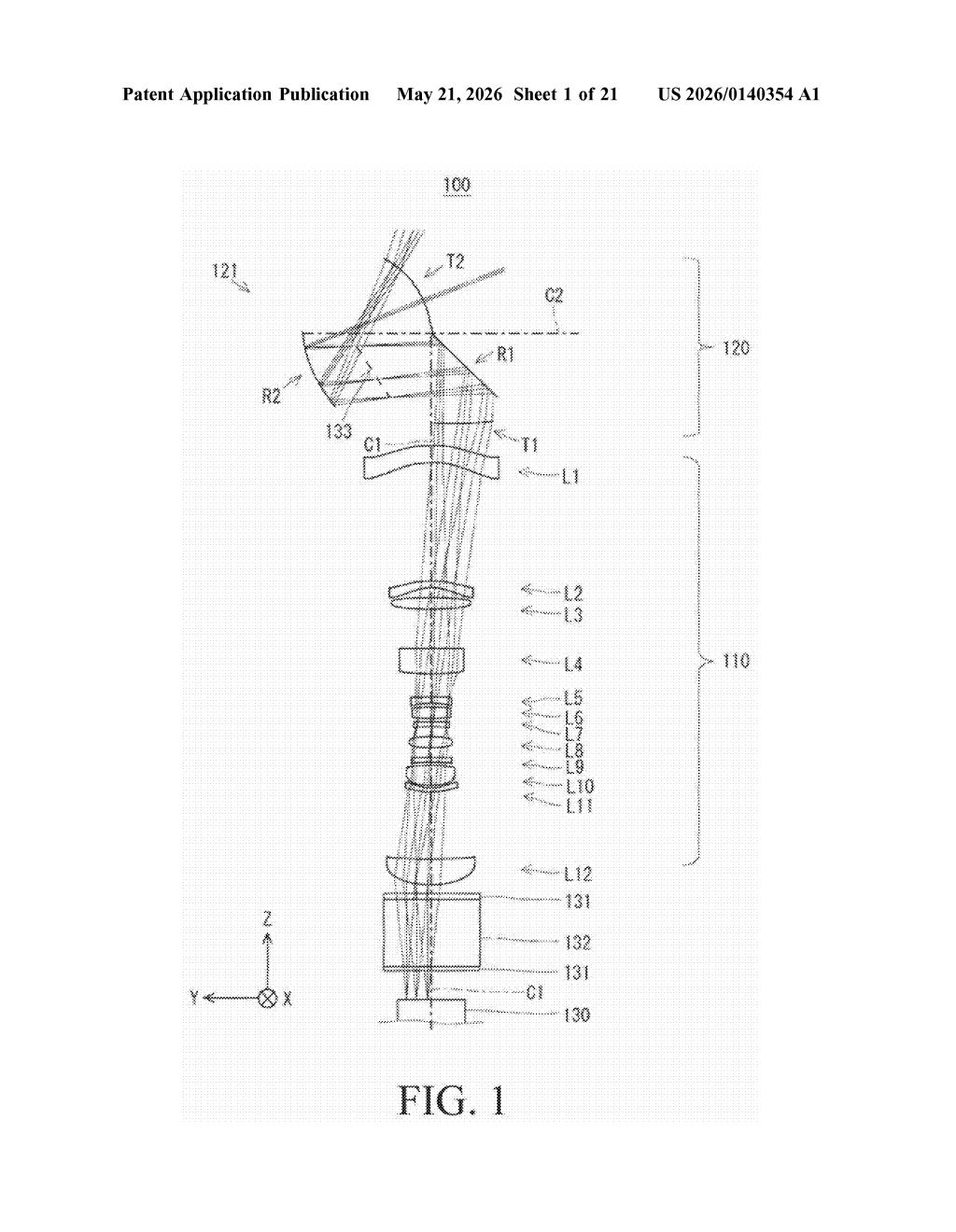
What Samsung's folded projection optics actually do
Imagine a projector that sits just a few inches from the wall but still throws a 100-inch image. That's the promise of ultra-short-throw projectors — but squeezing a clean, distortion-free picture out of such a tight space is genuinely hard optics work.
Samsung's patent describes a clever way to tackle that problem. Instead of bouncing light through a series of separate mirrors and lenses spread across a chassis, their design routes the image through a single solid optical element that handles four surfaces in sequence: light enters through one face, reflects off an internal mirror, bounces off a second curved mirror, then exits through another face. Think of it like a periscope folded into a block of glass.
The key detail is that the second reflecting surface is concave — curved inward — which helps focus and magnify the image onto your wall. A separate lens group upstream creates an intermediate "mini image" first, which the folded element then blows up to full size. The result is a more compact optical path that still delivers a wide, sharp projection.
How light folds through Samsung's four-surface optical element
The patent describes a two-stage optical system designed for image projection, likely targeting ultra-short-throw (UST) projectors.
Stage one — the first optical system is a conventional multi-lens group. It takes the raw image from a display element (think a DLP chip or LCOS panel) and focuses it into a smaller "intermediate image" floating inside the optical path. This intermediate image acts as a relay point — a way to reset the optical geometry before the second stage takes over.
Stage two — the second optical system is where the patent's novelty sits. It uses a single optical element (a solid, transparent medium like glass) that contains four functional surfaces arranged in sequence:
- First transmission surface — light enters the element
- First reflection surface — internal mirror bounces the beam
- Second reflection surface — a concave mirror magnifies and redirects the beam
- Second transmission surface — light exits toward the projection surface
Because all four surfaces are embedded in a single optically transparent medium, there are no air gaps between reflections. This matters because air-glass boundaries introduce aberrations (distortions and color fringing) — eliminating them keeps the image cleaner. The concave second mirror does the heavy lifting of enlarging the intermediate image onto the wall, which is described as a "conjugate plane" of the original display element (meaning the wall is optically equivalent to where the display would be if you ran the geometry in reverse).
What this means for ultra-short-throw projector design
Ultra-short-throw projectors are a genuinely competitive product category right now — Samsung's own The Freestyle and The Premiere compete with offerings from LG, Epson, and Hisense. The optical path is one of the hardest engineering constraints in UST design: you need large throw angles, minimal distortion, and a compact form factor all at once. A folded, air-gap-free optical element could help Samsung reduce chassis depth or improve image quality at the edges of the frame, where UST optics tend to struggle most.
This is also the kind of foundational optics patent that could apply beyond consumer projectors — think automotive heads-up displays, AR headset light engines, or compact rear-projection setups. Whether Samsung is building toward a next-generation Premiere or something entirely different isn't clear from the filing alone, but the patent stakes out territory in precision compact projection optics.
This is solid, specific optical engineering work — not a vague software patent. The folded solid-medium element with a concave second reflector is a real technical approach to a real problem in UST projection. It's not flashy news, but if you follow projector hardware or Samsung's display ambitions, this is worth a bookmark.
There are more where this came from
We read every patent application Big Tech publishes and send you the ones worth knowing. Plain English, free, every week.
Want this weekly breakdown for a company we don't cover? Patentlyze Pro →