
Samsung Files Patent for a Curved Display Assembly Method That Releases Its Own Adhesive
Building a curved display is genuinely hard — you have to hold everything perfectly still while bonding layers together, then let go without wrecking what you just built. Samsung's new patent describes a clever manufacturing jig that does exactly that using an adhesive that turns itself off on command.
How Samsung's curved screen bonding process actually works
Imagine trying to glue two curved pieces of glass together perfectly flat on a table — they keep sliding around because the curved edges don't sit still. That's essentially the problem Samsung's screen factories face every time they assemble a phone with a display that wraps around the sides.
This patent describes a manufacturing fixture (a kind of reusable holder) that temporarily sticks to the metal backing of a display panel using a special adhesive. The fixture holds the panel in exactly the right position while a cover glass — the clear protective layer on the front of your phone — gets bonded on top. Once the cover glass is attached, the factory sends a burst of energy (think light or heat) to the temporary adhesive, which kills its stickiness so the fixture can be cleanly removed.
The whole point is precision. Curved screens have both flat and curved zones, and those zones have to line up perfectly with the matching zones of the cover glass. The fixture's alignment features make that repeatable at factory scale.
How the energy-release adhesive locks and then lets go
The patent covers a two-part system: a display structure (the panel plus its metal backing plate) and an attaching structure (the reusable fixture used during assembly).
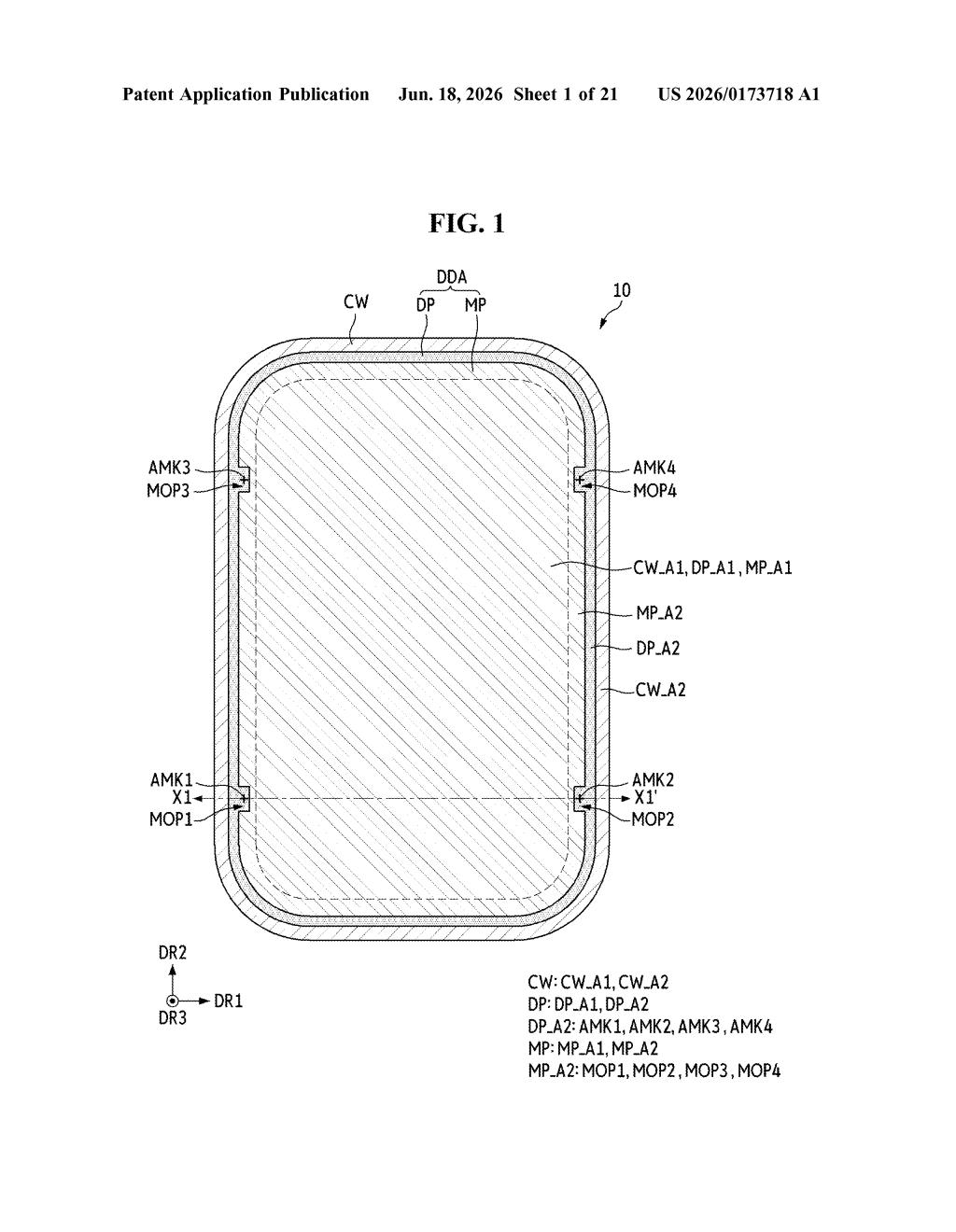
The display structure itself has four zones that matter:
- A flat first portion — the main screen area
- A curved second portion — the wraparound edges of the display panel
- A flat third portion of the metal backing — aligned with the flat screen area
- A curved fourth portion of the metal backing — aligned with the curved screen edges
The fixture (attaching structure) has a rigid plate with alignment features that lock the display structure into the correct position, plus a pad member — a compliant surface that the display structure bonds to during the cover-glass lamination step.
The key trick is the energy-releasable adhesive. It's applied to the back of the flat metal zone before assembly, holds the panel firmly during the cover-glass bonding step, and then loses its grip when the factory applies energy — likely UV light or heat — after the cover glass is secured. This avoids mechanical stress on the finished display when separating the fixture.
What this means for curved-screen phone and tablet production
Curved-edge displays are already common in Samsung's Galaxy S lineup, but yield rates — the percentage of screens that survive assembly without defects — are a constant pressure on manufacturing costs. A fixture that holds panels in precise alignment and then releases cleanly, without pulling or twisting the finished display, could meaningfully reduce the number of panels scrapped during production.
For consumers, better manufacturing yield typically means more consistent quality and, over time, lower costs. This patent sits squarely in the unglamorous but important category of process engineering that determines whether a premium display design is actually practical to build at volume.
This is a factory-floor process patent, not a product feature — you'll never see it mentioned on a spec sheet. That said, display manufacturing yield is a real competitive advantage, and patents like this are how Samsung protects incremental improvements in that area. It's worth a look if you follow display supply chain, but general readers can move on.
There are more where this came from
We read every patent application Big Tech publishes and send you the ones worth knowing. Plain English, free, every week.
Want this weekly breakdown for a company we don't cover? Patentlyze Pro →