
Qualcomm Patents Deep Auto Encoder System for Wireless Network Anomaly Detection
Qualcomm is filing patents on using deep auto encoders — a type of neural network that learns what 'normal' looks like — to automatically flag when a wireless network's performance quietly starts going sideways.
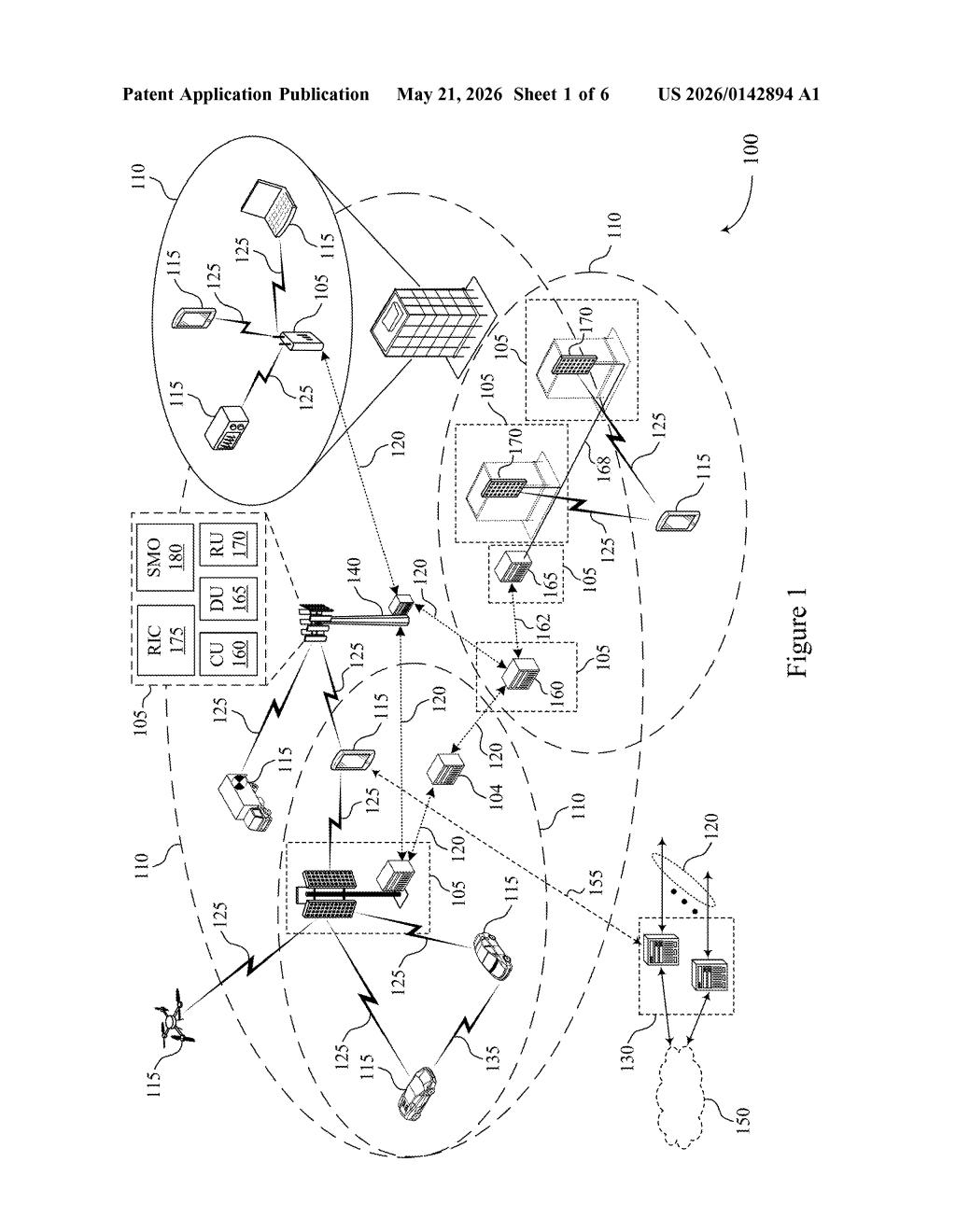
What Qualcomm's auto encoder network watchdog actually does
Imagine your wireless carrier has thousands of cell towers, each constantly sending back stats about call quality, data speeds, and connection counts. Most of the time everything looks fine — until it doesn't. The tricky part is catching gradual degradation before it becomes a real outage.
Qualcomm's patent describes a system where a management device watches over those key performance indicators (KPIs) using a deep auto encoder — essentially an AI trained to remember what healthy network behavior looks like. When the incoming stats don't match what the system expects, it flags the difference as a potential problem.
Once a problem is flagged, the management device can automatically adjust network parameters to compensate. Think of it as a self-monitoring thermostat for your carrier's network — one that catches a drafty window before your pipes freeze.
How the DAE compresses and reconstructs KPIs to spot drift
The patent centers on a deep auto encoder (DAE) — a type of neural network that learns to compress data down to its essential patterns and then reconstruct it. The trick: if the reconstruction is noticeably different from the original input, something unusual is happening.
Here's the flow the patent describes:
- A management entity collects KPIs (think: signal strength, latency, error rates, handoff counts) from multiple cells across a wireless network.
- Those KPIs are fed into the DAE, which encodes them into a compact internal representation and then decodes them back to full size.
- The system computes the reconstruction error — the difference between what went in and what came out. A large gap signals a performance change.
- The management entity then outputs alert messages and can trigger automatic parameter adjustments.
The use of a DAE (rather than, say, a simple threshold alarm) means the system can detect subtle, multi-dimensional shifts — anomalies that don't trip any single metric but represent a genuine deviation from baseline behavior. The neural network learns normal patterns during training, so it adapts to what each specific network environment typically looks like.
What this means for 5G network reliability at scale
Wireless networks are notoriously hard to monitor at scale. A carrier might manage hundreds of thousands of cells globally, and traditional rule-based alerting tends to either miss subtle degradation or drown operators in false positives. A learned-baseline approach like this could meaningfully reduce both problems by letting the model define what 'normal' means for each cell cluster.
For Qualcomm specifically, this fits squarely into its push to embed intelligence into RAN (Radio Access Network) management infrastructure — the same layer targeted by O-RAN standards and competitors like Ericsson and Nokia. If Qualcomm can make anomaly detection a turnkey feature of its chipsets or network software platforms, it becomes a stickier part of carrier infrastructure rather than just a silicon supplier.
This is solid, unsexy infrastructure work — the kind of patent that doesn't make headlines but could genuinely ship inside Qualcomm's network management tooling within a few years. The deep auto encoder approach to anomaly detection is well-established in the research literature, so the novelty here is in the specific application to wireless KPIs and the management entity architecture, not the underlying ML concept. Worth tracking for anyone following O-RAN and AI-native network management trends.
There are more where this came from
We read every patent application Big Tech publishes and send you the ones worth knowing. Plain English, free, every week.
Want this weekly breakdown for a company we don't cover? Patentlyze Pro →