
Samsung Patents a Wearable That Uses Skin Temperature to Know How You're Wearing It
Your smartwatch already knows when you've taken it off — but Samsung's new patent goes further, trying to figure out exactly *how* you're wearing it based on skin temperature alone.
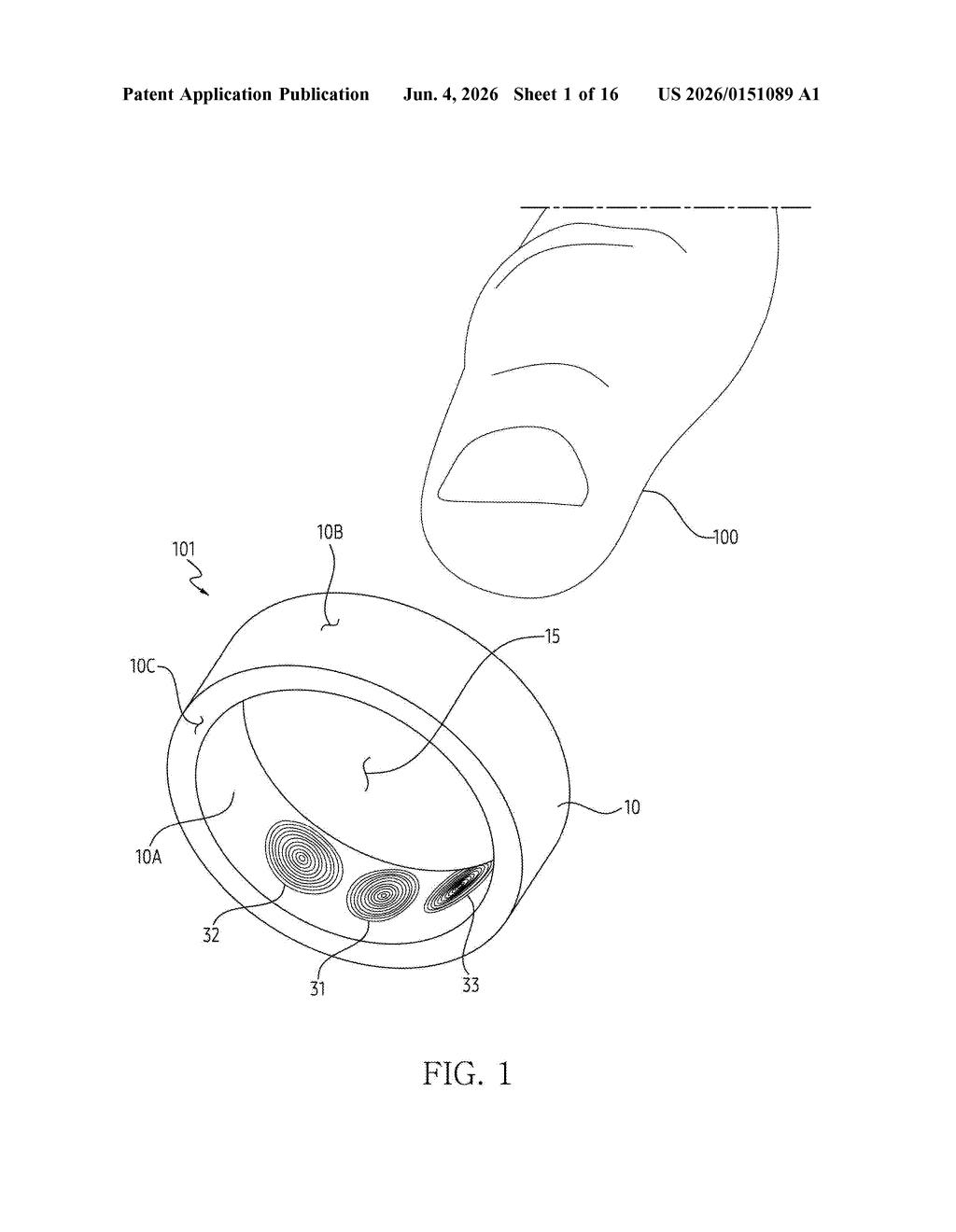
What Samsung's temperature-based wear detection actually does
Imagine your smartwatch slipping slightly up your wrist during a workout, or sitting looser than usual because you put it on over a long sleeve. Right now, most wearables can only tell you whether they're on or off. Samsung's new patent wants to do something more nuanced: figure out the specific way the device is being worn by reading your skin temperature.
The idea is that a temperature sensor facing your skin will read differently depending on whether the fit is snug, loose, over clothing, or worn on an unusual spot. By mapping those temperature readings to a set of predefined "wearing states," the device can classify its own situation — not just "on" or "off," but something richer.
For you as a wearer, this matters because health sensors like heart rate monitors and SpO2 readers are extremely sensitive to fit. If your watch knows it's sitting slightly off-position, it could warn you, adjust its readings, or skip a measurement it knows would be unreliable.
How the sensor maps temperature readings to wearing states
The patent describes a wearable device — most naturally a smartwatch or fitness band — with a temperature sensor positioned to face the user's skin when worn correctly. Once the device detects it's being worn, it doesn't stop there: it reads the temperature data and matches it against a set of predefined wearing states.
Those "wearing states" are the key concept here. Rather than a simple binary (on/off), the system maintains a classification of multiple possible conditions — think of them like buckets the device sorts itself into based on what it senses. The patent doesn't enumerate every possible state, but the implication is that temperature is a reliable proxy for fit quality and contact consistency.
The processor runs these instructions:
- Confirm the device is being worn (likely via existing capacitive or optical on-wrist detection)
- Read the temperature value from the skin-facing sensor
- Match that temperature reading to one entry in the plurality of wearing states
What makes this distinct from basic on/off detection is the granularity. Skin contact temperature changes measurably depending on how much of the sensor is touching skin, how tight the band is, and what's between the device and the body. The patent leverages that sensitivity as a classification signal.
What this means for health tracking accuracy on Galaxy wearables
Health wearables live or die by data accuracy, and fit is one of the biggest uncontrolled variables. A heart rate reading taken when a watch is riding high on the wrist can be wildly off. If a Samsung Galaxy Watch or Galaxy Ring could self-report its wearing state, it could flag questionable readings or prompt the user to reseat the device — a genuinely useful improvement in data quality.
This also has implications for passive health monitoring, where the device is collecting data continuously in the background. Knowing the wearing state could let the device weight or discard certain data points automatically, making long-term trend data more reliable without requiring the user to do anything different.
This is a quiet but sensible patent. The problem it's solving — health sensors giving bad data because the fit isn't perfect — is real and persistent, and using temperature as a classification signal is an elegant, low-power approach. Whether Samsung turns this into a user-visible feature or just a background data-quality filter, it's the kind of infrastructure work that makes wearable health claims more defensible.
There are more where this came from
We read every patent application Big Tech publishes and send you the ones worth knowing. Plain English, free, every week.
Want this weekly breakdown for a company we don't cover? Patentlyze Pro →