
Samsung Patents a Diode-Driven Optical Switch for Steering Light
Samsung is patenting a way to steer light on a chip using a diode — the same basic building block that controls current in electronics — tucked inside an optical switch architecture. It's a small structural idea that could simplify how photonic systems redirect laser beams.
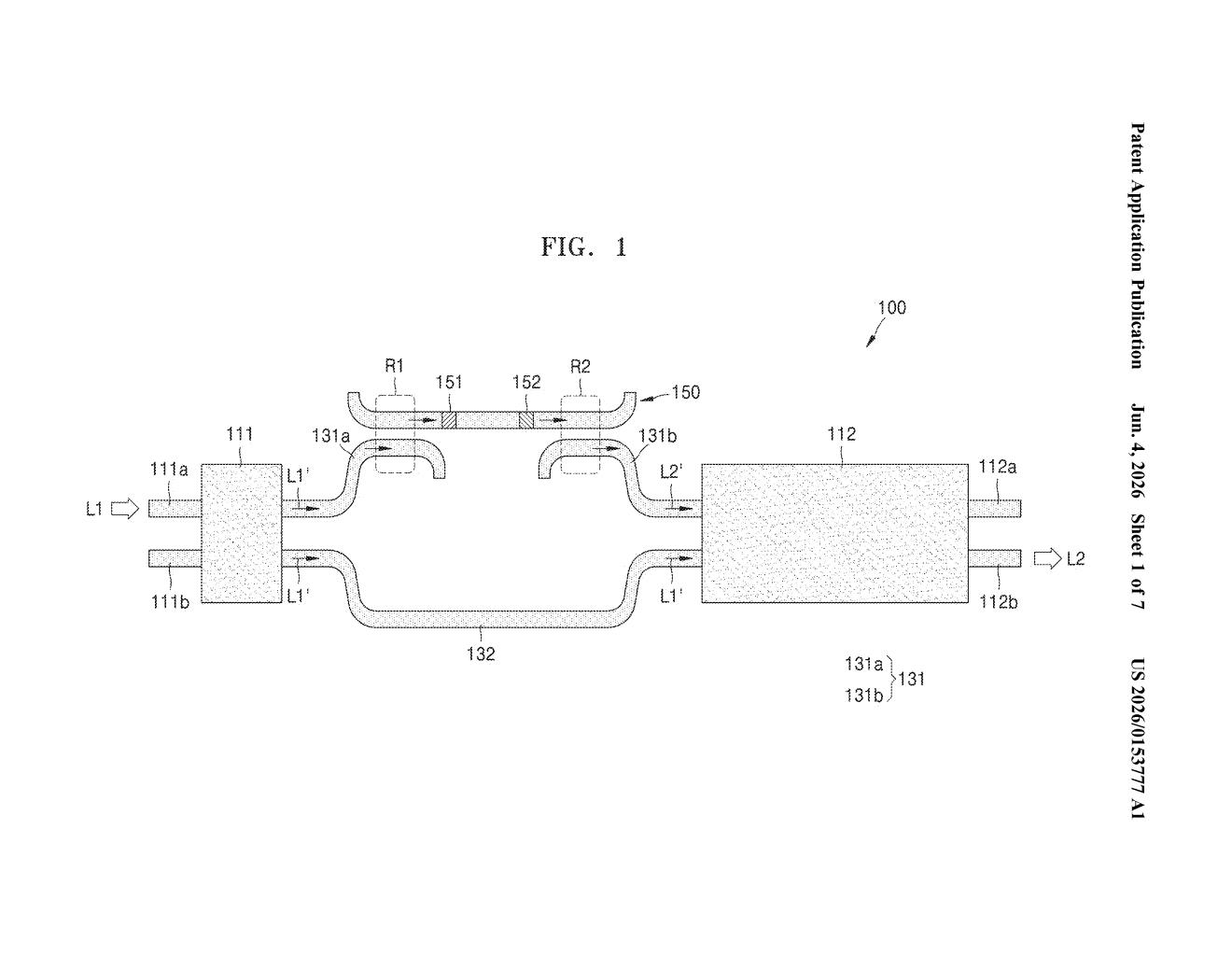
What Samsung's diode-based light-steering chip actually does
Imagine trying to redirect a beam of light the same way a railroad switch redirects a train — flipping it down one track or another on demand. That's essentially what an optical switch does, and it's a critical piece of any system that uses light to sense, communicate, or scan the world around it.
Samsung's patent describes a compact optical switch built on a chip. Light enters through one component, travels down a set of tiny channels called waveguides, and exits through another component — with a small diode-based coupler in the middle deciding which path the light takes. The diode acts like a gatekeeper, nudging the light left or right depending on whether it's switched on.
This kind of chip-scale light steering matters most in systems like LiDAR (the laser-based sensors used in self-driving cars and depth cameras) and high-speed optical data links, where you need precise, fast control over where a beam goes — without bulky moving parts.
How the directional coupler routes light through waveguides
The patent describes an optical switch built from four key parts working together:
- Two multimode interferometers (MMIs) — components that split or combine light by exploiting how multiple light-wave patterns (modes) interfere with each other inside a waveguide. Think of them as the on-ramps and off-ramps of the system.
- A set of waveguides — narrow channels etched into a photonic chip that guide light the way a fiber-optic cable does, just on a microscale.
- A directional coupler containing a diode — this is the patent's key element. A directional coupler normally transfers light between two adjacent waveguides by evanescent coupling (light leaking from one channel into a neighboring one). By embedding a diode here, Samsung adds active, electrically controllable switching behavior to that coupling.
The diode's electrical state — forward-biased or reverse-biased — changes the optical properties of the coupler, which in turn determines how much light jumps from one waveguide to another. That lets the chip route a light beam to different output ports on demand.
The patent also mentions this switch is part of a broader light steering system, suggesting it's designed for beam-scanning applications rather than purely data-switching use cases.
What this means for LiDAR and photonic chip design
Photonic chips that steer light without mechanical moving parts are a long-standing engineering goal for LiDAR, optical computing, and next-generation data center interconnects. Today's solid-state light-steering approaches — like optical phased arrays — are power-hungry and complex to control. A diode-integrated directional coupler could offer a more compact, lower-power path to the same result.
For Samsung specifically, this fits into a broader push into photonic integrated circuits and sensor hardware. If this architecture scales, it could find its way into depth-sensing cameras, autonomous vehicle sensors, or chip-to-chip optical links inside Samsung's own data center and mobile hardware ecosystem.
This is a focused, incremental photonics patent — not a platform announcement. The idea of using a diode inside a directional coupler is a real structural choice with practical tradeoffs (simpler fabrication, potentially faster switching), but Samsung will need to show it works at scale and low power to differentiate it from competing solid-state beam-steering approaches. Worth tracking if you follow photonic chip design; easy to skip if you don't.
There are more where this came from
We read every patent application Big Tech publishes and send you the ones worth knowing. Plain English, free, every week.
Want this weekly breakdown for a company we don't cover? Patentlyze Pro →