
Disney Patents AI Theme Park Characters That Know When You're Interrupting Them
Most voice AI just barrels through whatever it was saying when you interrupt. Disney is filing patents to give its AI characters the social awareness to actually handle that moment gracefully.
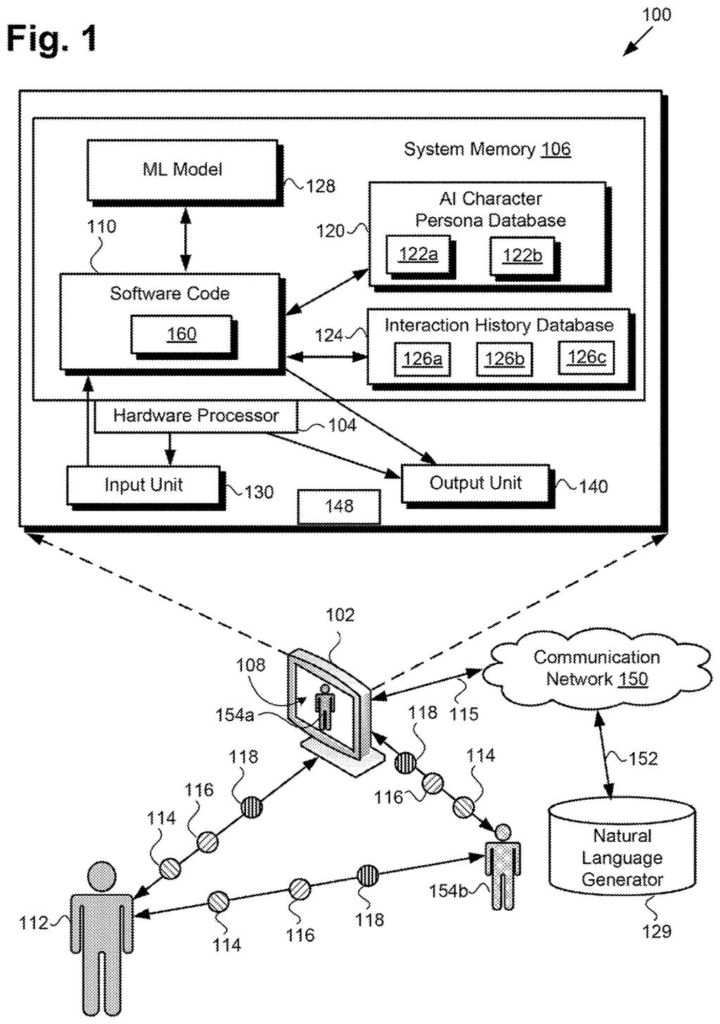
What Disney's interruption-aware AI characters actually do
Imagine you're talking to an AI character at a Disney park and you blurt something out while it's mid-sentence. Right now, most AI just keeps talking over you, or stops dead. Neither feels natural.
Disney's patent describes a system where the AI character listens for interruptions in real time, figures out why you interrupted, and then decides the best way to respond. If what the character was saying was important, it might finish its thought. If your interruption matters more, it might stop and respond to you instead. The decision is based on how far into its speech the character was, how important that speech seemed, and how significant your interruption appears to be.
The result is an AI character that handles the back-and-forth of conversation more like a person would, rather than a voice assistant that either steamrolls you or abruptly goes silent. For a theme park experience built around feeling like characters are real, that difference matters.
… classifying, using an ML model trained to detect an interruption to a conversation, the sound as an interruption to the interaction, identifying a response strategy for continuing the interaction …
Translation: An artificial intelligence uses machine learning to figure out when a person or another character cuts in while it is talking.
How the system classifies sounds and picks a response
The patent describes a three-step loop that runs in the background whenever an AI character is speaking.
First, the system listens for sounds made by the person (or another AI character) while the first AI is still talking. A machine-learning model trained specifically on conversation patterns classifies that sound: is it a genuine interruption, a filler noise, background sound, or something else?
Second, if it is an interruption, the system evaluates the context. It considers:
- The conversational context: what the interaction is about and who it's with
- The predicted importance of what the AI was saying: was this a key plot point or casual filler?
- The predicted importance of the interruption itself: does the person seem urgent or are they just reacting?
Third, it picks a response strategy and executes it by controlling playback of the AI's pre-generated speech. The character can resume from where it left off, modify the speech (skipping or condensing what remains), or terminate it entirely and shift to responding to the interruption. The key technical detail is that this is managed against a tracked playback position, so the system always knows exactly where in the speech the interruption happened.
What this means for AI characters in parks and beyond
The ability to handle interruptions naturally is one of the last big gaps between AI conversation and human conversation. Every voice assistant you've used has failed at this in some obvious way: talking over you, cutting off mid-word, or losing the thread entirely. For a smart speaker at home, that's annoying. For an AI character in a Disney park, where the whole point is immersion, it can break the spell entirely.
This patent suggests Disney is treating that gap as an engineering problem worth solving at the model level, not just patching with a mute-and-restart approach. If it works as described, your interactions with AI characters could feel far less robotic, and other companies building conversational AI for customer service, gaming, or entertainment face the same problem and will be watching how Disney handles it.
Disney's third voice and speech AI filing we've tracked since June follows one on scoring voice performance similarity and one on rewriting scripts in a commentator's voice.
Anyone who has tried to interrupt a voice assistant mid-sentence knows the sinking feeling that follows: it either ignores you completely or collapses into silence, and either way the illusion is broken. In a theme park, where that illusion is the entire product, a character that handles interruptions badly does not just annoy a child, it fails the whole reason the interaction exists.
The difficulty Disney is working through is that being interrupted means different things in different moments. A child blurting out excitement is a different signal from a question, which is a different signal from background noise, and the right response to each is distinct in ways that matter.
Holding that judgment together in a loud, chaotic, unpredictable environment is a demanding bar, and the complexity of the approach reflects how costly the problem actually is when it goes wrong.
There are more where this came from
We read every patent application Big Tech publishes and send you the ones worth knowing. Plain English, free, every week.
The drawings
5 drawing sheets from US 2026/0290345 A1 · click any drawing to enlarge


Want this weekly breakdown for a company we don't cover? Patentlyze Pro →
Be the first to weigh in