
Disney Files Patent for AI That Figures Out Which Soundtrack Is Which
Behind every movie file sits a set of audio tracks, and sometimes nobody knows which one holds the dialogue. Disney describes a system that listens, checks its own work against a rulebook, and even reads the title card on screen.
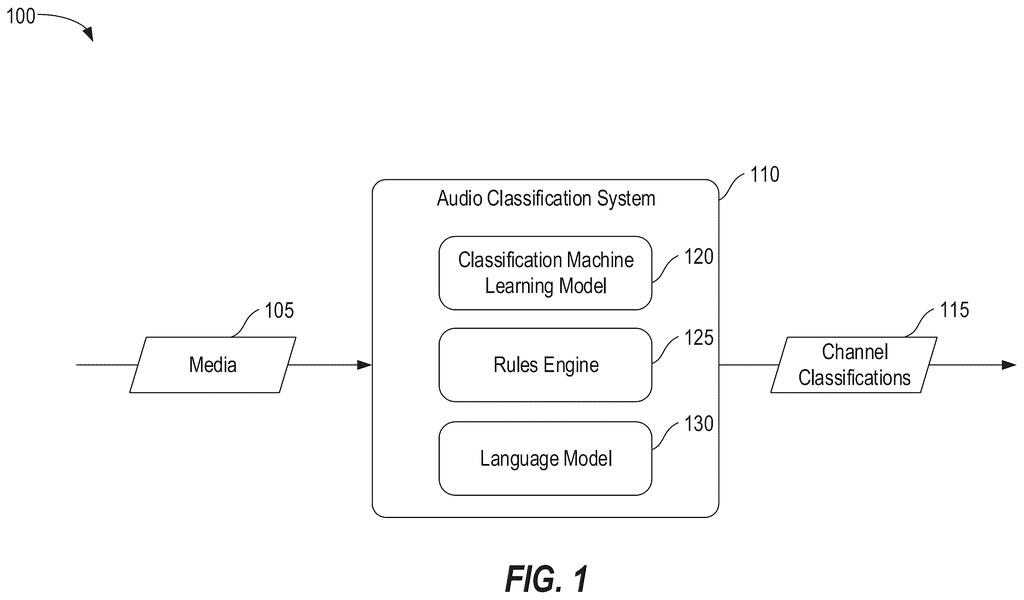
What Disney's audio channel labeler actually does
A technician receives a finished episode from an overseas studio. The file has six audio tracks, and the label says it's surround sound. But the label might be wrong, and nobody wants to find out after millions of people press play.
Disney's patent application describes a way to check automatically. A machine learning model listens to each track, using a picture of its sound (a spectrogram) to guess whether it holds left speaker audio, dialogue, music, effects or silence. Then a rulebook catches silly answers, like two tracks both claiming to be the single mono mix.
If a track still stumbles the system, an AI language model reads the slate or title card in the video and uses that text to settle it. The goal is that the file gets prepared for your TV or phone with the right sound in the right place.
… generating an initial set of channel classifications based on, for each respective channel of the set of channels, processing the respective spectrogram using a channel classification machine learning model; …
Translation: The system uses an artificial intelligence model to make a first guess about what each audio track is.
How the model, the rulebook and the reader combine
The system works in stages, and each stage cleans up after the one before it.
First, it takes every audio channel (a channel is one separate track of sound, like the left speaker feed) and turns short segments into spectrograms, which are pictures showing how much of each pitch is present over time. A trained classification model looks at each picture and labels the channel, for example 5.1 Left, dialogue, music, sound effects or a silent track. The filing says it can split a channel into segments (say, five thirty-second pieces) and take a majority vote on the answer.
Second, a rules engine (a set of fixed common-sense checks) reviews the whole lineup. If several channels claim to be the only mono mix, they get marked as unknown. If two neighboring channels are both called stereo, the rules assign one as left and the other as right. A lone channel labeled as part of a 5.1 surround set, with no matching neighbors, is marked unknown.
Third, only for channels still marked unknown, a language model (an AI that reads and answers questions in text) gets involved. The system uses character recognition to pull text off a title card or slate in the video, then asks something like "what audio is in channel 4?" The answer goes back through the rules for a final check.
Channels that pass the rules skip the extra AI step, which saves computing time. The final labels can drive re-encoding for streaming or home theater.
A revised set of channel classifications is generated based on evaluating the initial set of channel classifications using a set of channel rules.
Translation: It then double checks those guesses against a specific list of rules to make sure they are correct.
Why mislabeled audio matters for what you stream
If you stream a show and the dialogue is missing, or the music is blasting from the wrong speaker, a mislabeled audio track is one possible cause. Disney's filing says wrong labels can lead to glitches, missing audio, or encoding jobs that fail outright. Catching this automatically means fewer of those slips reach you, especially for content that arrives from many sources and countries.
It also saves people time. Editors could see which track holds what without opening each one, and the system only asks a bigger AI model for help when it has to. The examiner's first review rejected the claims as filed, which is routine at this stage and usually followed by amendments.
Disney's AI vision filings we cover now has eight entries since July, adding to earlier work like cutting actors from footage and translating gestures with dialogue, making this the eighth application in that group.
You will probably never notice this working, and that is the point. The benefit shows up as a show where voices come through clearly on every speaker in the room, rather than a clip where dialogue has gone silent or a rich surround mix has collapsed into a single muddy channel.
The system is designed so the expensive, slower checks only happen when the faster ones get stuck. A quick automated guess, a rulebook to catch obvious errors, and a more deliberate analysis as a last resort: that layered approach keeps corrections fast and predictable.
For a company managing a vast library with files arriving from everywhere, this is routine but necessary plumbing. When it works, viewers never blame the app for an audio problem that was actually hiding in the file long before it reached their television.
Get our take in your Top Stories
Liked this breakdown? Add Patentlyze as a preferred source on Google, and our plain-English take shows up more often in your Top Stories the next time Disney patent news breaks.
There are more where this came from
We read every patent application Big Tech publishes and send you the ones worth knowing. Plain English, free, every week.
The drawings
6 drawing sheets from US 2026/0331116 A1 · click any drawing to enlarge


Want this weekly breakdown for a company we don't cover? Patentlyze Pro →
Be the first to weigh in