
Samsung Patents a Dual-Amplification Image Sensor for Low-Light Photography
Two photodiodes sit under a single tiny lens, but one of them can amplify its signal twice before sending it out — a trick that could help Samsung squeeze more detail out of dark scenes without enlarging the pixel.
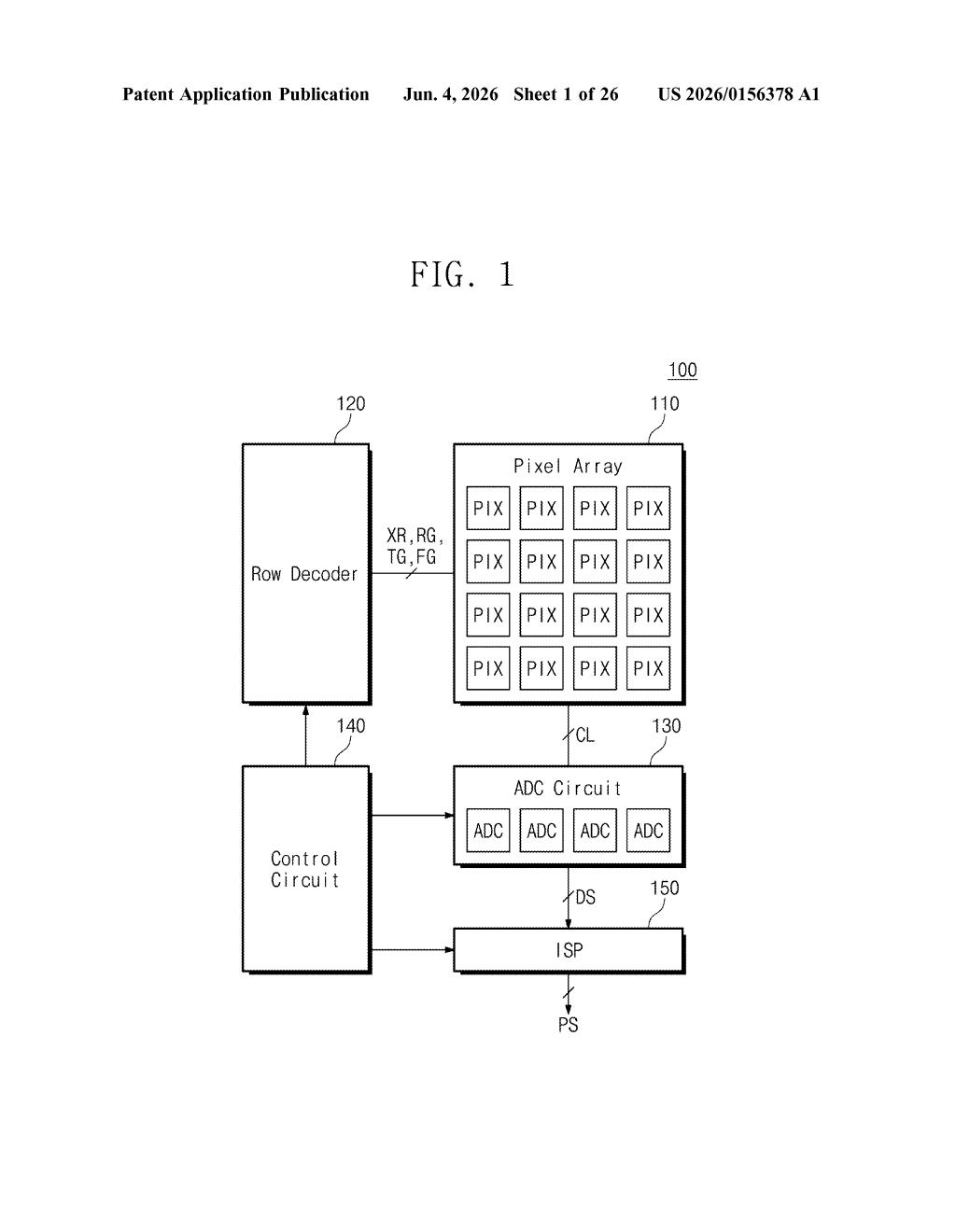
What Samsung's double-amplification pixel circuit actually does
Imagine trying to take a photo in a dim restaurant. Your phone's camera sensor has to work with very little light, and if the signal from each pixel is too weak, the resulting image looks noisy and dark. The usual fix is to use bigger pixels — but bigger pixels mean fewer of them, which hurts resolution.
Samsung's patent describes a sensor where two tiny light-collecting elements (photodiodes) share a single lens. One of them works normally, but the other has a special trick: it can run in a high-gain mode where it amplifies the incoming light signal not once, but twice in sequence — storing the first amplified result, then amplifying that stored result a second time before sending it to the rest of the camera system.
That second pass of amplification can make faint signals strong enough to read clearly, potentially improving how your camera handles shadows and low-light scenes without needing physically larger pixels.
How the two-stage charge amplification pipeline works
The sensor contains two photodiodes sitting beneath a single micro lens — think of them as two buckets collecting rain that falls through the same funnel. Each photodiode feeds its own output circuit, but the second output circuit has two operating modes controlled by external mode signals.
In first mode (standard operation), the second output circuit behaves like a conventional pixel readout: it transfers the accumulated charge to a floating diffusion region (a tiny capacitor node that converts charge to voltage), amplifies it once, and outputs the result.
In second mode (high-gain operation), the circuit skips the floating diffusion transfer and instead:
- Amplifies the raw charge a first time to produce a first amplified charge
- Stores that intermediate result in a dedicated storage region on the chip
- Amplifies the stored value a second time
- Outputs the doubly-amplified result as the final voltage
The two-stage amplification chain is the key novelty. By caching an intermediate amplified value and then amplifying it again, the circuit can achieve a much higher effective gain than a single amplifier stage alone would allow — useful when the photodiode is receiving very little light.
What this means for Samsung's next camera sensors
Higher gain inside the pixel itself means the camera can extract a usable signal from less light, which is directly relevant to low-light photo and video quality. This is especially meaningful as smartphone sensors keep shrinking individual pixels to fit more of them into the same sensor area — smaller pixels collect less light, so on-chip amplification becomes more important.
The switchable dual-mode design is also practical: the sensor can run in normal mode for well-lit conditions (where extra gain would just amplify noise) and switch to high-gain mode only when it's actually needed. Whether Samsung deploys this in a phone camera, a surveillance sensor, or an automotive image sensor isn't specified, but all three are areas where Samsung's sensor division actively competes.
This is a focused, incremental circuit-level improvement — not a headline-grabbing camera feature, but the kind of silicon-level work that quietly underpins generational sensor performance gains. If Samsung ships this in a future ISOCELL part, you probably won't see it called out in a spec sheet, but it could meaningfully contribute to low-light performance in whatever device it ends up in.
There are more where this came from
We read every patent application Big Tech publishes and send you the ones worth knowing. Plain English, free, every week.
Want this weekly breakdown for a company we don't cover? Patentlyze Pro →