
Red Hat Patents a System That Reroutes Quantum Computing Jobs on the Fly
Quantum computers are notoriously finicky — hardware goes offline, qubits decohere, and jobs fail. Red Hat's new patent describes a system that automatically finds a substitute quantum processor when your first choice isn't available.
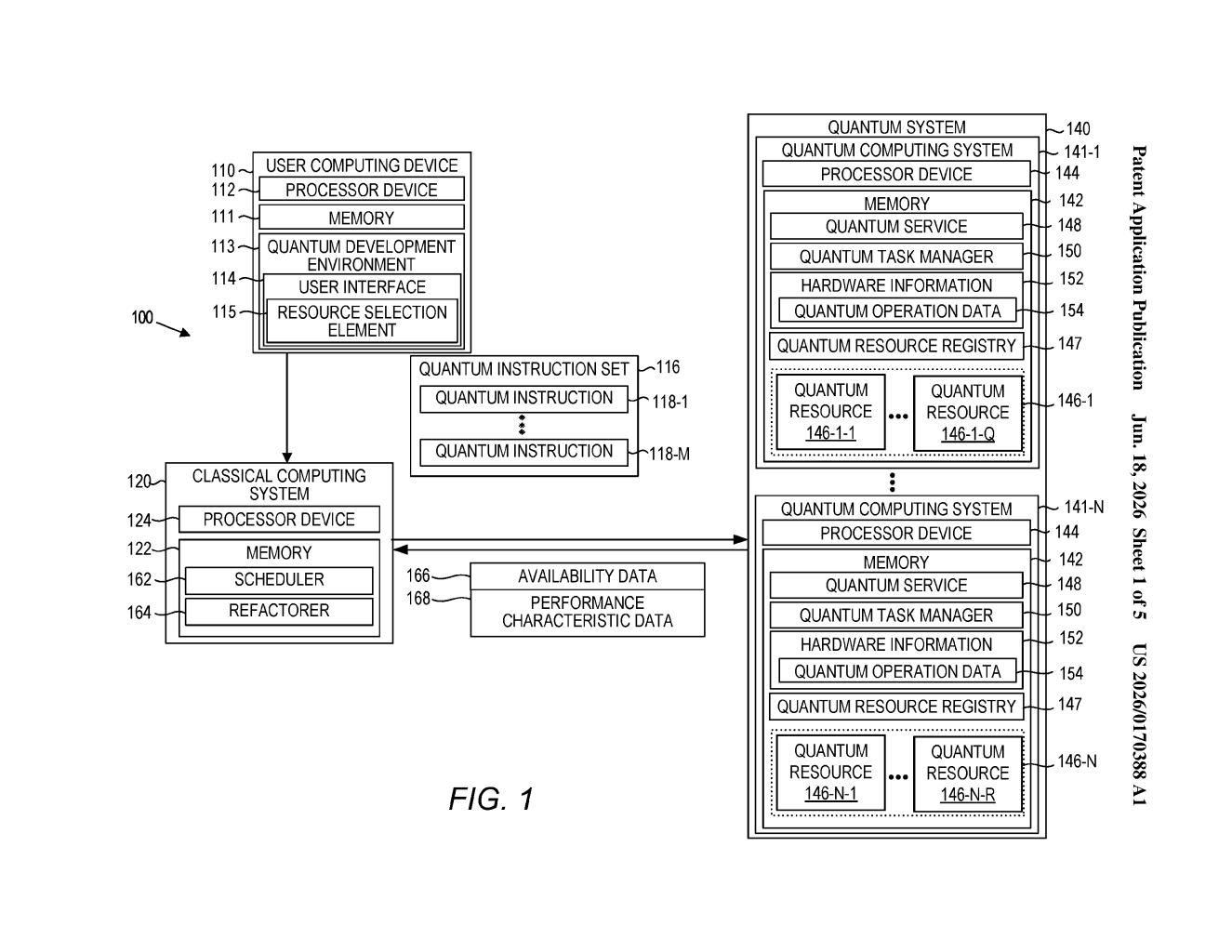
What Red Hat's quantum job-rerouting system actually does
Imagine you book a specific conference room for a meeting, but when you arrive it's locked. A smart building system could automatically find you another room that fits your group size and equipment needs — no manual searching required. Red Hat's patent applies that same idea to quantum computing.
When a program sends a job to a quantum computer and that machine is unavailable, this system doesn't just fail out. Instead, it looks at what the job actually needs — things like processing speed or accuracy — and finds a different quantum processor that can handle it. Then it quietly rewrites the job's instructions so they work on the new hardware.
This matters because quantum computers today are rare, expensive, and frequently offline for maintenance or calibration. A system that can automatically redirect workloads to available hardware could make quantum cloud services far more reliable for the businesses starting to experiment with them.
How the system picks a replacement quantum resource
The patent describes a middleware-style layer that sits between a program's quantum instructions and the actual quantum hardware. It works in a few distinct steps:
- Reads the instruction set: The system parses a quantum instruction set — essentially the compiled code telling a quantum processor what operations to run.
- Detects unavailability: It checks whether the originally specified quantum resource (a particular quantum processor or a set of qubits within one) is actually reachable and operational.
- Derives performance constraints: Rather than just grabbing any available machine, it extracts an attribute constraint — a set of requirements based on the job's performance characteristics, like minimum qubit count, gate fidelity (how accurately the machine executes operations), or connectivity topology (how qubits are wired together).
- Selects and rewrites: It identifies a second quantum resource that meets those constraints, then modifies the original instruction set so the job runs correctly on the new hardware.
The rewriting step is non-trivial. Different quantum processors use different gate sets and qubit layouts, so instructions that work on one machine often don't translate directly to another. The patent claims the system handles that translation automatically.
What this means for businesses renting quantum compute time
Right now, most quantum computing happens through cloud platforms — IBM Quantum, Amazon Braket, Microsoft Azure Quantum — where users queue jobs on specific hardware. If that hardware goes down, jobs simply fail, and users have to resubmit manually. Red Hat's approach would automate that recovery, making quantum cloud services behave more like conventional cloud computing, where workloads shift between servers without you noticing.
For enterprise customers beginning to integrate quantum into workflows — drug discovery, logistics optimization, financial modeling — reliability is a bigger barrier than raw performance. A system that keeps jobs running without manual intervention is a meaningful step toward making quantum computing practical at scale.
This is infrastructure plumbing, not a physics breakthrough — but it's the kind of infrastructure that determines whether quantum computing becomes genuinely usable for businesses or stays a research curiosity. Red Hat's play is to own the orchestration layer the way it owned Linux enterprise services: not the hardware, but the reliability layer on top of it. That's a credible and historically proven strategy.
There are more where this came from
We read every patent application Big Tech publishes and send you the ones worth knowing. Plain English, free, every week.
Want this weekly breakdown for a company we don't cover? Patentlyze Pro →