
Adobe Patents a Faster Denoising Path for AI Image Generation
Generating an AI image with a diffusion model is basically running a very expensive math problem dozens of times in a row. Adobe's new patent is about taking a smarter path through those steps so you get to the finish line faster.
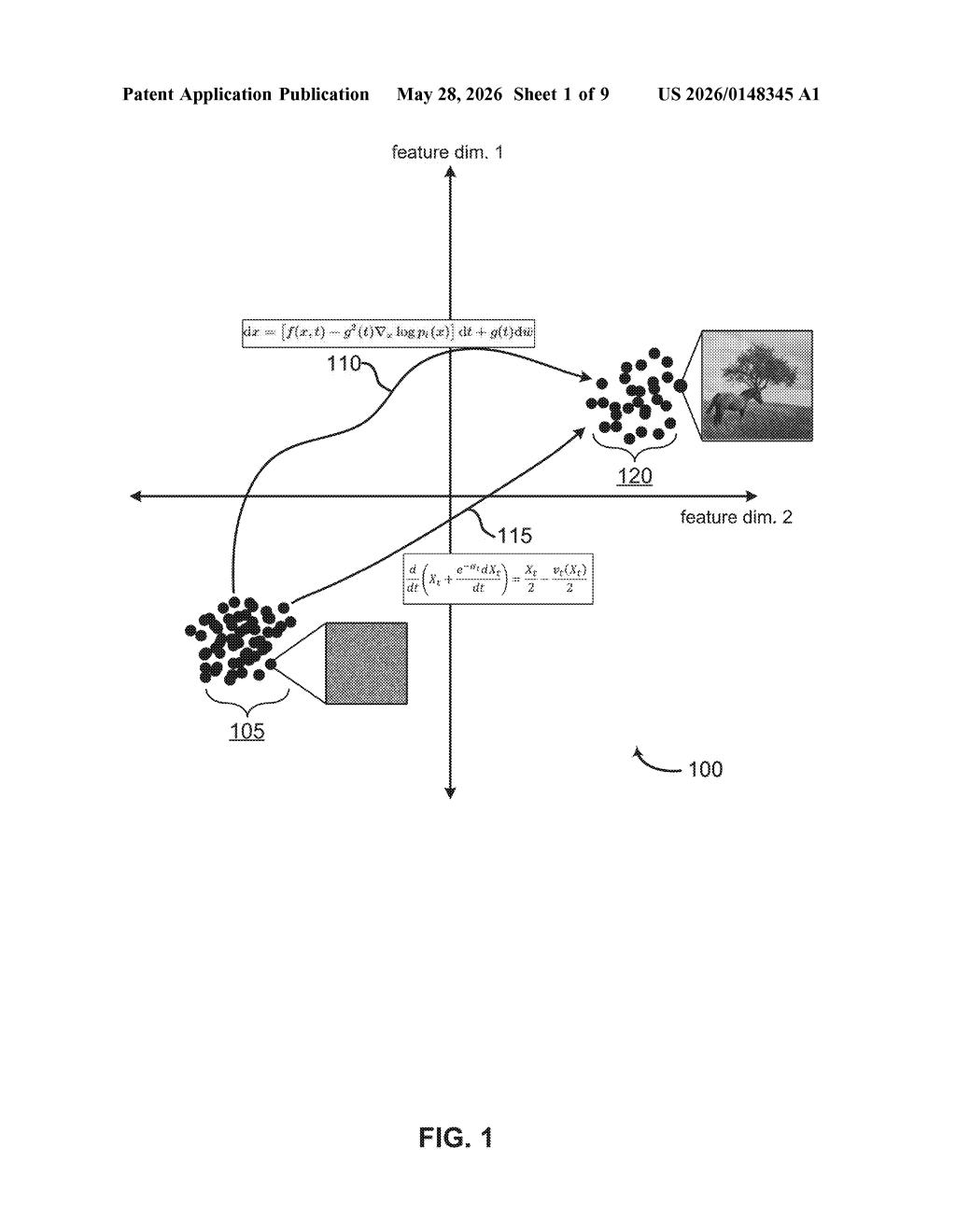
What Adobe's accelerated diffusion sampling actually does
Imagine you're driving from point A to point B, and the GPS gives you a route with 50 turns. Now imagine a faster GPS that figures out you can skip half those turns by accelerating differently at certain points. Adobe's patent is essentially that — but for AI image generation.
When tools like Adobe Firefly generate an image, they start with pure visual noise and iteratively "denoise" it — running the same neural network over and over until a coherent picture emerges. Each of those passes takes time and computing power. The more passes, the slower (and more expensive) the generation.
Adobe's approach introduces what it calls an accelerated denoising trajectory — a second-order path through time steps that lets the model denoise more aggressively at the right moments. The result: fewer steps needed to get a clean image, meaning faster outputs without sacrificing quality.
How the second-order trajectory reshapes denoising steps
Standard diffusion model samplers (think DDPM, DDIM, or DPM-Solver) treat the denoising schedule as a mostly linear path — each timestep removes roughly the same amount of noise as the last, guided by a fixed schedule. Adobe's patent proposes replacing that with a second-order time trajectory, meaning the denoising rate itself changes dynamically based on where you are in the process.
The key concept is the denoising vector — a computed direction that tells the model how to move from noisy to clean at each step. In standard samplers, this vector is recalculated with roughly equal weight at each timestep. Adobe's method adjusts the acceleration of that vector based on the current diffusion timestep, borrowing from second-order numerical integration (think of it like using velocity and acceleration to predict position, rather than just velocity).
In practice, the system:
- Initializes a noise map from a standard noise distribution
- Computes a denoising vector using the accelerated trajectory model
- Generates the final synthetic image by denoising along that optimized path
The practical payoff is that fewer neural network passes are needed to reach a high-quality image — each step does more work because the trajectory is shaped more intelligently.
What this means for Adobe's Firefly generation speed
For Adobe Firefly and any generative product Adobe ships inside Creative Cloud, inference speed is a real cost and user-experience problem. Every image generation request runs on expensive GPU infrastructure, and shaving even 20–30% off the step count translates directly into lower latency for users and lower compute costs for Adobe at scale.
This patent also signals that Adobe is investing in sampler-level optimization — not just training better models, but making the inference process itself more efficient. That's a meaningful architectural bet, because faster samplers can make even modestly-sized models competitive with much larger ones, which matters a lot if Adobe wants Firefly to run closer to real-time in tools like Photoshop or Premiere.
This is a genuinely useful piece of applied math research dressed up as a patent. Second-order ODE solvers for diffusion models are an active research area — DPM-Solver++ and similar work have shown real gains — and Adobe filing here suggests they have a specific implementation they think is defensible. It's not flashy, but faster image generation is one of the most direct ways to improve the Firefly user experience.
There are more where this came from
We read every patent application Big Tech publishes and send you the ones worth knowing. Plain English, free, every week.
Want this weekly breakdown for a company we don't cover? Patentlyze Pro →