
Samsung Patents a Crease-Swipe Screenshot Gesture for Tri-Fold Phones
Samsung is working on a tri-fold phone with a genuinely clever trick: swipe your finger along the physical crease between display panels and the device captures a screenshot. It's a gesture that turns an engineering constraint — the fold line — into a UI shortcut.
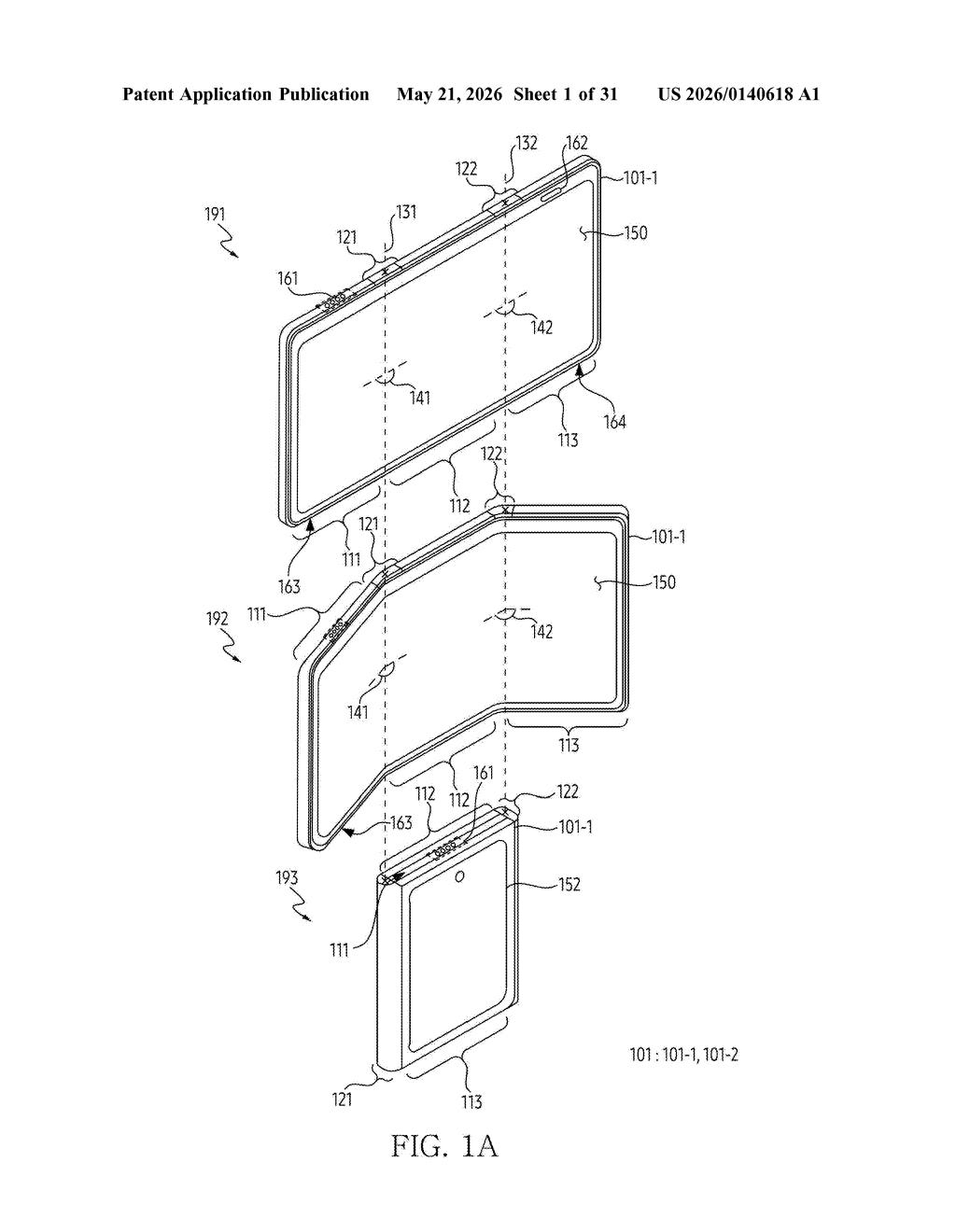
How Samsung's tri-fold crease gesture takes screenshots
Imagine you're holding a phone that folds into three panels, like a brochure. The lines where those panels fold are usually just... structural. You fold the device, it bends there, that's it. Samsung's idea is to make those fold lines actually do something when you touch them.
According to this patent, if you drag your finger along the crease between any two panels — not across it, but parallel to it — the device saves an image of whatever's on screen at that moment. It's essentially a screenshot gesture built into the physical fold line itself.
The device uses angle sensors on each hinge to know exactly how the phone is positioned, and the touch input on the border area triggers the capture. It's a small quality-of-life idea, but it shows Samsung thinking about how the unique physical form of a tri-fold device can create interaction patterns that flat phones simply can't offer.
How the border-swipe triggers the image capture
The patent describes a three-panel foldable device — a first, second, and third housing, each carrying a portion of a single flexible display. Two hinge sensors continuously track the angle between adjacent panels, so the device always knows its current folded configuration.
The core mechanic works like this:
- The device monitors touch input specifically on the border areas — the narrow zones where one display panel meets the next at a fold line.
- If a touch is detected on one of those border zones and the finger then moves in the direction the crease runs (i.e., along its length, not across it), the system interprets that as an intentional gesture.
- In response, it stores an image of the current screen — effectively a screenshot — in memory.
The angle sensors matter because the device needs to know which border area is active and potentially how the screen content is being displayed across panels at any given fold angle. The claim covers any of the three possible border zones: between panel one and two, or between panel two and three.
The instruction set ties the gesture detection to the processors handling both display output and sensor input, making it a low-latency, hardware-aware interaction rather than a pure software shortcut.
What this means for tri-fold device interaction design
Tri-fold phones introduce a navigation problem that flat phones never had: more screen real estate, more fold lines, and existing gestures (like a two-finger swipe or power+volume button combo) weren't designed with a three-panel form factor in mind. Repurposing the crease itself as a gesture surface is a logical response — the fold line is always in a known physical location, so it's a reliable anchor for a new input paradigm.
For Samsung, which is racing to define what tri-fold UX actually looks like before the category solidifies, small interaction patents like this are part of building a moat. If swiping a crease to screenshot becomes the muscle memory for tri-fold users, that's a behavioral habit tied to Samsung's hardware design.
This is a modest but genuinely thoughtful patent — it doesn't reinvent anything, but it shows Samsung treating the tri-fold's physical seams as a feature rather than an apology. The crease-as-gesture concept is intuitive enough that it could realistically ship. Whether it does depends more on whether Samsung releases a tri-fold at all than on any technical hurdles here.
There are more where this came from
We read every patent application Big Tech publishes and send you the ones worth knowing. Plain English, free, every week.
Want this weekly breakdown for a company we don't cover? Patentlyze Pro →