
Samsung Patents a Foldable Display That Shows Port Icons Where the Ports Actually Are
When you plug a charger into a folded Galaxy phone, shouldn't the screen just tell you what's happening — right next to the port you used? That's the core idea here.
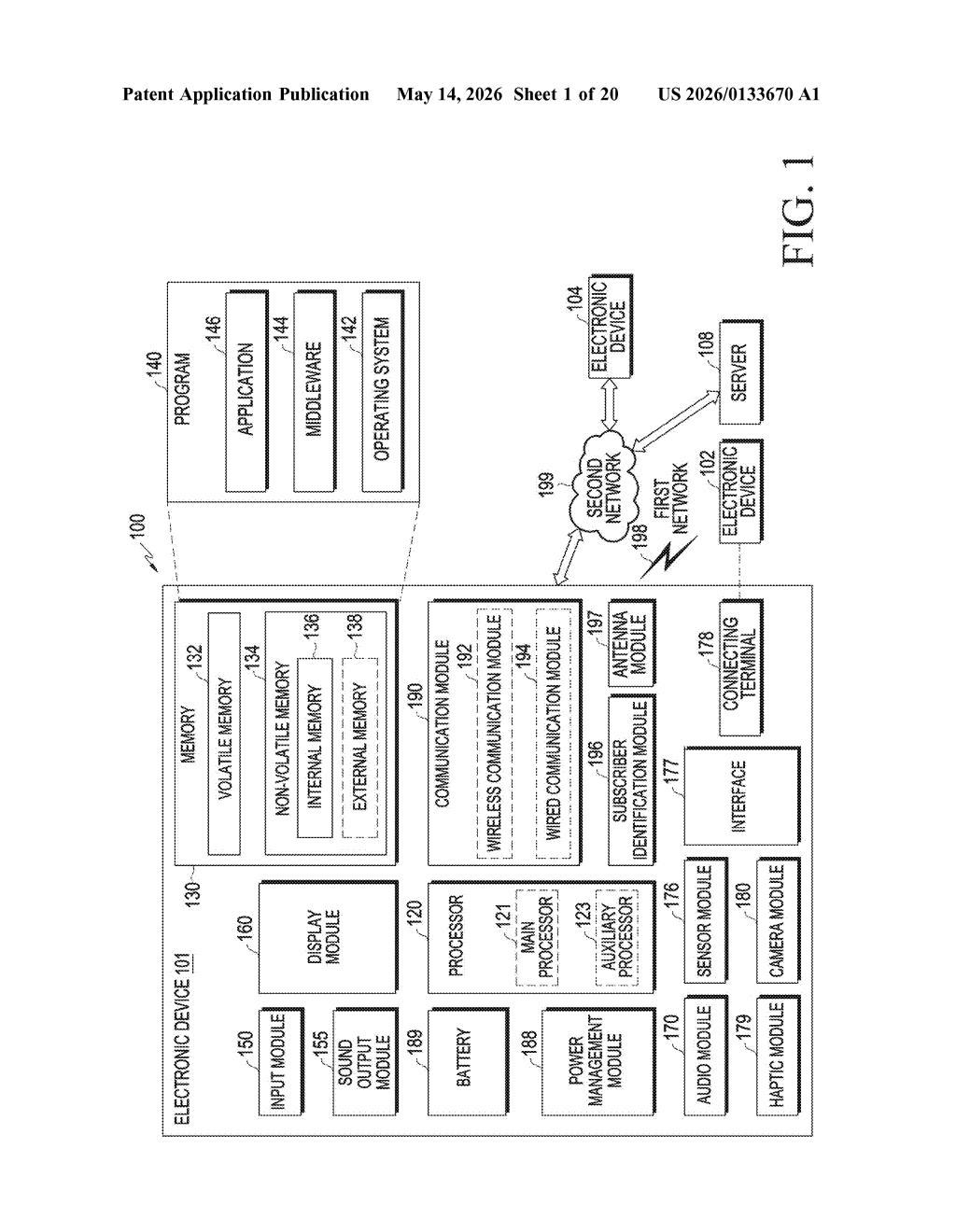
What Samsung's context-aware port icons actually do
Imagine plugging a USB-C cable into your foldable phone while it's half-folded on your desk. Instead of hunting through a notification shade or unlocking the full display to see your charging status, a small icon pops up right on the part of the screen that's physically closest to that port. No hunting required.
That's what Samsung is patenting here. The device watches two things at once: how the phone is currently folded, and whether something just happened at one of its ports — like a charger connecting or a headphone being plugged in. Then it figures out which part of the foldable display is geographically nearest to that port and puts the relevant icon there.
The included diagram shows a charging notification with "75 minutes remaining to full charge" appearing near the port it's connected to. It's a small quality-of-life tweak, but on a device with a screen that wraps around a hinge, knowing where to look actually takes a little mental effort — and this removes that friction.
How the device maps port position to display area
The patent describes a foldable phone with two housing panels connected by a hinge, with a single continuous foldable display spanning both panels. Along the sides of one or both housings sit multiple physical ports — think USB-C, SIM tray, and so on.
The core logic works like this:
- The processor continuously tracks the current folding state (fully open, half-folded, fully closed, etc.).
- It also monitors for events tied to specific ports — a charger connecting, a peripheral plugging in, or a cable being removed.
- When an event fires, the system calculates which region of the foldable display spatially corresponds to that port's physical location on the device chassis.
- It then renders the relevant icon or notification in that region — so the on-screen indicator and the physical port are visually co-located.
The mapping changes depending on fold state. A port on the bottom edge of the lower housing might be in the middle of the visible screen when the phone is half-folded, or near the bottom bezel when fully open. The system accounts for this geometry dynamically, so the icon always appears near the port regardless of how the user is holding or positioning the device.
The patent references a specific scenario where a charging plug icon appears with a time-remaining estimate, positioned near the charging port — a practical illustration of the broader mechanism.
What this means for foldable phone usability
Foldable phones introduce a genuinely new UI challenge: the screen's geometry changes based on how you hold the device, so the mental map between physical hardware and on-screen feedback gets scrambled. A notification that appears at the top of the screen might actually be far away from the port it's describing, depending on fold angle. Samsung's approach treats port-to-display proximity as a first-class design constraint, not an afterthought.
For everyday users, this could make foldables feel more spatially coherent — especially as Samsung pushes the Galaxy Z Fold line into productivity use cases where you might be charging, connecting peripherals, and multitasking simultaneously. It's a small interaction detail, but polish like this is exactly what separates a device that feels designed from one that feels assembled.
This is a narrow but genuinely thoughtful UX patent — it solves a real problem that's unique to foldables and doesn't exist on flat-screen phones. It won't headline a Samsung Unpacked event, but it's the kind of spatial-awareness detail that makes a form factor feel finished rather than experimental.
There are more where this came from
We read every patent application Big Tech publishes and send you the ones worth knowing. Plain English, free, every week.
Want this weekly breakdown for a company we don't cover? Patentlyze Pro →