
Samsung Patents a Display That Switches to a Mirror When You Look at It
Samsung is patenting a screen that watches where you're standing and where your eyes are pointed, then decides on its own whether to show you a reflection or display content.
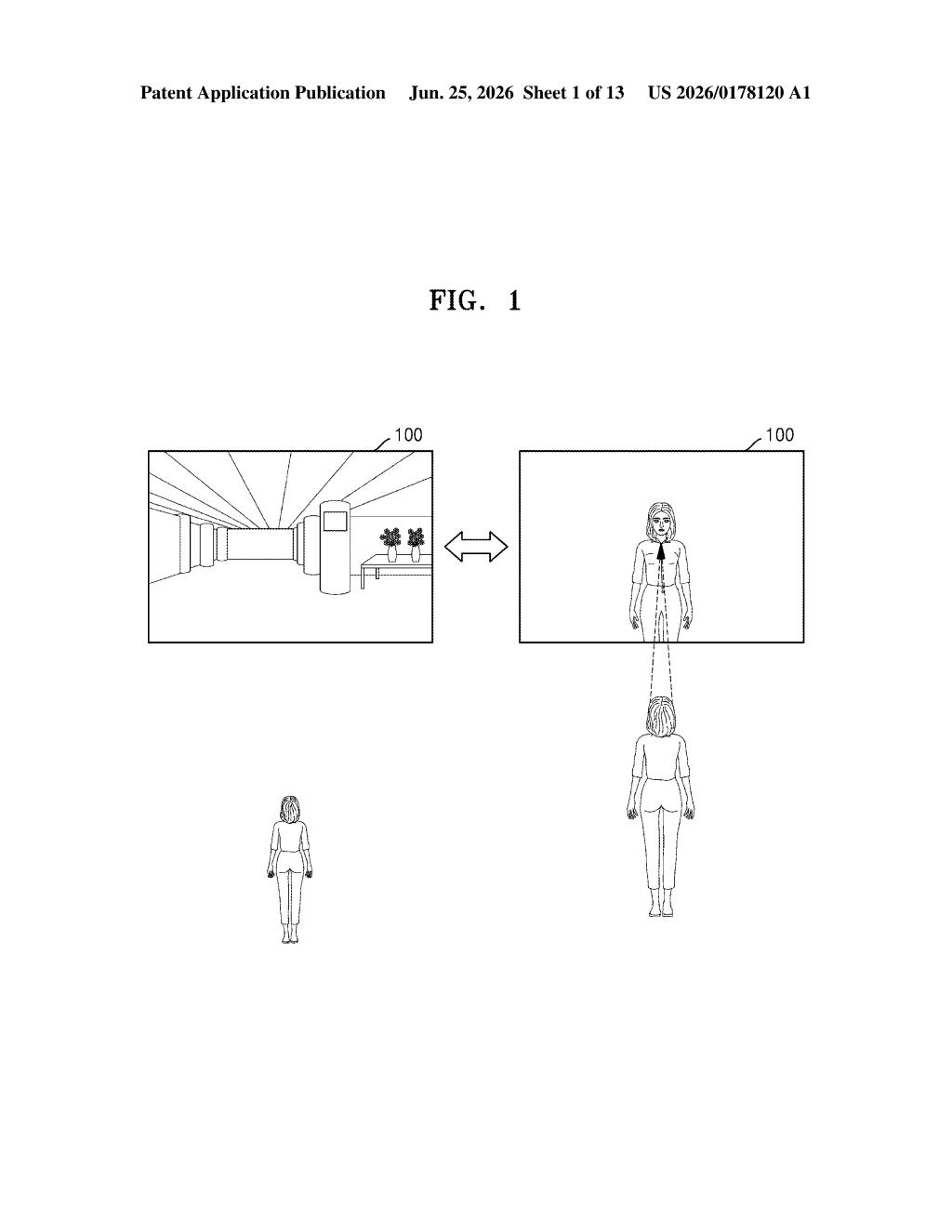
What Samsung's gaze-tracking mirror panel actually does
Imagine walking past a panel on your wall. When you glance at it to check your hair, it turns into a mirror. When you sit down on the couch and look toward it to watch something, it switches back to a screen. That's the core idea here: a single surface that reads both your location in the room and where your eyes are aimed, then chooses the right mode automatically.
Samsung's patent describes a panel that can operate as either a mirror or a conventional display, depending on what the camera picks up about your position and your gaze direction. The camera captures an image of you, the device figures out where you are and what you're looking at, and the panel responds.
This is aimed at removing the awkward step of manually toggling between mirror and TV modes, which is already a feature on some Samsung products. The goal is to make that switch happen without you touching anything at all.
How the camera reads position and gaze to flip the panel
The patent describes a display panel that has at least one zone capable of operating as either a reflective mirror surface or a standard display screen. A built-in camera continuously captures images of whoever is in front of the device.
From that camera feed, the processor extracts two pieces of information:
- Position information: where the user is physically located relative to the panel
- Gaze direction: which way the user's eyes are pointed, inferred from their facial image
The system then uses both signals together to decide whether that partial area of the panel should act as a mirror or a display. So if you step close and face the panel directly (the posture of someone checking their reflection), it renders as a mirror. If your gaze suggests you're trying to watch content rather than check your appearance, it renders as a screen.
The claim is intentionally broad: it covers the panel switching the whole surface or just a portion of it, which hints at split-screen scenarios where part of the panel mirrors and part displays content simultaneously.
What this means for smart mirrors and Samsung's home displays
Samsung already sells the The Frame and a line of mirror TVs that can toggle between display and reflective modes. This patent would let that switch happen automatically, driven by where you are and what you're looking at, instead of requiring a voice command or remote press. For bathroom mirrors, bedroom panels, or retail display cases, removing that manual step is genuinely useful.
The broader play here is in ambient display hardware: panels that live in spaces where people both need mirrors and want screens, like dressing rooms, hotel rooms, or gyms. If Samsung can make the mode switch feel invisible, that category of product becomes a lot more practical for everyday use.
This is a focused, plausible improvement to a product category Samsung already sells. The gaze-detection angle is the interesting part: position alone would not be enough to reliably tell a mirror-check from someone watching TV from across the room, so combining both signals is the right call. It's not a flashy filing, but it's the kind of thing that makes a real product category feel finished rather than half-baked.
There are more where this came from
We read every patent application Big Tech publishes and send you the ones worth knowing. Plain English, free, every week.
Want this weekly breakdown for a company we don't cover? Patentlyze Pro →