
Adobe Patents an AI That Writes Text to Fit Any Box Exactly
Anyone who has ever pasted AI-generated copy into a design layout knows the pain: the text is always too long, too short, or weirdly formatted. Adobe's new patent tackles that frustration head-on.
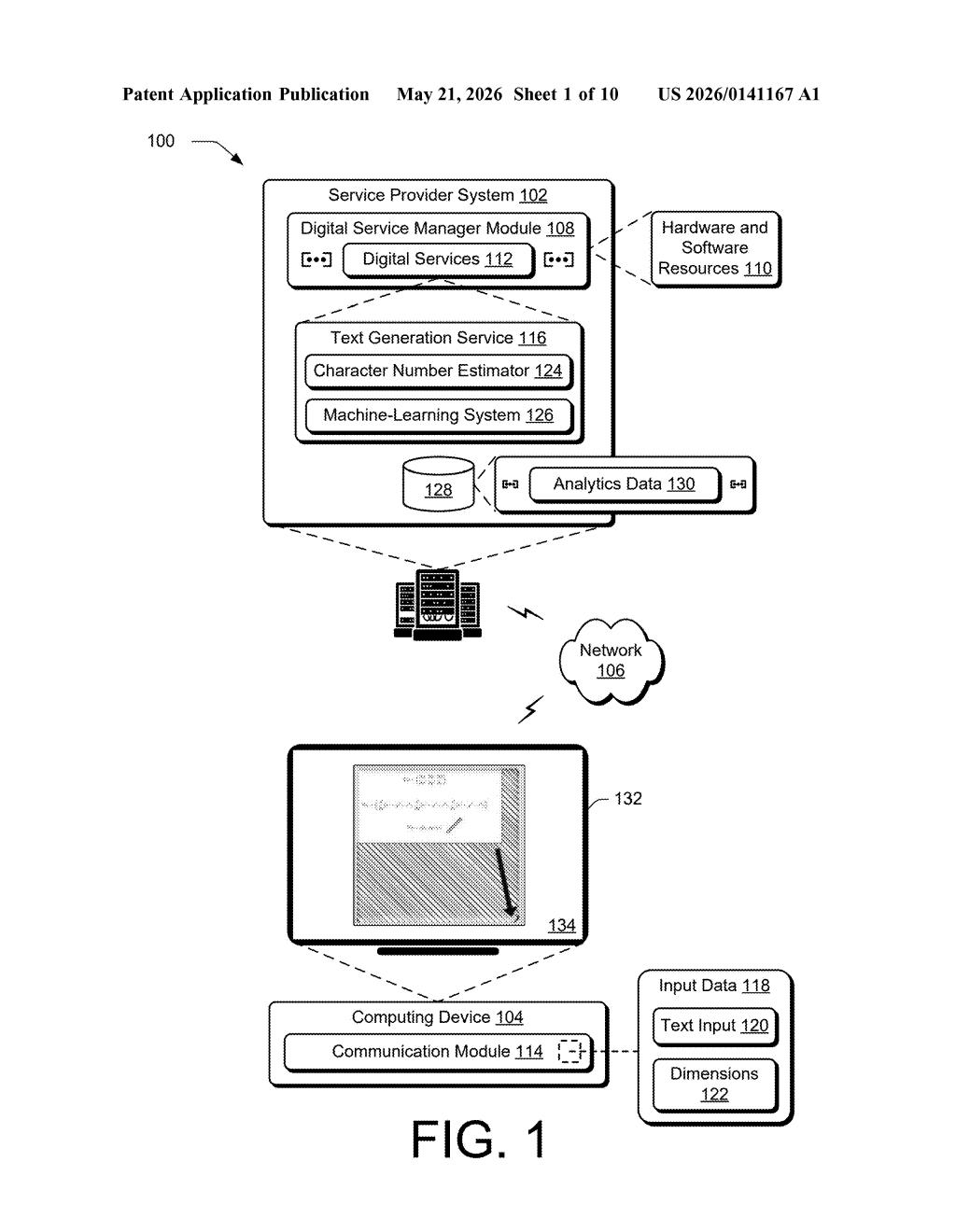
What Adobe's box-aware text generation actually does
Imagine you're dropping placeholder text into a brochure layout in InDesign. You've got a text box that's exactly 240 pixels wide and 80 pixels tall. You type a rough idea — "something about summer savings" — and the AI spits back three sentences that happen to overflow the box. You edit, trim, repeat. It's tedious.
Adobe's patent describes a system that skips that loop entirely. You give it two things: a short hint about what you want the text to say, and the dimensions of the text box itself. The AI then generates a response whose character length is calculated to actually fit inside that box — no overflowing, no awkward white space.
The system builds a prompt for a machine-learning model that bakes in both the content intent and the spatial constraints. The result lands directly inside your text box, ready to use or refine. It's a small idea with a genuinely practical payoff for anyone working in document or layout design.
How the ML model sizes text to match box dimensions
The patent describes a text generation service that operates in two steps. First, it accepts a combined input: a text input (your rough description of what the copy should say) and the dimensions of a target text box (width, height, or both). These come in through a standard UI — think a panel inside a design application.
From those two inputs, the service constructs a prompt for a machine-learning model. The prompt encodes not just the content direction, but also a character length target derived from the box dimensions. The ML model then generates a text response constrained to that character length — so what comes out is designed to fill the box appropriately rather than spill over or leave it half-empty.
The generated text is then rendered directly inside the text box in the user interface. The patent's claims are fairly broad — they cover the method, a system implementing it, and a non-transitory storage medium — but the core mechanic is the dimension-to-character-length translation step:
- User provides content intent (text input) + box size (dimensions)
- Service constructs a spatially-aware prompt
- ML model outputs text calibrated to fit the target box
- Result is displayed in-place in the UI
The patent doesn't specify which ML model is used, leaving the architecture flexible.
What this means for designers using Adobe's layout tools
For designers, copywriters, and anyone building templated documents, the constant mismatch between AI-generated text and fixed layout containers is a real friction point. A tool that generates fit-to-box copy natively could meaningfully speed up workflows in products like InDesign, Adobe Express, or any template-based editor. It also hints at a tighter integration between Adobe's generative AI layer (Firefly) and its layout tools.
The broader implication is about spatially-aware generation — the idea that content AI shouldn't just produce text, but produce text that understands its physical context. If this ships, it could reduce the back-and-forth between copywriters and designers significantly. For users of Adobe's creative suite, it's a practical quality-of-life improvement rather than a flashy feature.
This is a focused, practical patent — not a moonshot. The core idea (tell the AI how big the box is, get text that fits) is obvious in hindsight, which is often the sign of a useful idea. Adobe is in a strong position to ship this given its ownership of both the layout tools and the Firefly generative AI stack, and it solves a real daily annoyance for designers.
Get our take in your Top Stories
Liked this breakdown? Add Patentlyze as a preferred source on Google, and our plain-English take shows up more often in your Top Stories the next time Adobe patent news breaks.
There are more where this came from
We read every patent application Big Tech publishes and send you the ones worth knowing. Plain English, free, every week.
Want this weekly breakdown for a company we don't cover? Patentlyze Pro →