
Nvidia Patent Uses AI to Fill Rendering Gaps in Graphics Processing
What if your GPU only had to draw part of every frame, and an AI filled in the rest? That's exactly what Nvidia is patenting, and it's a direct bet on AI-assisted rendering becoming standard inside games.
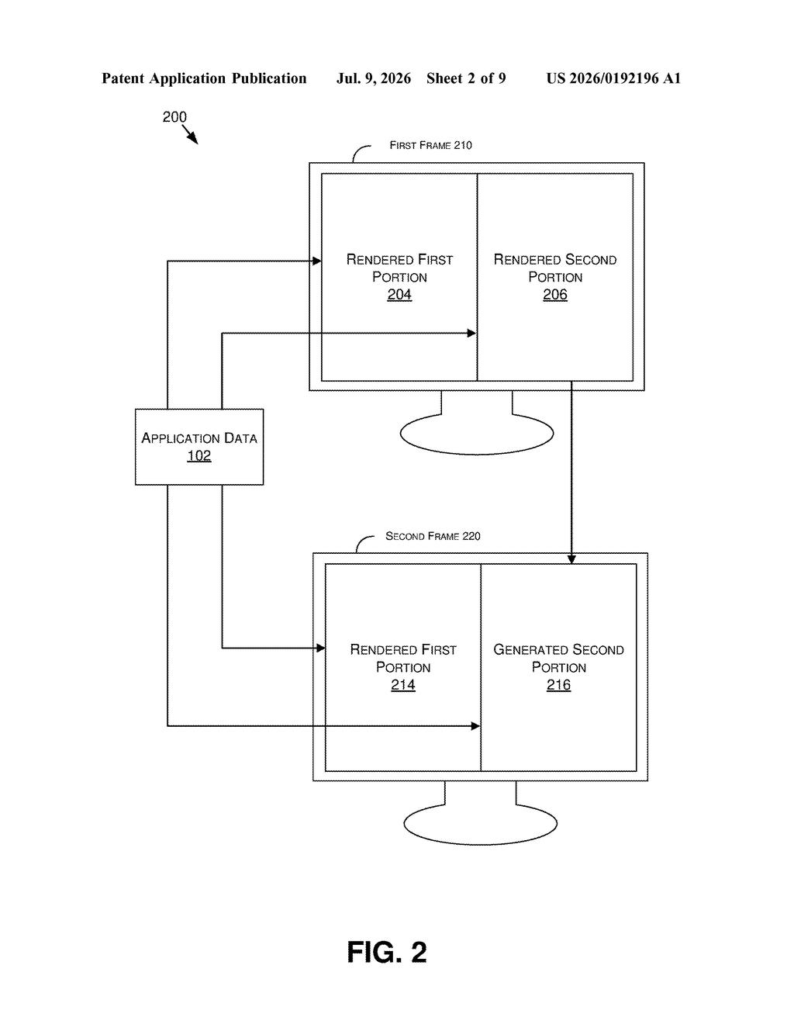
How Nvidia's frame-filling AI cuts rendering work
Imagine a painter who only finishes the foreground of a canvas and asks an assistant to paint everything else from memory. Nvidia's idea works similarly: instead of your graphics card fully drawing every single frame of a game or interactive app, it only fully renders some parts of each frame, then hands off the rest to an AI model that generates what should be there.
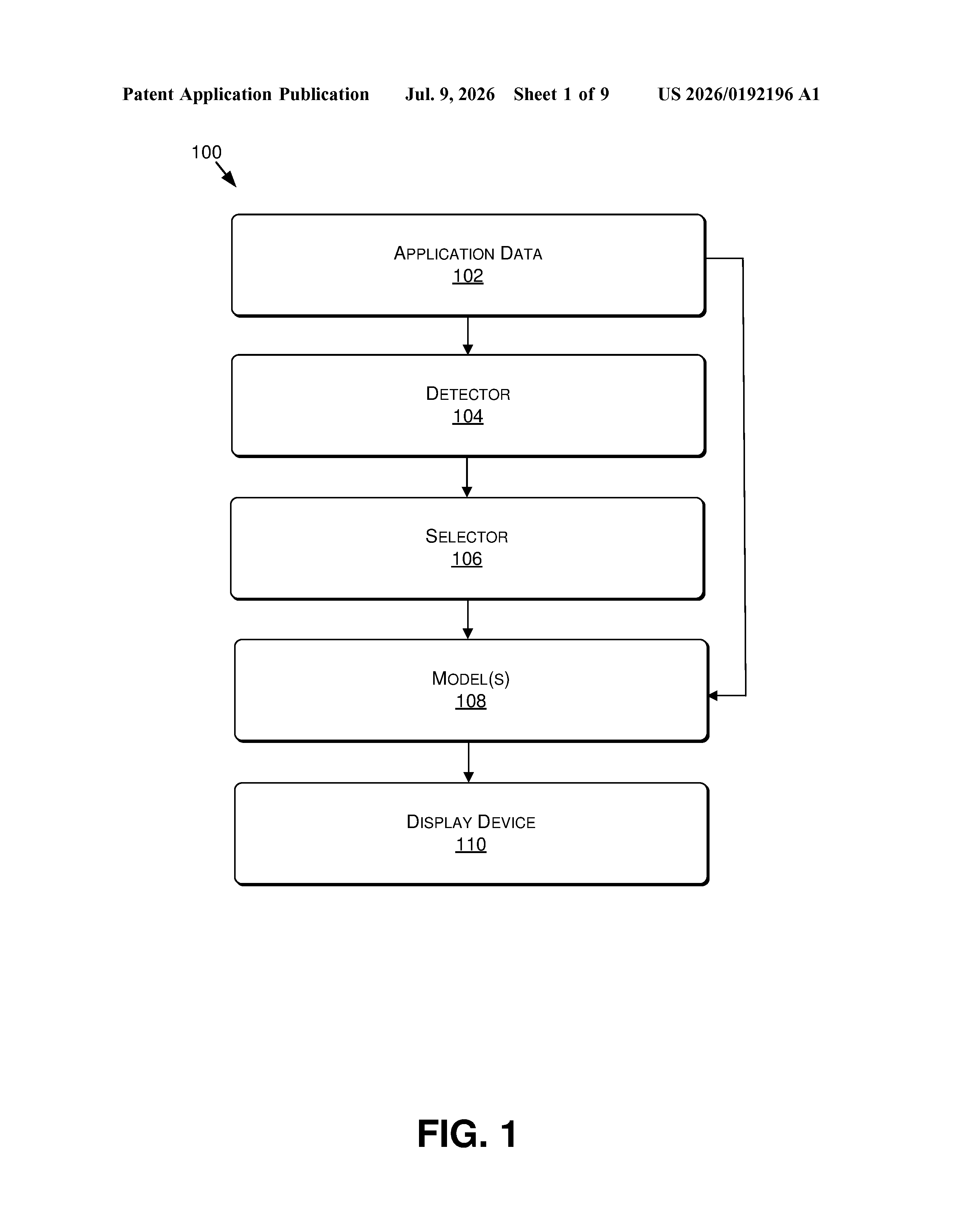
The system uses information about the app (what's moving, what's important) to decide which regions actually need a full render pass and which can be predicted and filled in by the AI. The idea is that many parts of a scene don't change much between frames, so generating them with a neural network is much cheaper than drawing them from scratch.
The end result appears on your display like any normal sequence of frames. You wouldn't see a difference, but your GPU would be doing a fraction of the traditional work for those generated sections.
How the system splits render and generate duties per frame
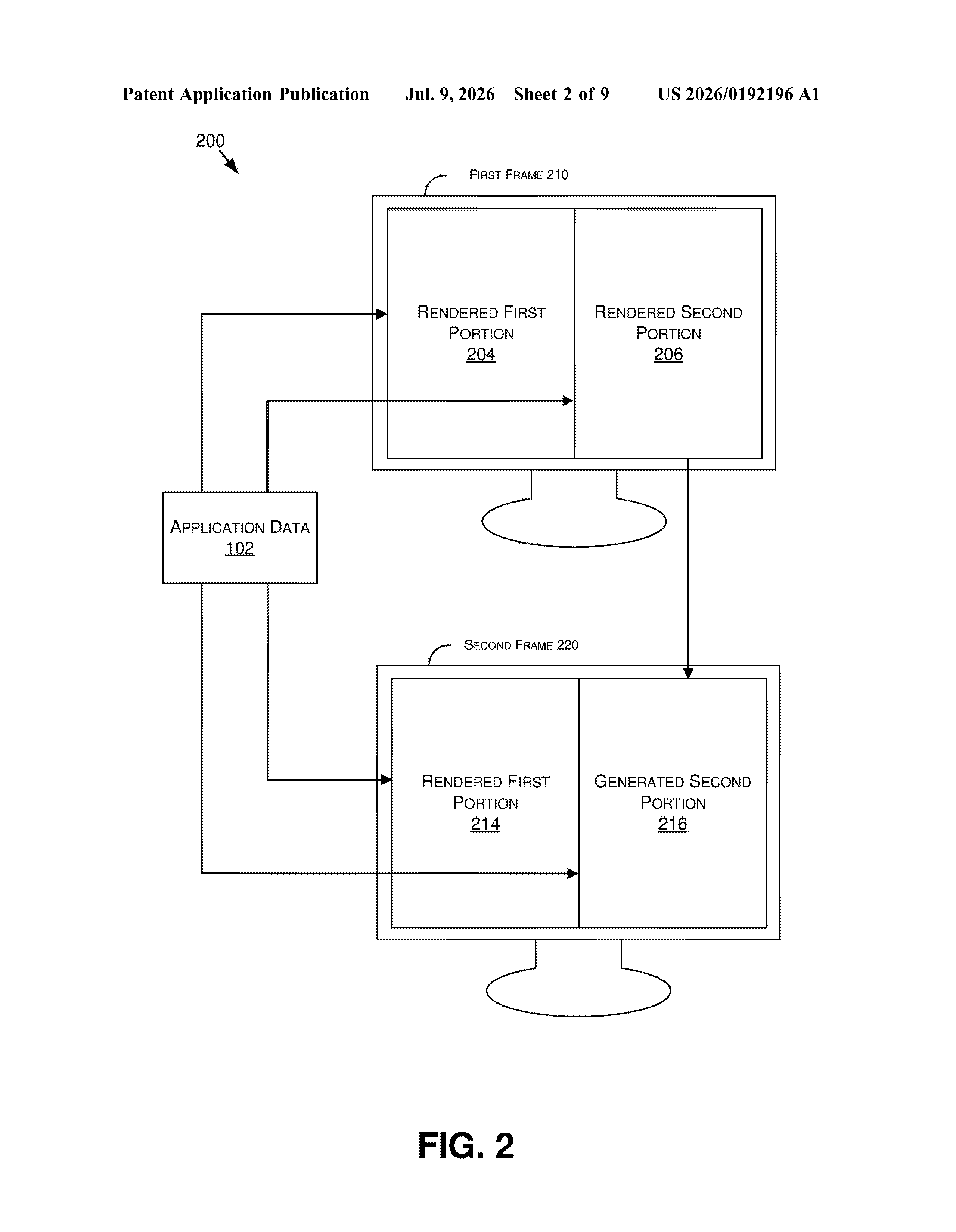
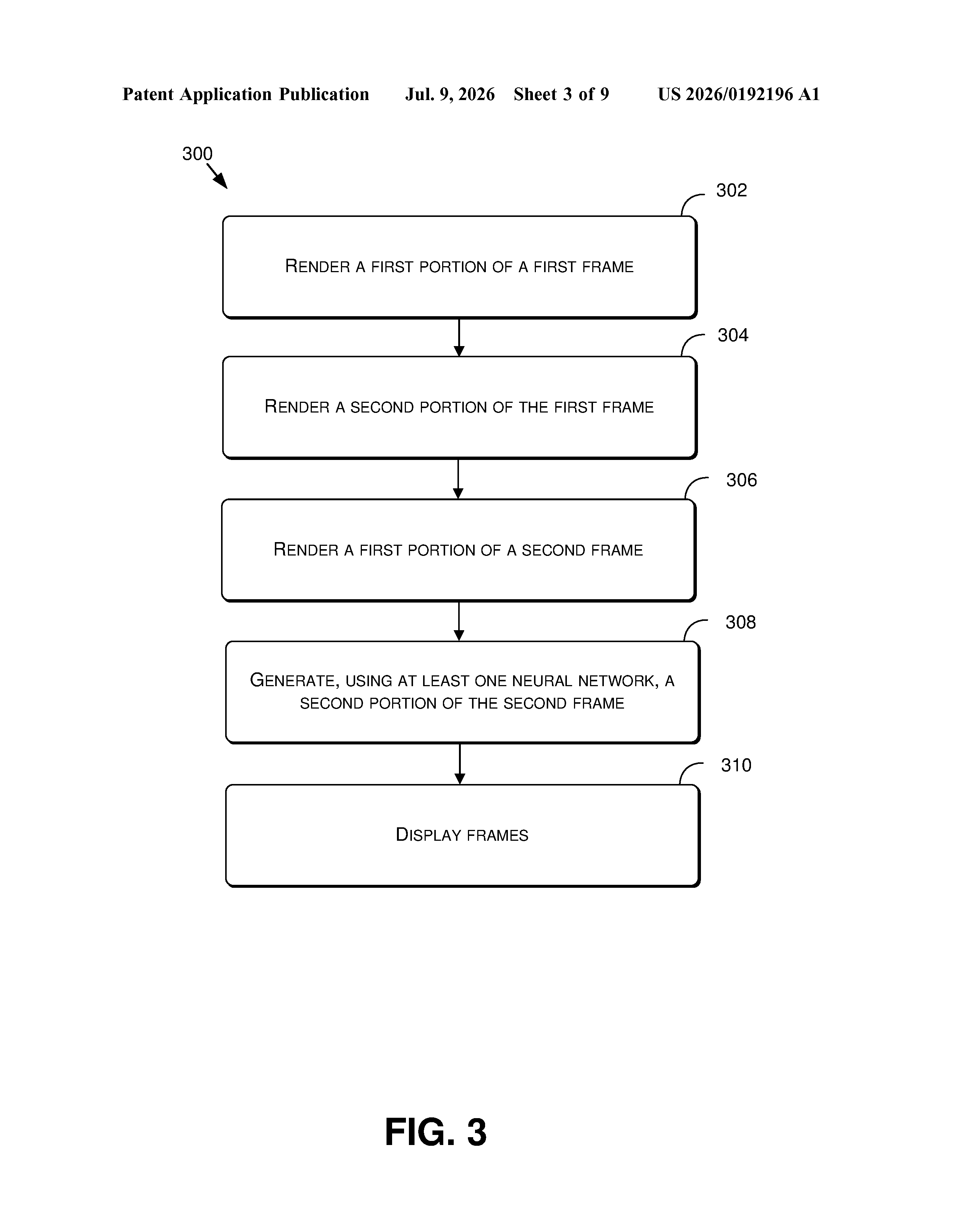
The patent describes a processor pipeline that handles two types of work for each frame in a sequence:
- Rendered portions: regions of the frame fully drawn by traditional GPU rasterization or ray tracing, selected based on data from the application and a detector (likely a system that tracks motion, scene changes, or user attention).
- Generated portions: regions filled in by a machine learning model using information from the app and from the previously rendered frame, rather than being computed from scratch.
The key mechanism is interpolation (using known data points to estimate what goes in between). Rather than interpolating purely in time (like frame generation in DLSS 3), this approach can interpolate in space across regions within a single frame, filling in areas the GPU skipped.
The system selects which portions to render and which to generate on a per-frame basis, meaning the split can shift dynamically based on what's happening in the scene. A frame with a lot of fast motion in one corner might get a full render there, while a mostly static background region gets generated. All of this feeds into a display pipeline that presents the completed frames normally.
What this means for high-frame-rate gaming and GPUs
This filing is essentially Nvidia extending the logic of DLSS (its AI upscaling technology) from the time domain into the spatial domain. DLSS Frame Generation already uses AI to create whole extra frames between rendered ones; this goes further by letting AI fill in regions within a single frame that the GPU never touched. For you as a player, the goal would be higher frame rates or lower GPU power consumption without a visible quality drop.
For Nvidia's hardware roadmap, this matters because it creates a tighter dependency on dedicated AI accelerator cores (like Tensor Cores) inside its GPUs. If games are designed to offload spatial regions to AI, GPUs without those cores become second-class citizens, which is a strong commercial incentive to push the ecosystem toward Nvidia's own silicon.
This is a meaningful extension of what Nvidia has already shipped with DLSS Frame Generation. The spatial-region angle is genuinely new territory, and the per-frame dynamic selection mechanism is clever. It's also exactly the kind of patent that, if it ships, could make non-Nvidia GPUs feel noticeably behind in a generation or two.
Get our take in your Top Stories
Liked this breakdown? Add Patentlyze as a preferred source on Google, and our plain-English take shows up more often in your Top Stories the next time Nvidia patent news breaks.
There are more where this came from
We read every patent application Big Tech publishes and send you the ones worth knowing. Plain English, free, every week.
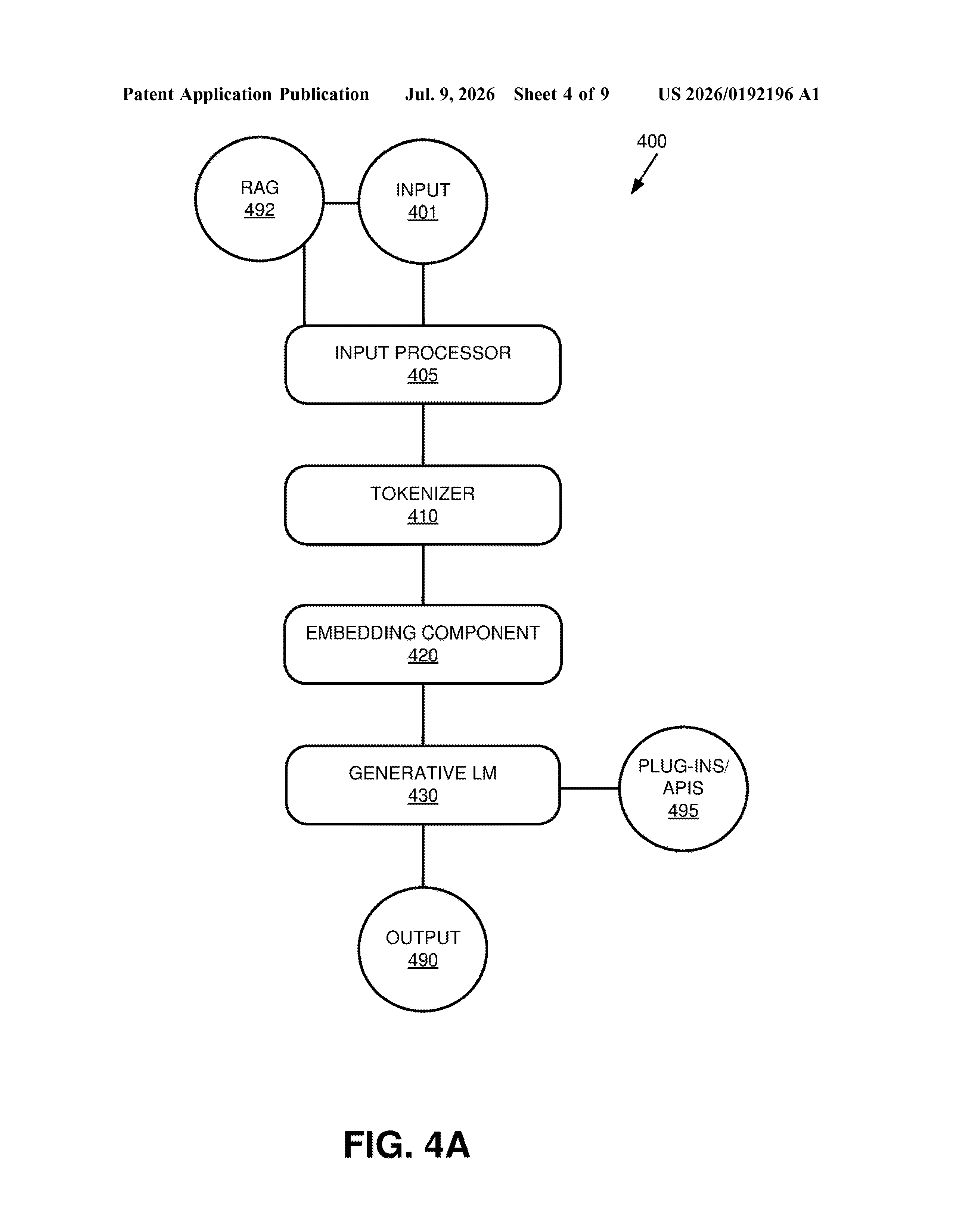
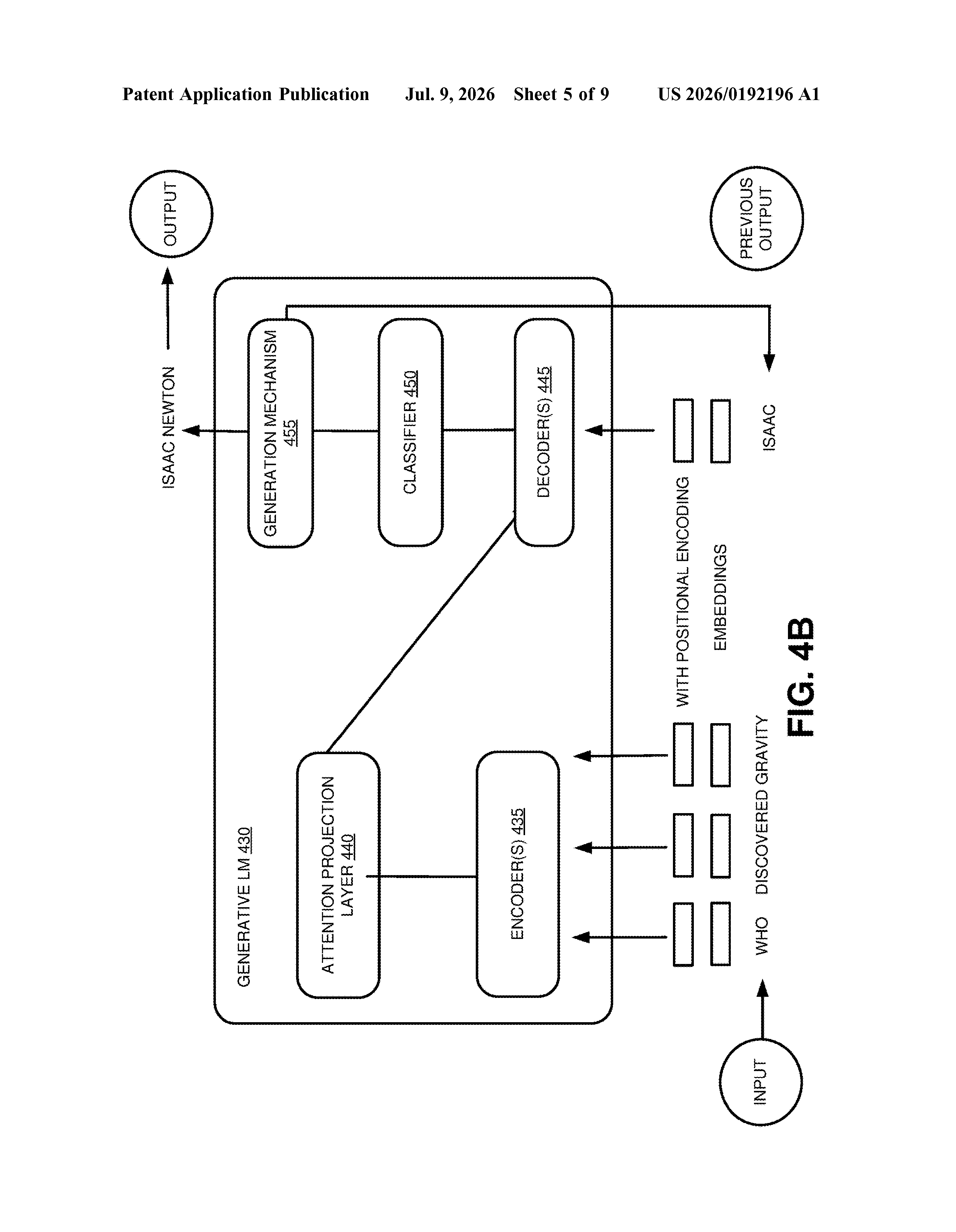
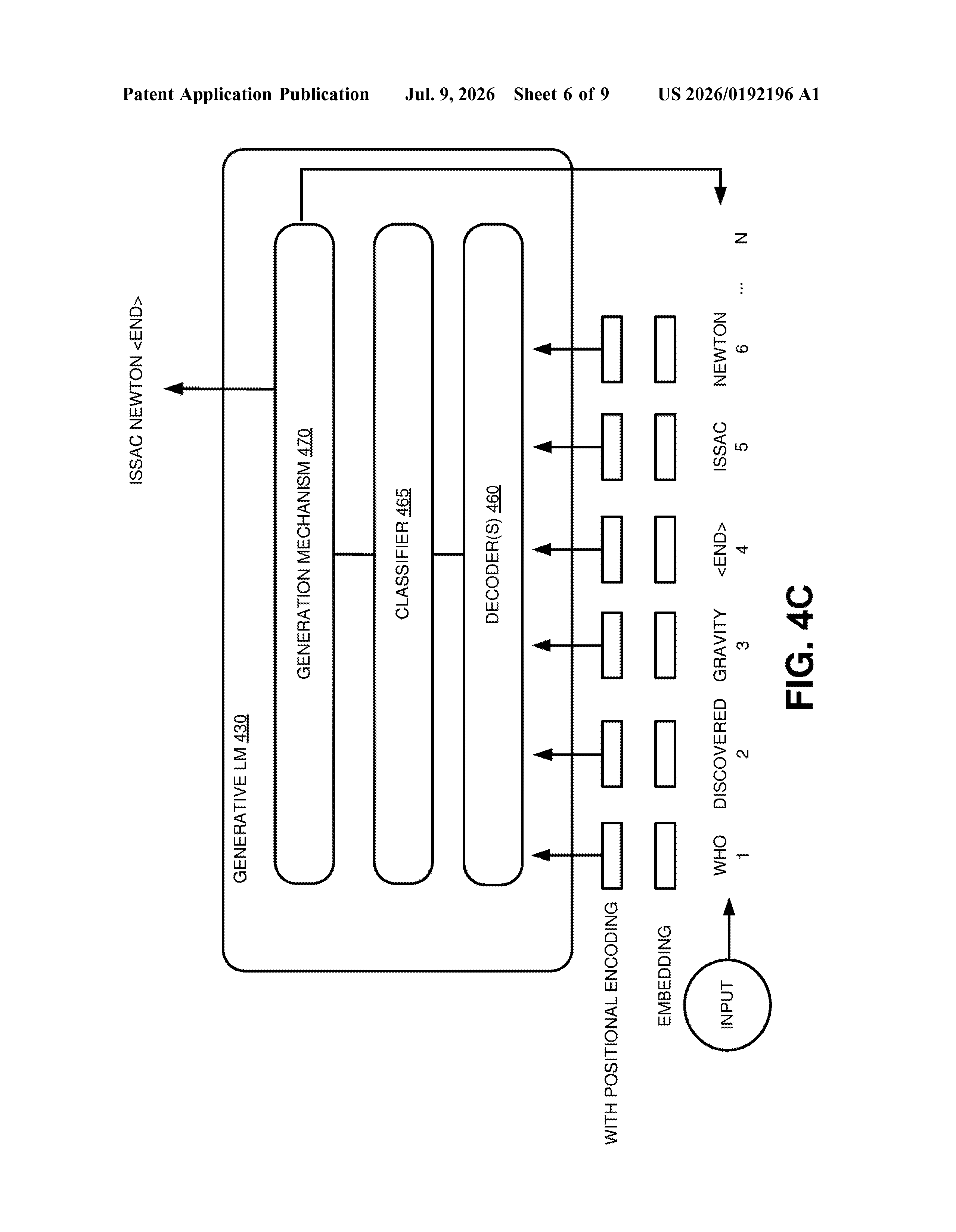
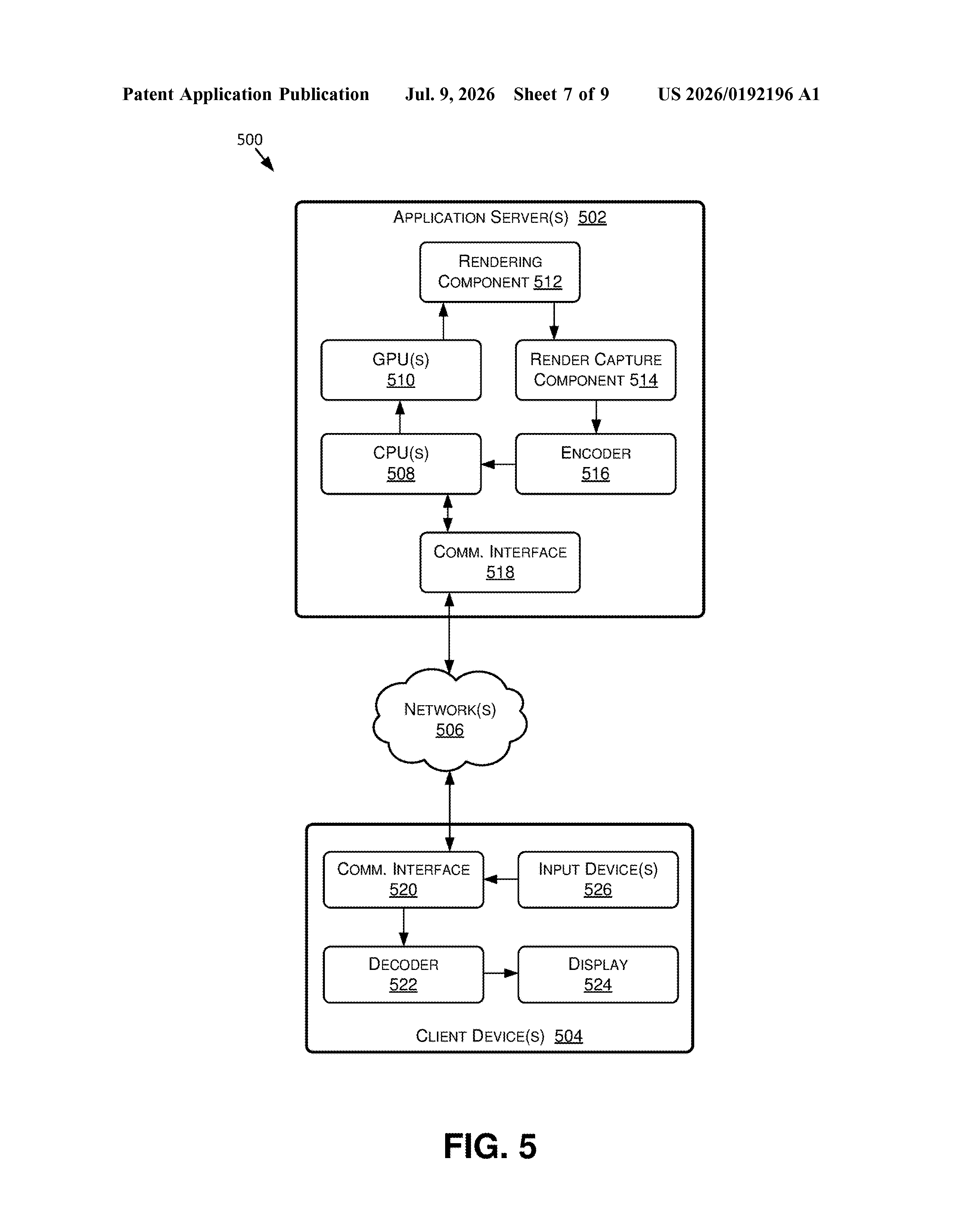
The drawings
9 drawing sheets from US 2026/0192196 A1 · click any drawing to enlarge
Want this weekly breakdown for a company we don't cover? Patentlyze Pro →