
Samsung Patents a Two-Gesture System for Taking Screenshots Inside Virtual Worlds
Taking a screenshot on your phone is muscle memory — two buttons, done. But how do you capture something inside a virtual world where there are no buttons? Samsung has a patent answer: two hand gestures.
What Samsung's virtual-space screenshot system actually does
Imagine you're wearing a headset and exploring a virtual room — maybe a showroom, a game, or a 3D workspace. You spot something you want to save. On a phone you'd hit a button, but in a virtual environment your hands are the only tool you have.
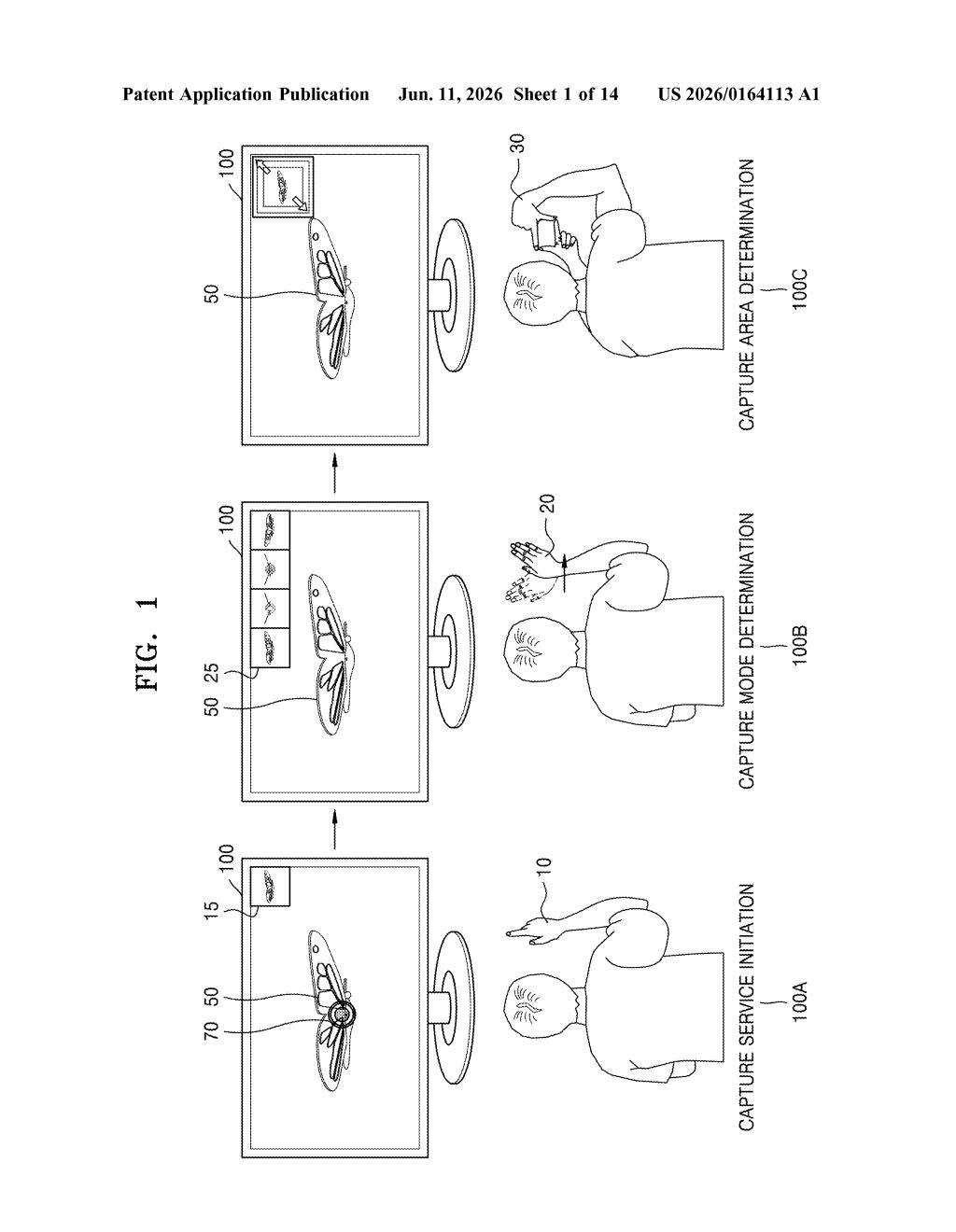
Samsung's patent describes a system where you use two separate hand gestures to do what a screenshot button normally does. The first gesture tells the device "I want to capture something" and picks the object you're looking at. The second gesture lets you choose how to capture it — think of it like picking between "save just this object" or "save the whole scene."
The result is a captured image generated from the virtual space, tailored to whatever mode you selected. It's essentially a screenshot system designed from the ground up for hands-free, controller-free virtual environments — the kind of experience Samsung has been building toward with its mixed-reality hardware.
How the two gestures pick an object and a capture mode
The patent describes an electronic device — most likely a headset or glasses-style display — that shows a virtual space to the user and responds to hand gestures to capture images from within it.
The system works in two steps:
- First gesture (capture intent + object selection): The user performs a gesture that signals they want to capture something. The device interprets this to identify a specific object within the virtual scene as the capture target.
- Second gesture (mode selection): A follow-up gesture lets the user specify the capture mode — essentially, the format or scope of what gets saved. This could mean capturing just the isolated object, a wider scene view, or some other variant the system supports.
Once both inputs are registered, the device generates a captured image of the selected object according to the chosen mode. The patent doesn't specify exactly what "capture modes" are on offer, but the two-step architecture suggests the system is designed to be flexible — different modes for different use cases, all triggered without touching a physical button.
The underlying logic ties into how modern XR (extended reality) devices handle input: since there's no keyboard or trackpad, gesture recognition replaces traditional UI controls entirely.
What this means for Samsung's AR and mixed-reality ambitions
For anyone using a mixed-reality headset, this kind of gesture-based screenshot system solves a genuinely awkward problem. Right now, capturing content inside a virtual environment often means fumbling for a physical button or digging through a menu — which breaks immersion immediately. A two-gesture shortcut keeps you in the experience.
This patent also signals where Samsung is investing in its XR software layer. The company has been building out its Galaxy XR ecosystem, and patents like this fill in the everyday usability details that make or break a headset as a daily-use device. Screenshots are mundane — but they're also one of the most-used features on any screen-based device, and getting them right in 3D environments is a real design challenge.
This isn't a flashy AI patent — it's quiet interaction design work, and that's exactly why it's worth noticing. The companies that win the headset wars won't just win on display resolution or processing power; they'll win on whether everyday tasks like saving an image feel natural. Samsung clearly knows that, and this patent shows they're thinking it through systematically.
There are more where this came from
We read every patent application Big Tech publishes and send you the ones worth knowing. Plain English, free, every week.
Want this weekly breakdown for a company we don't cover? Patentlyze Pro →