
Google Patents an AI System That Auto-Optimizes Billions of Lines of Code
Google's internal codebase is famously one of the largest in the world. Now Google has patented a system that could send a generative AI through that codebase — automatically finding and rewriting inefficient code at a scale no human team could match.
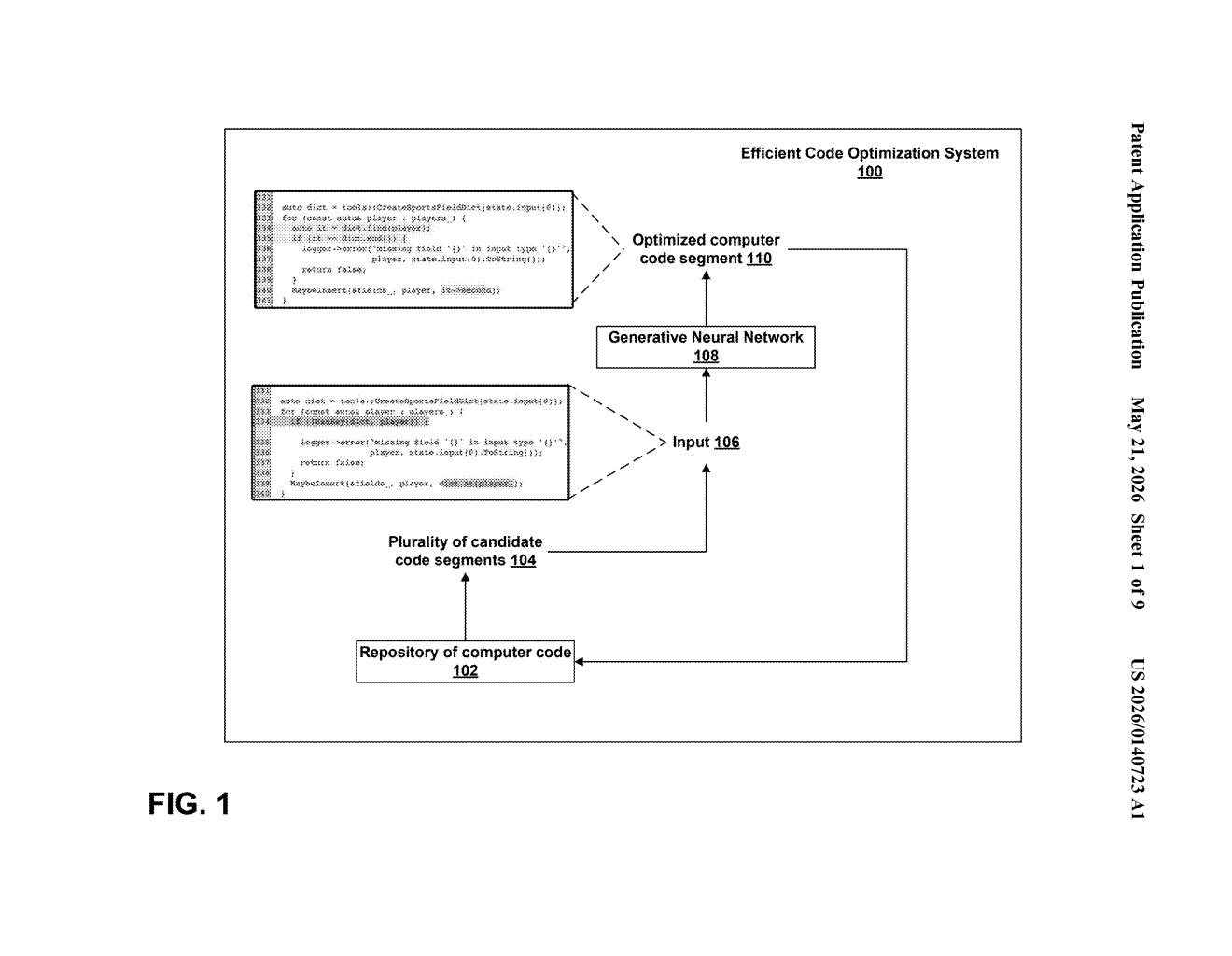
What Google's AI code optimizer actually does
Imagine hiring an intern who reads every line of code your company has ever written, spots the slow or inefficient parts, rewrites them more cleanly, and submits the changes — all without being asked. That's the rough idea here.
Google's patent describes a system that crawls a code repository (think: a giant library storing all the programs a company runs), identifies snippets that could be improved, and feeds each one to a generative AI model. The model produces a rewritten version, and that new version gets dropped back into the repository to run instead of the old one.
The key ambition isn't just automating a code review — it's doing this at massive scale. Google explicitly calls out repositories with "billions or more lines of code." That's not a startup's GitHub repo; that's the kind of infrastructure that powers Search, YouTube, and Cloud simultaneously.
How the neural network scans, rewrites, and replaces code
The patent describes a pipeline with three core steps: search, generate, and replace.
- Search: The system scans a repository to identify candidate code segments — pieces of code flagged as potential optimization targets. The patent doesn't rigidly define what makes something a candidate, which suggests the search could use profiling data, static analysis, or a separate classifier.
- Generate: Each candidate snippet is fed as input to a generative neural network (the kind of large language model architecture powering tools like Gemini or Copilot). The model outputs an "optimized" version — potentially faster, more memory-efficient, or structurally cleaner.
- Replace: The rewritten code segment is added back into the repository, where it will actually execute on the underlying compute infrastructure.
The claim is deliberately broad — it covers any generative neural network processing code as input. What makes this more than a fancy autocomplete is the scale framing: the whole point is that the system can run this loop across billions of lines without human intervention at each step. Think of it like a continuous background process, not a one-time refactor.
What this means for large-scale software infrastructure
At Google's scale, even a 1% efficiency gain across its infrastructure translates to enormous savings in compute, energy, and latency. A system that can autonomously identify and rewrite underperforming code — across a codebase that no individual team fully understands — would be a meaningful internal tool, not just a demo.
For the broader software industry, this is a signal that AI-assisted code optimization is moving from "developer productivity feature" to "automated infrastructure management." If Google ships something like this internally, it raises the obvious question of whether a version eventually lands in Google Cloud or as a Gemini Code Assist enterprise feature — letting other companies run the same loop on their codebases.
This is a genuinely interesting filing because it targets Google's own infrastructure problem — not a consumer product. The scale claim (billions of lines) signals this is being built for internal use first, which means Google may already be running experiments on its own codebase. Whether the AI rewrites are actually correct and safe at that scale is the hard unsolved problem this patent quietly sidesteps.
Get our take in your Top Stories
Liked this breakdown? Add Patentlyze as a preferred source on Google, and our plain-English take shows up more often in your Top Stories the next time Google patent news breaks.
There are more where this came from
We read every patent application Big Tech publishes and send you the ones worth knowing. Plain English, free, every week.
Want this weekly breakdown for a company we don't cover? Patentlyze Pro →