
Google Patents Automated SSD Recovery System for Cloud VM Storage
Losing your data when a cloud server restarts is one of the quiet frustrations of running software in the cloud. Google is filing patents to make that recovery automatic and configurable instead of manual and painful.
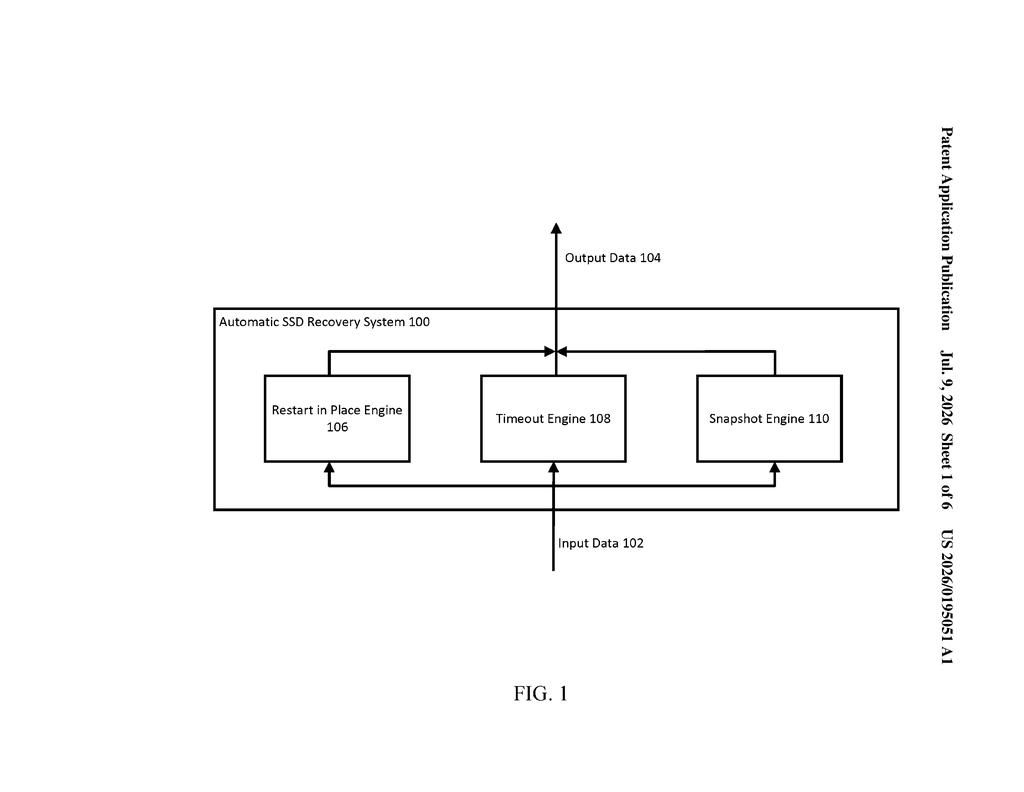
What Google's automated SSD recovery actually does
Imagine you're running a business application on a rented cloud computer. The server it lives on hiccups, and when it reboots, the local storage tied to your application is gone or disconnected. Right now, recovering from that situation often requires manual steps and technical know-how.
Google's patent describes a system that keeps track of which virtual computer (your rented slice of a server) belongs to which physical storage drive. When something goes wrong, the system can automatically restart your virtual machine on the same physical machine, making sure your data is reconnected exactly where it was.
The patent also describes extra controls: configurable time limits for how long a recovery attempt can run, automatic backups triggered the moment a problem is detected, and archiving options so your data isn't just left dangling. It's essentially a self-healing layer for cloud storage that removes the need for a human to step in every time.
How Google tracks VMs and their local drives to recover them
The core of the patent is a metadata-tracking system. When a virtual machine (a software-based computer running on shared hardware) is created, the system stores two linked identifiers: one for the virtual machine itself, and one for the SSD storage (the fast local drive) attached to the physical server hosting it.
When a recovery event occurs, the system reads those identifiers and confirms they still match. If they do, it restarts the virtual machine directly on the same physical machine, a mode the patent calls restart-in-place. This avoids the common problem where a VM gets moved to a different physical server and loses access to its local drive.
Beyond the core restart mechanism, the patent covers several configurable options:
- Configurable time-outs: operators can set a limit on how long a recovery attempt runs before the system gives up and tries something else
- Automatic snapshot triggering: the system can take a point-in-time copy of the drive the moment a failure is detected, preserving data before anything else goes wrong
- Automatic archiving: data can be moved to longer-term storage automatically during recovery
- Stop/start compatibility: the same recovery logic extends to VMs that are deliberately stopped and restarted, not just ones that crash
The approach keeps the link between a virtual machine and its physical storage alive through failures, which is the root problem this patent is designed to solve.
What this means for businesses running cloud workloads
Cloud providers typically offer two kinds of storage: persistent disks that survive a server reboot, and local SSDs that are faster but are tied to one physical machine. Local SSDs are popular for high-performance workloads like databases and analytics, but they come with a risk: if the server is moved or replaced, the data on that local drive is gone. That trade-off has always been a frustration for engineers who need speed but can't afford data loss.
For businesses running Google Cloud, this patent points toward a future where local SSD performance no longer comes with such a brutal reliability trade-off. Automatic recovery, configurable time-outs, and snapshot triggers would make local SSDs a more viable choice for production workloads that previously had to settle for slower persistent storage.
This is unglamorous infrastructure work, but it matters to anyone who has ever lost data or scrambled through a manual recovery after a cloud server failure. Google is essentially building a smarter safety net around one of cloud computing's oldest pain points. It won't make headlines, but cloud engineers will notice.
Get our take in your Top Stories
Liked this breakdown? Add Patentlyze as a preferred source on Google, and our plain-English take shows up more often in your Top Stories the next time Google patent news breaks.
There are more where this came from
We read every patent application Big Tech publishes and send you the ones worth knowing. Plain English, free, every week.
Want this weekly breakdown for a company we don't cover? Patentlyze Pro →