
Google Patents a System That Acts on Your Messages the Moment You Hit Send
Google is patenting a system that doesn't just suggest what to say in a message — it also figures out what you should *do* next and does it for you automatically, the instant you tap Send.
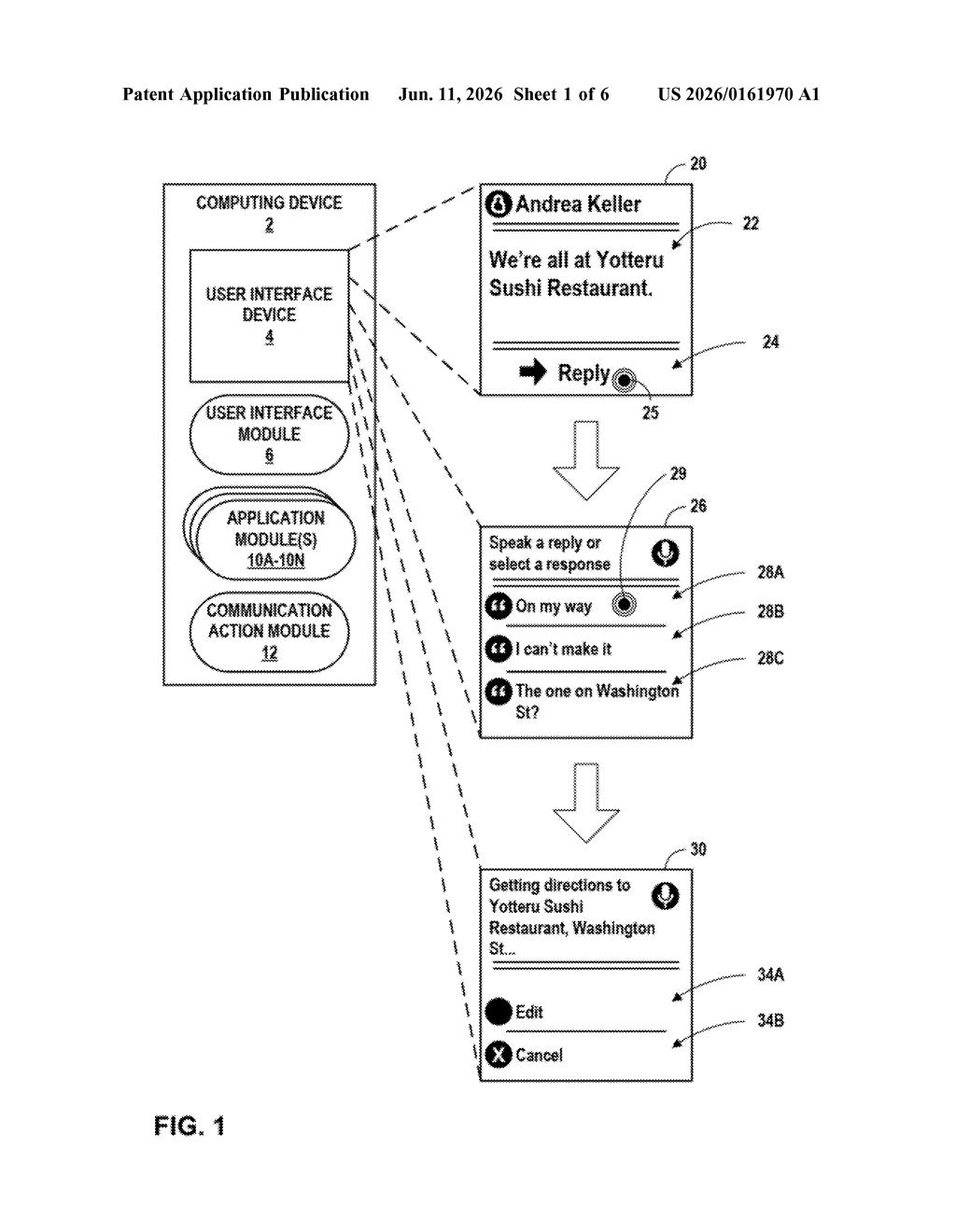
What Google's auto-action messaging system actually does
Imagine you get a text from a friend asking if you want to meet for coffee at 3pm. Your phone suggests a quick reply: "Sure, see you then!" — and the moment you tap it, your calendar automatically blocks off 3pm. No extra steps. That's the core idea here.
Google's patent describes a system where your device doesn't just offer canned replies to incoming messages — it also detects what follow-up action makes sense given the conversation, and runs that action the second you pick a reply. Setting a reminder, opening a map, adding an event to your calendar — the phone reads the context and moves on its own.
Right now, Google already offers "Smart Reply" suggestions in Gmail and Messages. This patent extends that idea by tying the reply you choose to an automatic next step, turning a two-tap workflow into a one-tap one.
How the system links a reply to a follow-up action
The patent describes a method with a clear sequence of steps:
- A device receives an incoming message (email, text, or other communication).
- A response suggestion module — an AI model trained on large text datasets — generates one or more candidate replies.
- The user picks one of those replies and sends it.
- The system then determines an operation that is contextually related to the reply — meaning it infers a logical next action from the content of the message and the reply chosen.
- That operation executes automatically on the device.
The phrase "contextually related operation" is doing a lot of work here. The patent doesn't enumerate every possible action, but the concept covers anything a device could do: creating a calendar event, launching navigation, placing a call, setting an alarm, or opening an app.
The AI module can run on-device or on a remote server (i.e., Google's cloud), which gives Google flexibility in how it deploys this across different hardware tiers. The model is trained on "one or more corpora" — meaning large collections of real-world text — so it can recognize patterns like a time reference in a message implying a scheduling action.
What this means for Google's messaging and AI assistant push
Google has been layering AI into its messaging products for years, from Smart Reply in Gmail to suggested actions in Google Messages. This patent formalizes the next logical step: collapsing the reply-then-act sequence into a single user gesture. For you as a user, it could mean fewer context switches — you pick a reply and your phone has already handled the follow-up.
The broader strategic picture is that Google is treating the reply moment as a trigger point for its assistant ecosystem. Every time someone taps a suggested reply, there's an opportunity to surface a Google service — Maps, Calendar, Tasks, Keep. Whether this ever ships as a distinct feature or quietly folds into Gemini-powered messaging is the real question.
This is a tidy, incremental extension of Smart Reply — not a reinvention of messaging. The core idea is sensible and the user benefit is real (fewer taps to get things done), but the patent itself is fairly narrow engineering work. Its importance lies less in the novelty of the concept and more in what it signals: Google is methodically staking claims around AI-driven in-message actions before competitors do the same at scale.
There are more where this came from
We read every patent application Big Tech publishes and send you the ones worth knowing. Plain English, free, every week.
Want this weekly breakdown for a company we don't cover? Patentlyze Pro →