
Google Patents an Automated Camera Quality Scoring and Correction System
Google has filed a patent for a system that automatically grades individual aspects of a camera image — sharpness, exposure, color balance, and more — converts them into numerical scores, and triggers corrections the moment any score dips below a set threshold.
What Google's camera quality scoring system actually does
Imagine your phone's camera snaps a photo and something is off — the image is a bit too dark, slightly blurry, or the colors look wrong. Usually you'd never know until you opened the photo app. Google's patent describes a system that catches these problems automatically, in real time, before you even see the shot.
The system breaks a photo down into individual quality measurements — things like brightness, focus, or noise levels — and converts each one into a standardized score. If any score falls below a minimum acceptable level, the system doesn't just flag it: it triggers a specific corrective action tied to whatever parameter failed.
Think of it like a quality-control inspector on an assembly line, but for photos. Instead of one human checking the whole product at once, each aspect of the image gets its own dedicated check — and its own automated fix if something goes wrong.
How image parameters become vector scores and trigger fixes
The patent describes a pipeline that starts by capturing an image and extracting a set of image parameter values — discrete, measurable qualities of the photo such as exposure level, sharpness, white balance, or signal-to-noise ratio.
Each parameter value is then transformed into a vector space (a mathematical coordinate system where similar values cluster together, making comparisons more meaningful and consistent across different camera sensors or lighting conditions). Once in vector space, each parameter is converted further into a raw score — a single number that summarizes how well that particular aspect of the image performed.
The scoring logic acts as a gatekeeper:
- If all raw scores meet their respective thresholds, the image passes.
- If any raw score falls short, the system automatically identifies the specific parameter that failed and dispatches a targeted corrective action for that parameter alone.
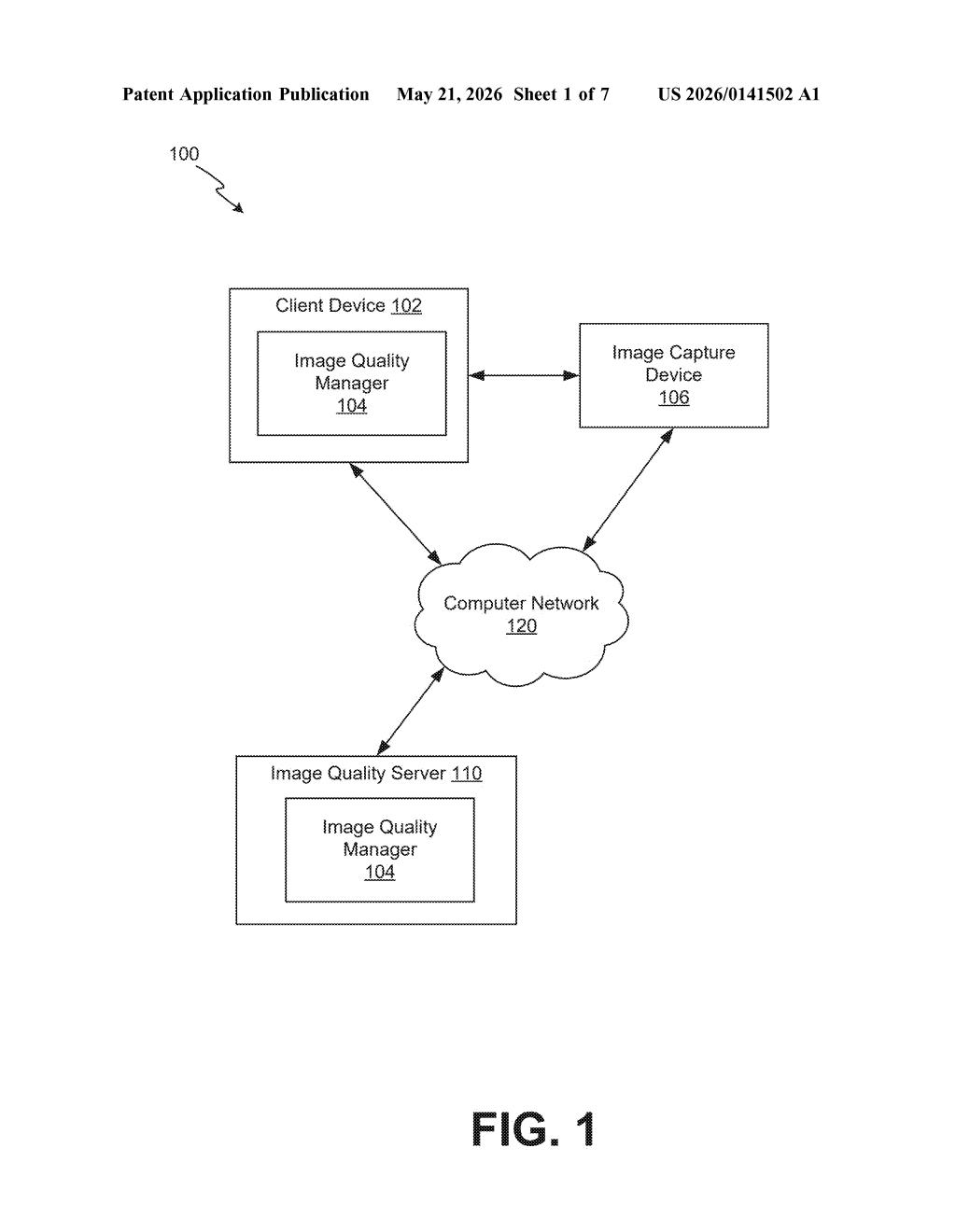
The architecture involves a networked Image Quality Server and an Image Quality Manager, suggesting this processing can happen off-device in the cloud — meaning the correction logic doesn't necessarily have to live on the camera hardware itself.
What this means for Google's camera and cloud pipelines
For Google, this kind of infrastructure matters at scale. When you're processing millions of photos through products like Google Photos, Pixel cameras, or enterprise camera systems, having a parameter-level quality feedback loop rather than a single pass/fail check makes corrections more precise and less likely to over-process a perfectly good image just because one metric was off.
The vector-space conversion step is particularly interesting — it suggests Google wants this system to generalize across different camera hardware, image sensors, and capture conditions without having to retune every threshold from scratch. That's useful whether you're shipping a Pixel phone or running camera quality assurance across a fleet of devices.
This is solid, unglamorous infrastructure work. The vector-space normalization step shows genuine engineering thought — it's the kind of design decision that makes a system work reliably across diverse hardware, not just in a lab. It won't make headlines, but it's exactly the kind of plumbing that separates a camera platform that scales from one that doesn't.
Get our take in your Top Stories
Liked this breakdown? Add Patentlyze as a preferred source on Google, and our plain-English take shows up more often in your Top Stories the next time Google patent news breaks.
There are more where this came from
We read every patent application Big Tech publishes and send you the ones worth knowing. Plain English, free, every week.
Want this weekly breakdown for a company we don't cover? Patentlyze Pro →