
Google Files Patent for Keeping Your Phone's Camera AI Ready Between Shots
Your phone's AI chip can hold the data for only one AI model at a time, so it keeps wiping and reloading it. A new Google patent application tries to keep a whole routine, like a burst of camera shots, loaded and ready.
What Google's phone AI memory patent actually does
Right now, the AI chip in your phone can keep the working data for only one AI model at a time. When your phone needs a different model, the chip wipes that data and loads the new model's. When the first model comes back, it does the whole swap again, which costs time and battery.
Google's patent application goes after that wasted shuffling. Take a camera app: when you shoot a burst of photos, the phone runs a face finder, then a tilt checker, then a blur checker, then a model that picks your best shot. The same four steps run in the same order, over and over.
So the software watches which AI steps you run often and in what order, then loads the whole routine into the chip's fast memory in one go. Next time you shoot a burst, the data is already sitting there, and nothing needs to be wiped or reloaded.
… loads a static random access memory (SRAM) of a hardware accelerator with the compiled models only when the same compiled models-from another, but same, sequence that was previously invoked-are not already present in the SRAM …
Translation: It avoids reloading AI models into memory if they are already sitting there waiting to be used.
How the compiler tags a run of AI models as one
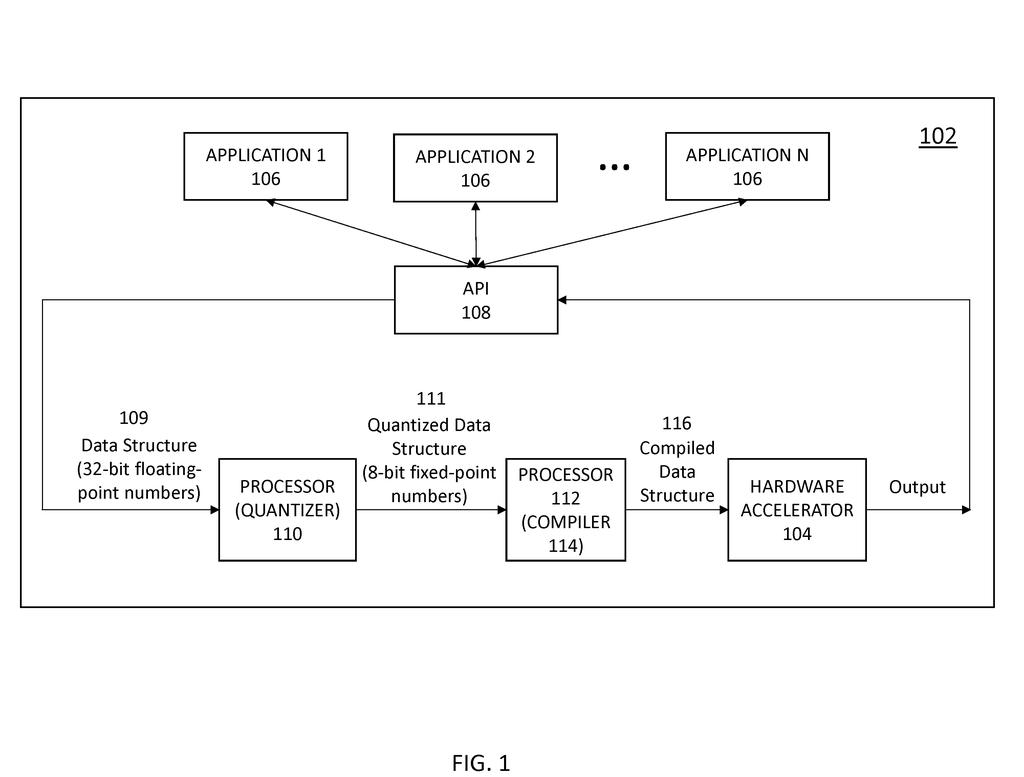
The core job belongs to a compiler (software that translates an AI model into instructions a specific chip can run). It looks back over a set window of time and finds the models the chip has run more than a threshold number of times. One version in the filing uses five. It then works out the order those models usually run in.
Next, it compiles each model in that order and sends the results to the chip's SRAM (a small, very fast memory on the accelerator chip, up to 8 megabytes in the example). All models in one routine share a single hash (a short ID number that works like a fingerprint). When the next routine arrives, the chip compares fingerprints. A match means the data stays put and runs again. A mismatch means the old data is erased and replaced.
If part of a model does not fit in the SRAM, the compiler sends that part to the phone's main memory and writes instructions telling the chip to fetch it when needed. The filing says that is slower than SRAM but still faster than wiping and reloading every time.
The filing also describes some housekeeping:
- Compiling can happen while the chip is busy running other models.
- Models over a preset size (5 megabytes in the example) are skipped so more of them fit.
- The list of frequent models is refreshed at set intervals.
- After a failed compile, the compiler pauses for a preset time (7,500 milliseconds in one example) to avoid a loop of retries.
determining that a portion of a compiled data structure in the respective compiled data structures cannot be allocated in the one or more memories of the hardware accelerator; in response, outputting the compiled data structure for storage in another memory external to the one or more memories …
Translation: If an AI model is too big for the primary chip memory, the overflow is stored in backup storage instead.
Why your camera app could feel faster and sip power
If this works as described, your phone's camera and face-related features could respond faster and use less battery, because the AI chip spends less time shuffling data it already had. The filing uses a camera app on an Android phone as its main example, and it lists face recognition as the first step in a sample routine.
For Google, the appeal is that the savings come from software alone. The compiler decides what stays in fast memory based on how people actually use their apps, so the chip adapts to your habits without new hardware. On a phone, where speed and battery both matter, cutting repeated work is an easy win to want.
Google's 21st filing we've tracked since July in the AI chip wars watchlist, it builds on earlier applications like one offloading memory tasks and one speeding up AI text.
The problem here is real but small in any single moment. Reloading a few megabytes of AI data costs a bit of time and a bit of power. It adds up because phones run these chains of AI steps constantly, every time you shoot a burst of photos, and each wasted reload is a little more waiting and a little less battery.
The fix matches that size well. The phone notices what it already does a lot, keeps those pieces in its fastest memory, and skips the cleanup when nothing changed. It needs no new chip and no new kind of AI.
You will probably never notice it directly. The best outcome is a camera that feels a touch quicker and a battery that lasts slightly longer, and the filing gives no measured numbers to say how much.
Get our take in your Top Stories
Liked this breakdown? Add Patentlyze as a preferred source on Google, and our plain-English take shows up more often in your Top Stories the next time Google patent news breaks.
There are more where this came from
We read every patent application Big Tech publishes and send you the ones worth knowing. Plain English, free, every week.
The drawings
5 drawing sheets from US 2026/0319769 A1 · click any drawing to enlarge


Want this weekly breakdown for a company we don't cover? Patentlyze Pro →
Be the first to weigh in