
Red Hat Patents a System That Cleans Up Bad Data Before an AI Model Gets It Wrong
AI models fail in predictable ways when the data fed to them looks nothing like what they were trained on. Red Hat's new patent describes an automatic layer that detects and fixes that mismatch before the model ever sees the problem data.
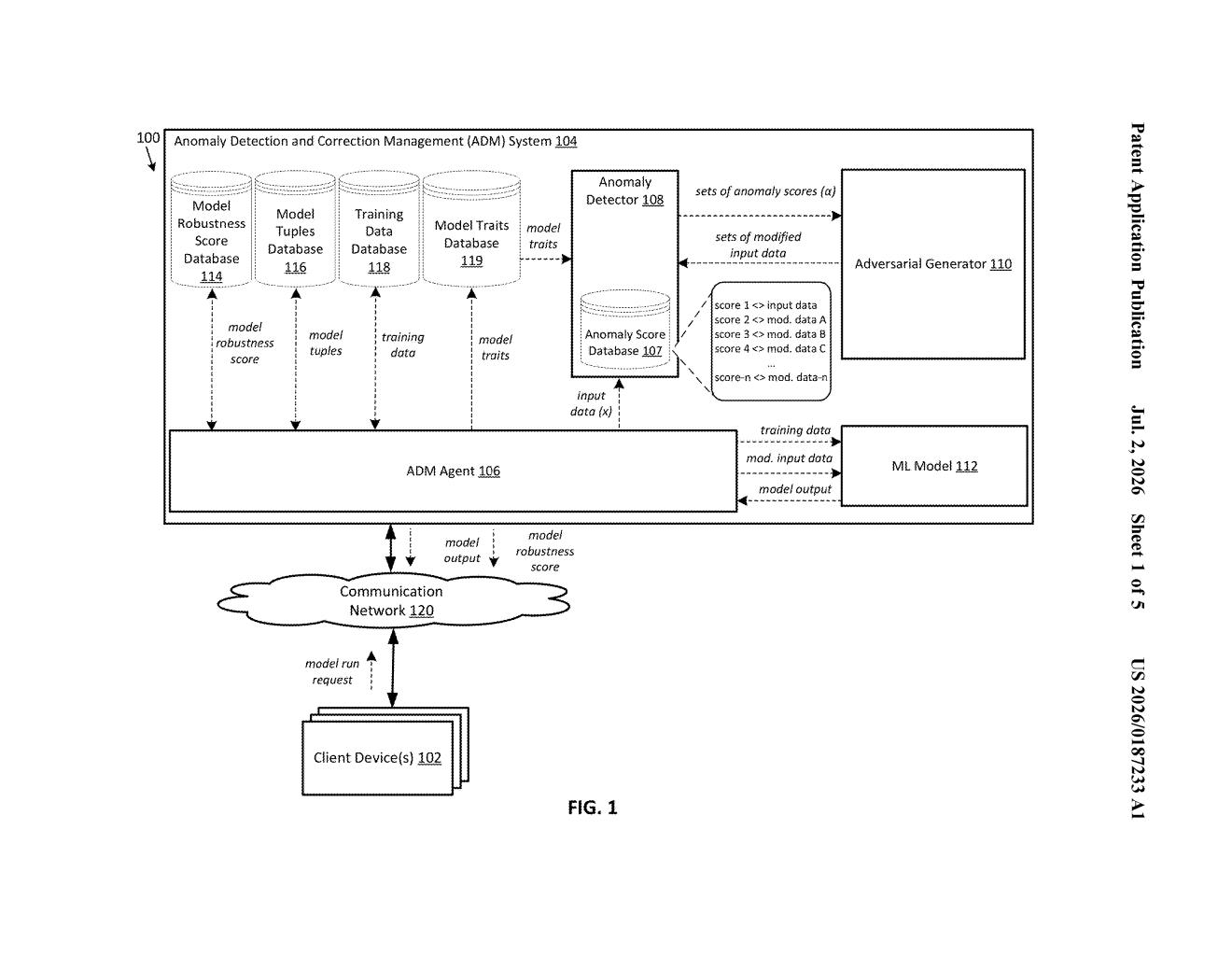
What Red Hat's input-correction system actually does
Imagine you trained a dog to recognize cats using photos taken indoors under good lighting. Then someone hands it a blurry, outdoor photo taken at night. The dog will probably guess wrong, not because it's a bad model, but because the input is too different from everything it learned on.
Red Hat's patent describes a system that sits between your raw data and your AI model, checking whether the incoming data looks similar enough to the data the model was originally trained on. If it doesn't, the system adjusts the input to bring it closer to what the model expects, before the model ever runs.
The goal is a more accurate prediction on the other end, without you having to retrain the model or even know there was a problem. The system borrows a technique from the world of AI security ("adversarial attacks") but applies it in reverse: instead of breaking a model with bad inputs, it nudges inputs toward making the model work better.
How the anomaly score drives the data adjustment
The patent describes what Red Hat calls a "benevolent adversarial attack" system. In traditional AI security research, adversarial attacks are inputs carefully crafted to fool a model into giving a wrong answer. Red Hat flips that concept: the same mathematical tricks used to fool models can also be used to help them.
Here's how the pipeline works:
- Anomaly scoring: The system measures how different the incoming dataset is from the data the model was trained on. This is called an anomaly score, essentially a number representing how far out-of-distribution (unfamiliar) the input is.
- Input adjustment: Based on that score, the system modifies the input dataset to make it look more like the training data distribution. Think of it as translating the input into a language the model already understands.
- Transparent substitution: The modified input is sent to the model instead of the original. The model never sees the raw, potentially confusing data.
The system uses model traits (internal properties of the ML model itself) alongside the incoming data to calculate the anomaly score, meaning the correction is tailored to that specific model's expectations, not a generic fix.
What this means for AI reliability in enterprise software
Most AI deployments in enterprise software run on models trained months or years ago on data that no longer perfectly matches what's coming in today. Data shifts over time as markets change, systems update, and edge cases accumulate. Retraining a model is expensive and slow, so organizations often just live with degraded accuracy.
Red Hat's approach offers a middleware-style fix: a correction layer that could be dropped into an existing AI pipeline without touching the model itself. For companies running AI across infrastructure monitoring, security alerts, or IT operations (all areas where Red Hat plays), this kind of automatic accuracy improvement at inference time could matter more than a headline model upgrade.
This is a practical, unsexy piece of engineering that solves a real problem enterprise AI teams deal with constantly. The "benevolent adversarial attack" framing is catchy but the core idea is a preprocessing layer for out-of-distribution data, a known pain point. Whether it works well in practice depends entirely on implementation details the patent doesn't cover, but the direction is sensible.
Get our take in your Top Stories
Liked this breakdown? Add Patentlyze as a preferred source on Google, and our plain-English take shows up more often in your Top Stories the next time IBM patent news breaks.
There are more where this came from
We read every patent application Big Tech publishes and send you the ones worth knowing. Plain English, free, every week.
Want this weekly breakdown for a company we don't cover? Patentlyze Pro →