
Google Patents a Training Method That Teaches AI When to Ignore Its Sources
AI models that answer questions from documents have a persistent problem: sometimes the document is useless, and the AI should just say what it already knows. Google has filed a patent for a training method designed to teach AI models exactly when to trust the document — and when to ignore it.
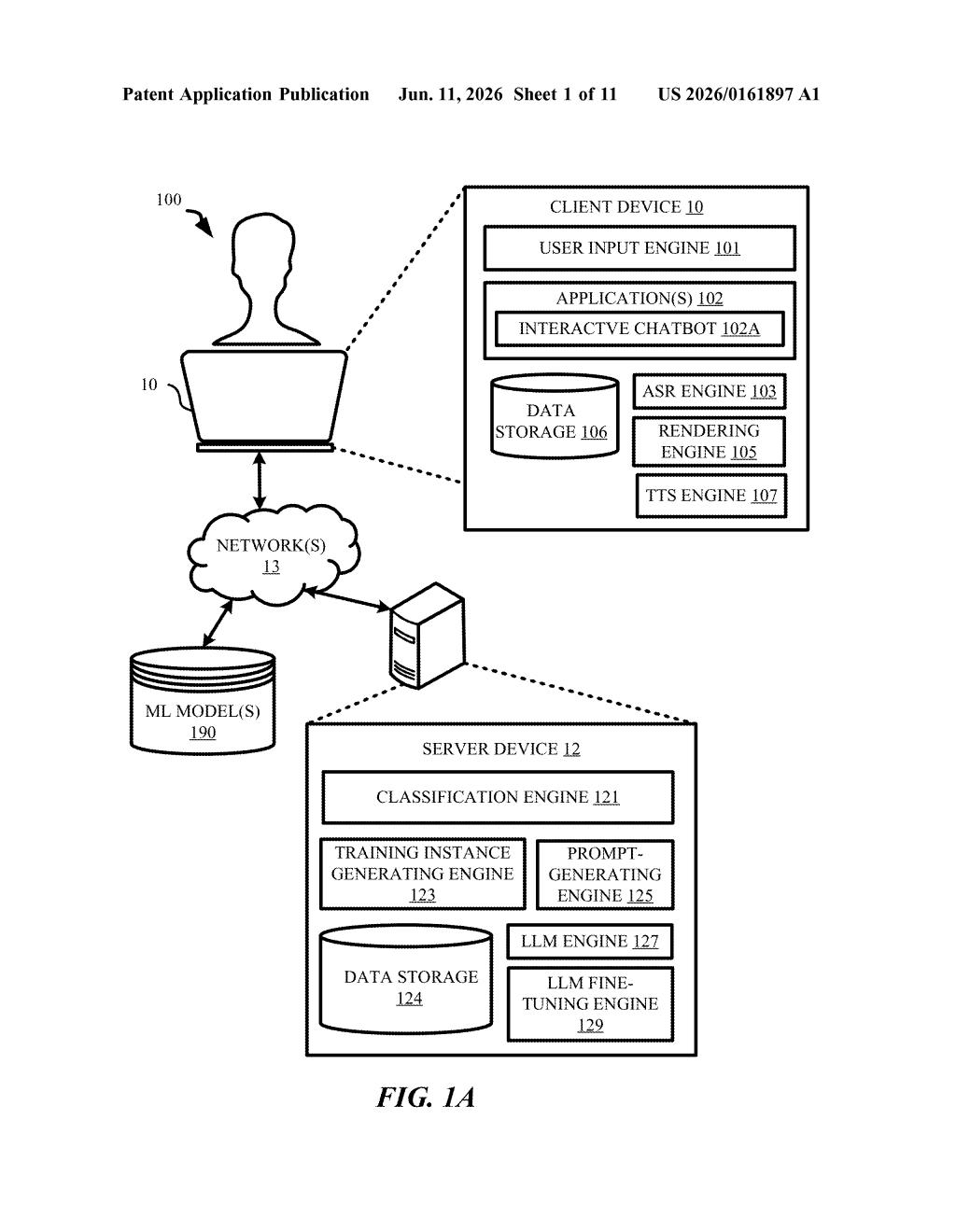
What Google's two-track AI training method actually does
Imagine you're asking a customer-service chatbot a question, and the company has handed it a relevant policy document to work from. If the document actually covers your question, great — the bot should use it. But what if the document has nothing to do with what you asked? A poorly trained AI might either make something up based on the document, or refuse to help entirely.
Google's patent describes a way to train AI models to handle both situations correctly. The trick is to use paired training examples: one where the provided document is helpful and the AI learns to draw from it, and one where the document isn't helpful and the AI learns to fall back on its own built-in knowledge instead.
Both training examples use the same two-part instruction — essentially a rule that says "use the document when it helps; use what you already know when it doesn't." By seeing both scenarios during training, the model learns to make that judgment call on its own, without needing a human to flag which situation it's in.
How the multi-part instruction shapes the model's behavior
The patent describes a fine-tuning pipeline (a process of further training an already-capable AI model on specific examples) built around what Google calls a multi-part instruction — a two-clause rule baked into every training example.
The first clause tells the model to use the provided side information (think: a document, a retrieved web snippet, a knowledge-base entry) when it contains something relevant to the user's question. The second clause tells it to fall back on its own inherent knowledge (what the model already learned during its original large-scale training) when the side information is a dead end.
To drill that behavior in, Google constructs two types of training examples:
- Positive examples: a question paired with a document that actually answers it, plus a correct response that demonstrably comes from that document.
- Negative examples: a different question paired with a document that's irrelevant, plus a correct response drawn entirely from the model's own knowledge.
By training on both, the model learns to discriminate — rather than blindly deferring to documents or blindly ignoring them. The same instruction text appears in both example types, which is key: the model learns to interpret the instruction flexibly based on context, not just follow it mechanically.
What this means for AI assistants that answer from documents
Most real-world AI deployments — search assistants, enterprise chatbots, customer-support tools — work by feeding the model a retrieved document alongside the user's question, a pattern called retrieval-augmented generation (RAG). The biggest failure mode in these systems is when the retrieved document is off-topic and the model either hallucinates an answer from it or becomes unhelpfully evasive.
If this training approach works as described, it would make those AI assistants meaningfully more reliable for you as an end user: the model confidently answers from documents when they're relevant, and gracefully pivots to its own knowledge when they're not — without needing a separate system to make that routing decision first.
This is unglamorous but genuinely important work. The RAG failure mode Google is targeting — an AI that either over-relies on bad documents or unnecessarily ignores good ones — is one of the most complained-about behaviors in deployed AI products today. Training the judgment in at the fine-tuning stage rather than patching it with external logic is the right architectural instinct, and the paired-examples approach is elegant in its simplicity.
There are more where this came from
We read every patent application Big Tech publishes and send you the ones worth knowing. Plain English, free, every week.
Want this weekly breakdown for a company we don't cover? Patentlyze Pro →