
Google Patents Technology That Stops Screens From Redrawing Parts That Have Not Changed
Every time your screen updates, your device can waste power redrawing pixels that haven't changed at all. Google's new patent describes a way for the GPU to flag only the parts of the screen that actually moved — so the rest of the pipeline doesn't bother.
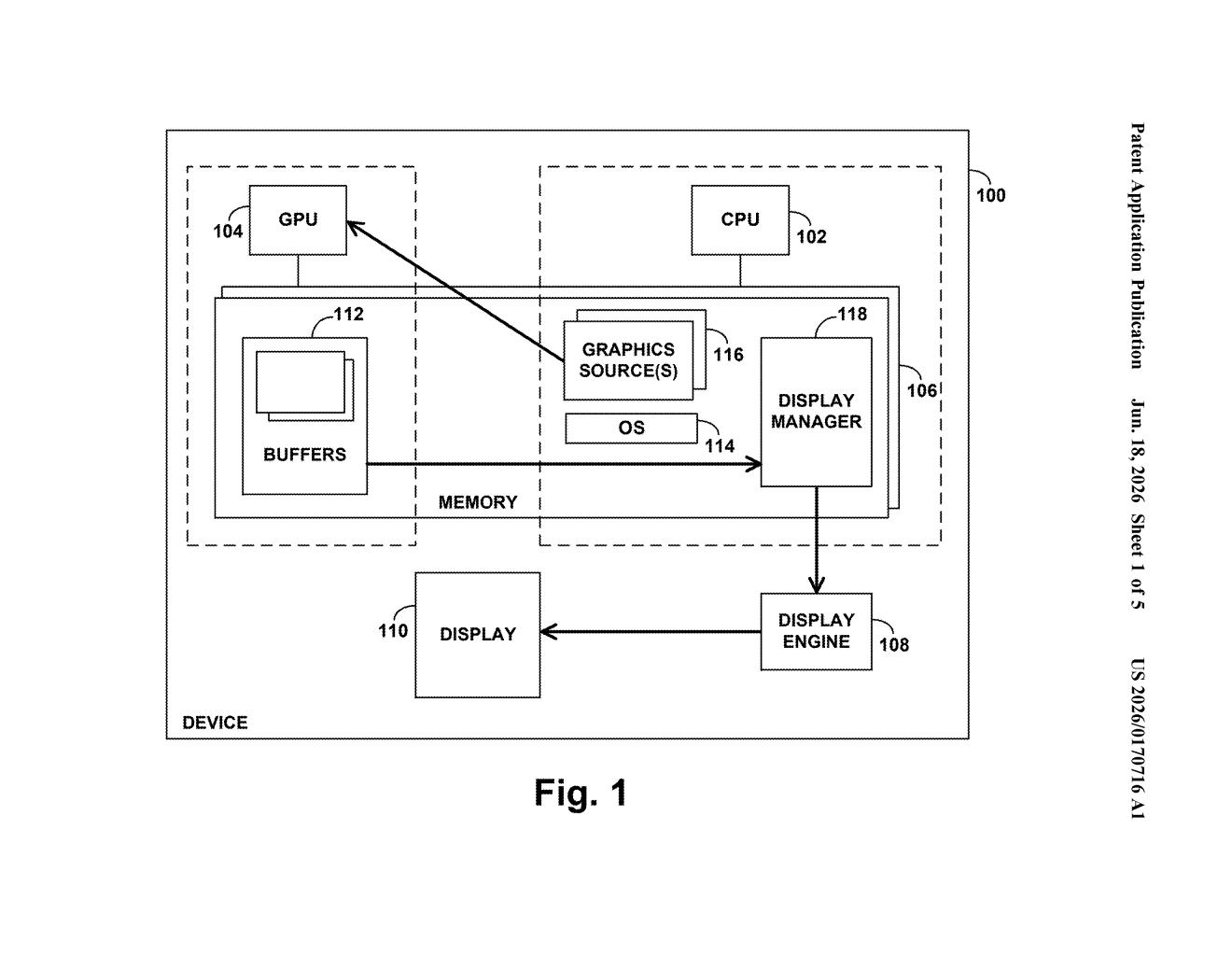
How Google's GPU tells the CPU what actually changed on screen
Imagine your phone's screen is showing a mostly static page — a map with a small animated icon in the corner. Right now, many devices redraw the entire screen on every refresh, even the parts that look identical to the previous frame. That's wasted work, and wasted battery.
Google's patent describes a smarter handoff between two chips inside your device. The GPU (the chip that draws graphics) figures out exactly which pixels changed from one frame to the next. It then passes that information to the CPU, which can tell the display engine: "only process these regions, ignore the rest."
The result is that your device does less work per screen update whenever most of the image stays the same — which, for things like reading, browsing, or a static home screen, is most of the time.
How the GPU tracks and reports changed pixel regions
The patent describes a two-chip pipeline where the GPU takes on a detection job it doesn't normally do.
Here's the flow:
- The GPU receives drawing commands — instructions from apps about what to show on screen.
- It translates those commands into a full grid of pixels representing the current frame.
- It then compares that new frame against the previous one, identifying the "dirty regions" — the industry term for pixels that have actually changed.
- It packages up a description of those changed areas and hands it to the CPU.
The CPU (the general-purpose chip that coordinates everything) receives this "dirty region" report and uses it to instruct the display engine (the hardware that pushes pixels to the physical screen) to only process what's new. Unchanged regions can be skipped or reused from a buffer.
The key architectural detail is that the GPU — not the CPU — is doing the comparison work. Since the GPU already holds both frames in memory while rendering, it's well-placed to do this diff cheaply, before the data even leaves the graphics pipeline.
What this means for battery life and display efficiency
Display refresh is one of the more power-hungry things a device does constantly in the background. On devices like phones, tablets, and Chromebooks, cutting down the number of pixels the display engine has to process per frame could translate directly into longer battery life — especially during low-motion tasks like reading or watching a paused video.
For Google, this is particularly relevant across its hardware lineup: Pixel phones, Chromebooks, and Android TV devices all run on a CPU-GPU split that this patent targets. It also fits a broader industry trend toward more efficient display pipelines, where chips increasingly coordinate to avoid redundant work rather than each doing a full job independently.
This is quiet but practical engineering — the kind of optimization that ships in a firmware update and never gets a press release, but chips away at one of the real costs of running a modern display. It's not exciting, but the logic is sound and the payoff in battery efficiency is real.
There are more where this came from
We read every patent application Big Tech publishes and send you the ones worth knowing. Plain English, free, every week.
Want this weekly breakdown for a company we don't cover? Patentlyze Pro →