
Google Patents a Headphone Noise-Canceling Chip That Runs at Three Speeds at Once
Active noise cancellation normally forces a hard choice: react fast to noise (burn battery) or sip power (miss sudden sounds). Google's latest patent proposes running three audio-processing lanes simultaneously to dodge that tradeoff entirely.
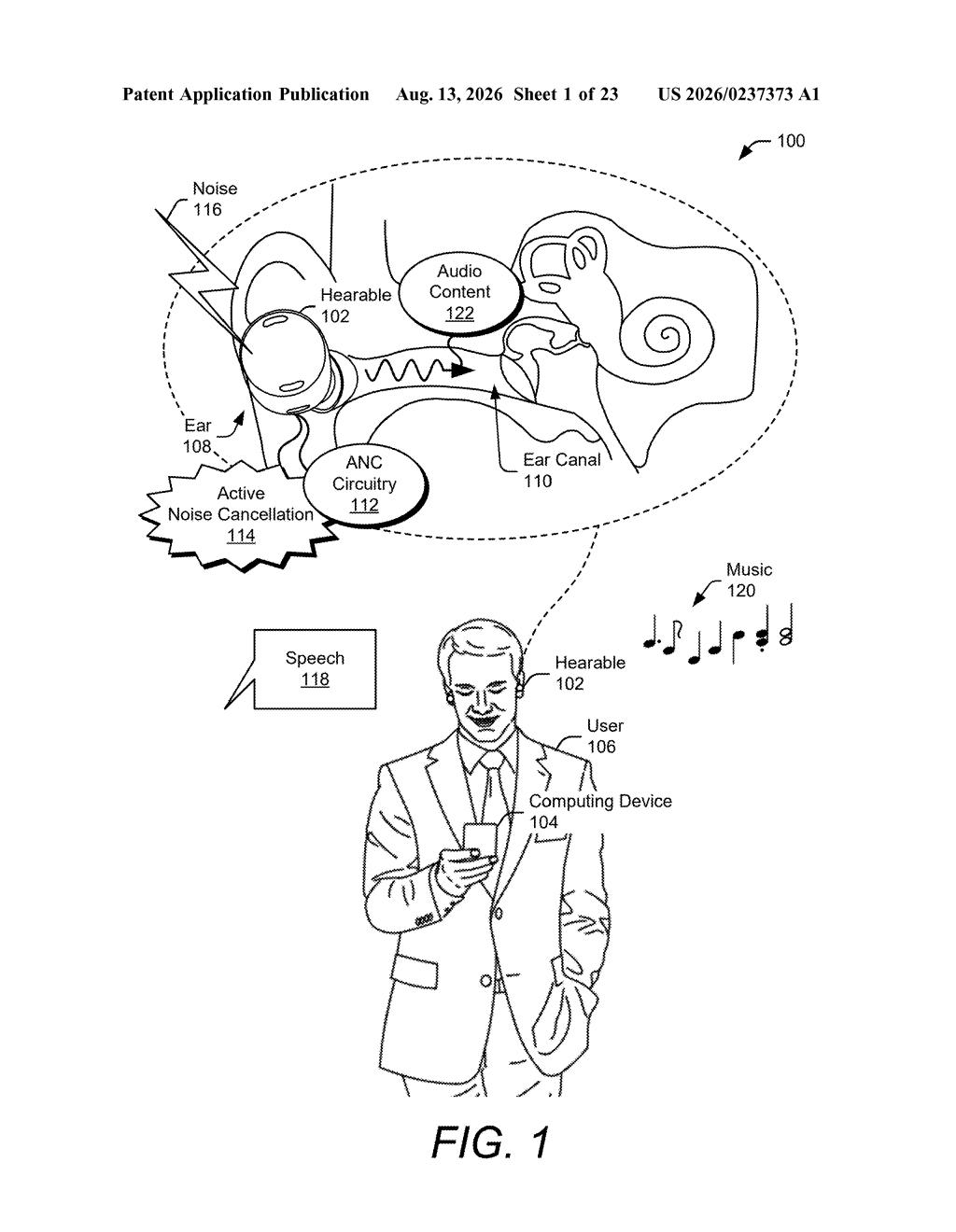
How Google's three-path ANC balances battery and speed
Today's noise-canceling headphones run their cancellation circuitry at a single fixed speed. Go fast and you get crisp, responsive silence; go slow and the battery lasts longer. Every pair of ANC earbuds on the market picks one or the other.
Google wants to split the job across at least three parallel lanes running at different speeds. The fast lane catches sudden, sharp noises almost instantly. The slower lanes handle steady, predictable drone, like a plane cabin hum, without burning through power. Each lane produces its own "anti-noise" signal, and the chip blends all three together into one final output.
For you, the result would be headphones that react quickly when something loud and unexpected happens, but don't flatten your battery doing it all day. It's less of a spec-sheet upgrade and more of a quiet fix to something you've probably just accepted as normal.
generating, using active-noise-cancellation circuitry, at least three anti-noise signal components by processing an input noise reference signal using at least three processing paths of the active-noise-cancellation circuitry, the at least three processing paths associated with at least three different processing rates …
Translation: The chip creates three separate noise-canceling signals simultaneously by processing audio at three different speeds.
How the three processing paths divide up the noise work
The patent describes a noise-cancellation circuit that processes incoming sound through at least three separate paths, each clocked at a different rate (think of rate as how many times per second the chip samples and reacts to audio).
A high-rate path operates fast enough to catch transient noise (sudden, brief sounds like a door slam or a dropped mug) and respond before your ear registers them. Because it's working quickly, it consumes more power.
One or more lower-rate paths handle sustained, predictable noise (engine rumble, air conditioning) at a fraction of the energy cost, because that kind of noise changes slowly enough that you don't need to check on it thousands of times per second.
The outputs of all three paths are combined into a single anti-noise signal before being sent to the speaker. The patent's claim specifies at least three paths with at least three distinct rates, meaning the design could scale beyond three lanes if the engineering demands it. The key insight is that no single rate is optimal for all noise types, so the circuit stops pretending it is.
With the multiple processing rates, active-noise-cancellation circuitry can avoid the tradeoff between responsiveness (e.g., latency) and power efficiency (e.g., power consumption) that is associated with a single processing rate and instead be tailored for both responsiveness and power efficiency.
Translation: This design lets headphones cancel noise quickly without draining the battery as fast as traditional methods.
What this means for the next generation of Pixel Buds
For everyday users, the practical payoff is headphones that handle both worlds: the sharp crack of a coworker dropping their keyboard and the six-hour flight where you'd normally turn ANC off halfway through to save battery. Today you typically sacrifice one for the other, and this patent describes hardware that tries to stop making you choose.
Google's Pixel Buds line has always sat in the shadow of Sony and Apple on ANC performance, so a chip-level rethink like this would address one of the product's most consistent criticisms. Readers who follow new Big Tech patents in the audio and wearables space will recognize this as part of a broader push, from multiple companies, to make ANC circuitry more power-aware rather than simply more aggressive.
Anyone who uses ANC earbuds daily knows the tradeoff this patent targets: you feel it the moment a loud noise punches through because your buds were in a low-power mode, or when the battery warning hits at hour four of a flight. Running parallel processing paths at different rates is an elegant way to attack that problem at the hardware level rather than through software heuristics. If Google ships this into Pixel Buds, the change shows up where it counts: in battery-life reviews and 'how did it handle the subway?' tests.
There are more where this came from
We read every patent application Big Tech publishes and send you the ones worth knowing. Plain English, free, every week.
The drawings
23 drawing sheets from US 2026/0237373 A1 · click any drawing to enlarge


Want this weekly breakdown for a company we don't cover? Patentlyze Pro →
Be the first to weigh in