
Google Patents an Ordinal Regression Training Method for Ranked Recommendations
When a recommendation system suggests five things to you, the order matters — but most ML training routines don't enforce that order as rigorously as they should. Google's new patent tries to fix that at the loss-function level.
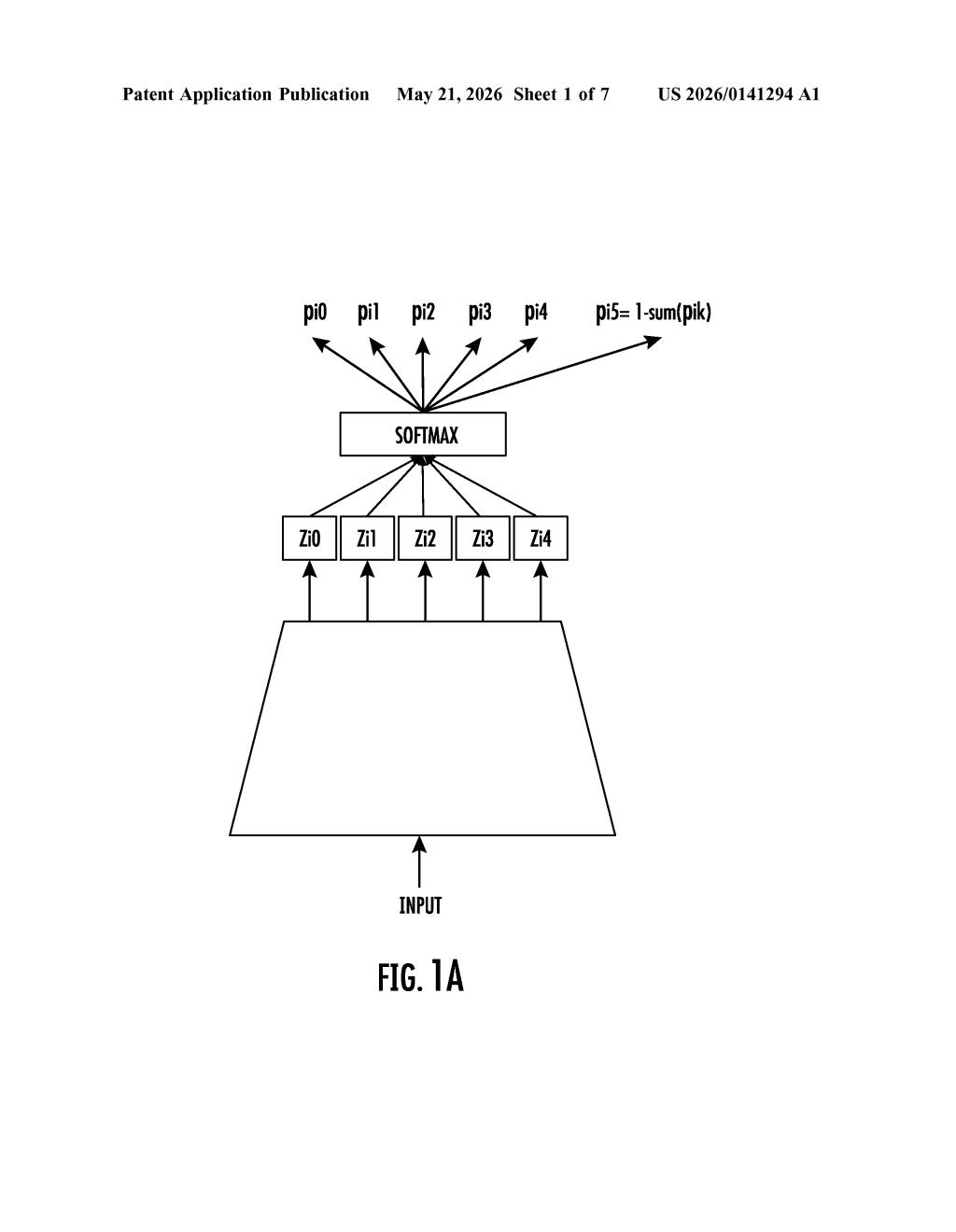
What Google's ranked-label training approach actually does
Imagine you're shopping online and a site recommends five products. You'd expect the most relevant item to appear first and the least relevant last. But teaching a machine learning model to respect that ordering — especially when items can belong to multiple categories at once — is surprisingly tricky.
Google's patent describes a training technique that explicitly penalizes a model when it gets the relative ranking of recommended items wrong. Instead of just asking "did the model predict the right label?", it also asks "did the model rank item A above item B when it should have?" That extra pressure is baked into the training process itself.
The approach is designed for situations where labels aren't just yes/no but exist on a graded scale — like relevance scores of 1 through 5. By building those grades into the loss function (the signal that tells the model how wrong it was), the system nudges the model toward recommendations that are ranked in a more meaningful, human-sensible order.
How the pairwise loss pushes gradients across label grades
The core idea is combining ordinal regression (a technique for predicting outcomes that have a natural order, like star ratings) with ranking losses (penalties that care about whether item A scores higher than item B, not just whether each item's absolute score is correct).
During training, the model processes two inputs — say, two candidate items — and produces a score vector for each. Those vectors are combined into a single "combined score vector" whose coordinates represent the probability that one item outranks the other at each label grade. A scoring function is applied to each coordinate to generate label-level outputs.
The system then evaluates a ranking loss function based on those outputs. The loss is framed as a function of conditional probabilities — specifically, conditioned on the event that the two items have unequal labels. This conditioning keeps the gradient signal focused on cases where ranking actually matters, rather than wasting training effort on ties.
- Pairwise losses compare two items at a time and penalize inversions in their predicted order.
- Listwise losses consider the entire ranked list at once, penalizing global ordering errors.
- Both integrate into a multi-label, multi-class logistic regression framework, so a single item can belong to multiple graded categories simultaneously.
What this means for Google's recommendation quality
Recommendation quality at Google's scale — Search, YouTube, Google Shopping, Play Store — depends heavily on ranking. A model that predicts what is relevant but can't reliably order items from most to least relevant leaves real user-experience gains on the table. This patent targets that gap by making the training objective itself care about ordering, not just classification accuracy.
For users, the practical upside is recommendations that feel more calibrated — the top result genuinely better than the second, not just both "predicted relevant." For Google, tighter ranking during training could also reduce the need for expensive post-hoc re-ranking passes, which would matter at the enormous query volumes the company handles daily.
This is a solid, incremental contribution to the learning-to-rank literature — the kind of thing that ships quietly inside a recommendation pipeline and produces a measurable lift in NDCG without anyone writing a blog post about it. It's not a conceptual leap, but the careful conditioning framework (losses only where labels differ) is a genuinely thoughtful engineering choice that reduces training noise. Worth noting for anyone who works in recommendation systems, but don't expect a product announcement.
There are more where this came from
We read every patent application Big Tech publishes and send you the ones worth knowing. Plain English, free, every week.
Want this weekly breakdown for a company we don't cover? Patentlyze Pro →