
Google Patents a Progressive Regularization Method to Speed Up ML Model Training
Training a machine learning model is expensive and slow — and a big chunk of that cost comes from how you apply regularization. Google's new patent, from the duo behind EfficientNet, describes a training schedule that deliberately starts loose and tightens the rules as training progresses.
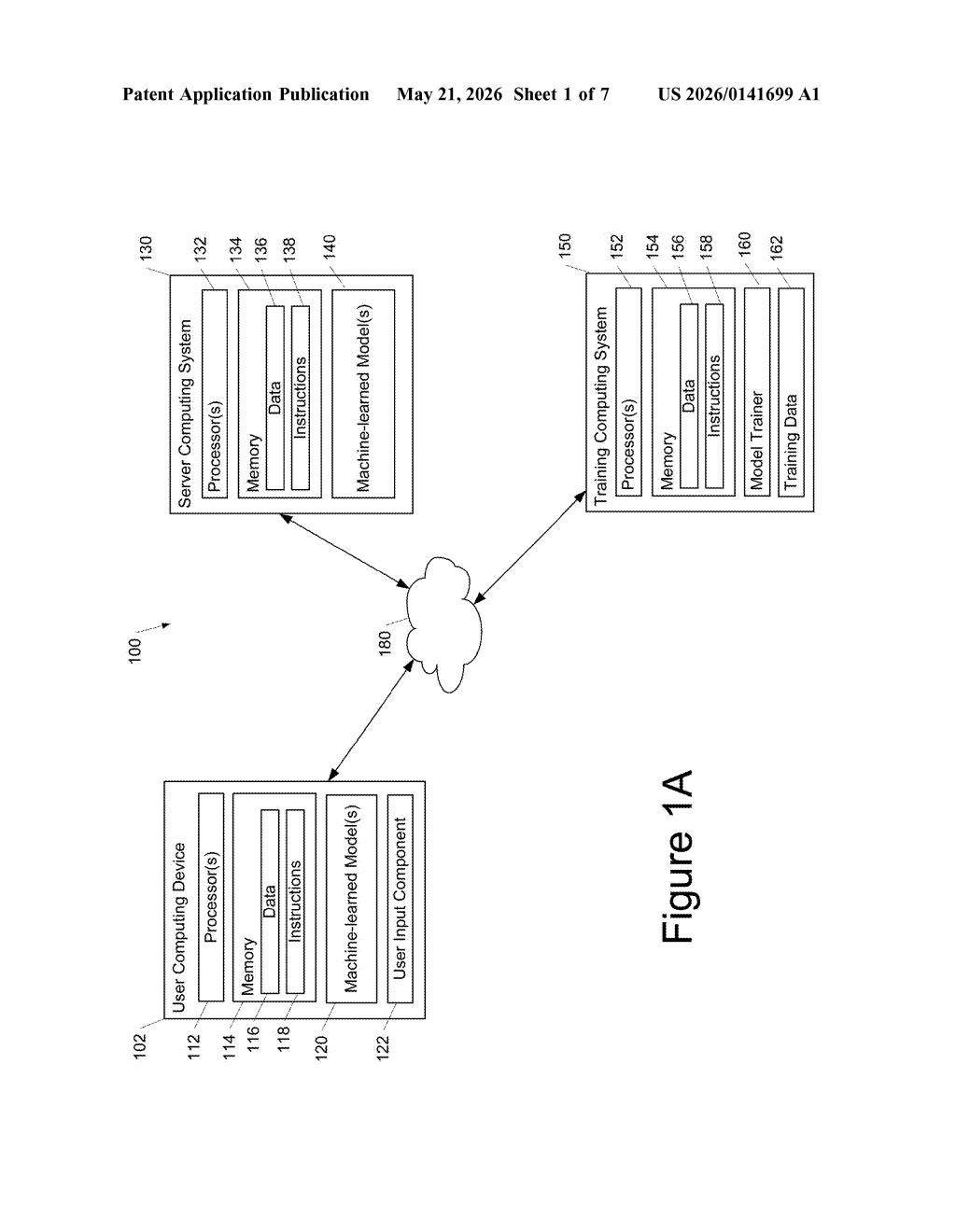
What Google's progressive training schedule actually does
Imagine trying to teach someone a new skill. Early on, you let them make mistakes freely so they can explore. Later, you hold them to much stricter standards so they refine what they've learned. That's essentially the idea behind this Google patent.
When training a neural network, regularization is a set of techniques that prevent the model from simply memorizing its training data — it's like adding friction so the model has to generalize. The problem is that heavy regularization from the very start can slow everything down and make early training unstable.
Google's approach starts with low regularization in early training rounds, letting the model learn quickly, then gradually increases it in later rounds. The result is a training process that's faster overall without sacrificing model quality. The patent also describes a specific image-processing model architecture that pairs regular convolutions early on with depthwise convolutions later — a design optimized to work with this progressive schedule.
How the regularization ramp works inside the model
The patent describes two interlocking ideas: a progressive training schedule and a specific model architecture for image processing tasks.
On the training side, the system runs through training in at least two phases. In the first phase, a low regularization magnitude is applied — think of regularization techniques like dropout (randomly disabling neurons during training) or data augmentation (artificially distorting images) as dials set to a low setting. In the second phase, those dials are turned up. This lets the model absorb broad patterns quickly early on, then lock in robust, generalizable behavior later.
On the architecture side, the claimed model for image tasks uses:
- A first sequence of stages using regular convolutions — standard filters that look at all input channels together, good at learning rich early features
- A second sequence of stages using depthwise convolutions — lighter-weight filters that process each channel independently, reducing compute cost significantly
The two halves complement each other: heavier computation upfront where feature richness matters most, lighter computation in later stages where efficiency wins. The inventors — Mingxing Tan and Quoc V. Le — are the same researchers behind Google's EfficientNet family, so this architecture philosophy is a continuation of well-established work.
What this means for faster, cheaper AI model development
Faster, cheaper training matters a lot right now. As models get larger and datasets grow, even incremental improvements to training efficiency translate into real savings — in time, money, and energy. A method that lets you start training with the brakes off and only apply full regularization later could meaningfully compress training runs without requiring new hardware.
For you as a developer or researcher, this kind of technique could eventually show up in Google's ML frameworks like JAX or Keras as a built-in training scheduler. The image-processing architecture claim also keeps Google's options open for on-device vision models — the depthwise convolution backbone is a hallmark of efficient models designed to run on phones and edge hardware.
This is a focused, practical patent from two of Google's most credible ML researchers — the EfficientNet pedigree gives it real weight. The core idea of ramping regularization isn't entirely new as a concept, but patenting the specific combination with this architecture suggests Google is building toward a concrete, shippable training pipeline. Worth watching if you follow efficient vision models.
Get our take in your Top Stories
Liked this breakdown? Add Patentlyze as a preferred source on Google, and our plain-English take shows up more often in your Top Stories the next time Google patent news breaks.
There are more where this came from
We read every patent application Big Tech publishes and send you the ones worth knowing. Plain English, free, every week.
Want this weekly breakdown for a company we don't cover? Patentlyze Pro →