
Google Patents a Speaker Surround That Catches Itself Under High Excursion
Push a speaker too hard and its flexible surround can tear, fold, or fail — often permanently. Google's new patent describes a speaker design where the surround physically catches itself before that can happen.
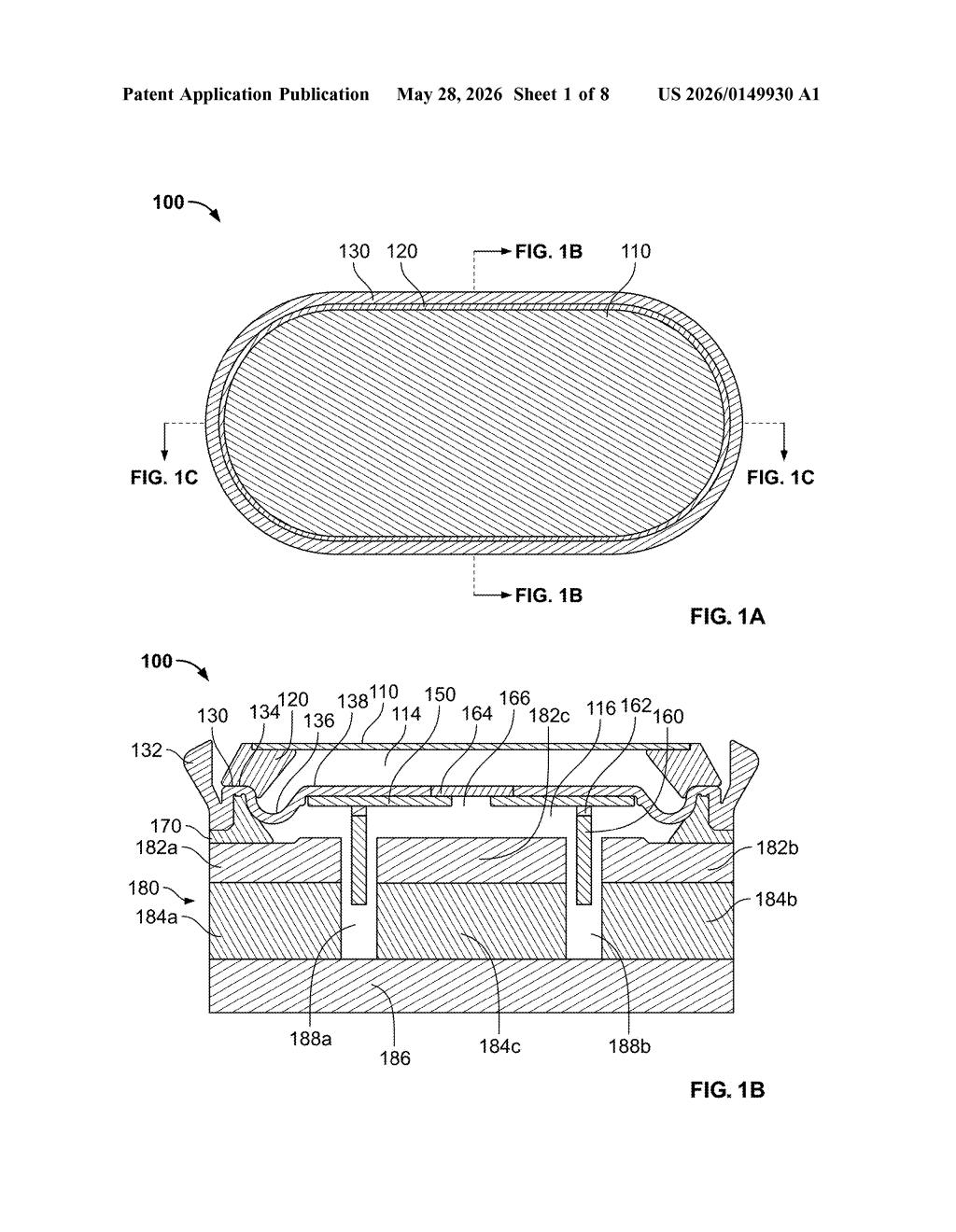
What Google's self-limiting speaker surround actually does
Imagine cranking up the volume on a small speaker — a smart home device, say, or a pair of earbuds — until you hear it start to distort. That distortion isn't just bad sound; it can signal the speaker's internal parts are moving farther than they were designed to. Do it enough times and the speaker physically breaks.
Every speaker has a flexible ring called a surround that holds the vibrating cone (the diaphragm) in place while letting it move back and forth. On most speakers, there's nothing to stop the surround from bending too far under a big bass hit or a high-volume moment. Google's patent adds a clever mechanical backstop: the surround and the surrounding frame are shaped so that when the cone moves too far, a section of the surround that normally floats free gently lands on a physical surface built into the frame.
Think of it like a car's suspension hitting a bump stop — it's not the normal operating state, but it prevents catastrophic over-travel. The result is a speaker that can survive louder, more demanding use without tearing itself apart.
How the landing surface geometry controls surround movement
The patent describes a conventional electroacoustic transducer (a speaker) with one key structural twist. The standard components are all here: a magnetic circuit that creates the field the voice coil reacts to, a voice coil attached to the diaphragm (cone) that moves when electrical audio signals run through it, and a surround — the flexible ring connecting the outer edge of the cone to the rigid frame.
The innovation is in the geometry of the surround and the peripheral support structure (the frame). Both are shaped so that a specific portion of the surround, which hangs freely in air during normal playback, descends into contact with a lower landing surface machined or molded into the frame when the diaphragm moves beyond a certain excursion distance.
In practical terms:
- At rest or low volume, the surround floats freely and behaves like any normal surround.
- At high excursion (big bass hits, high volume), the relevant surround segment touches down on the landing surface, mechanically limiting how far the assembly can travel.
- This contact absorbs or redirects stress that would otherwise concentrate at vulnerable points in the surround material.
The approach is essentially a passive mechanical limiter — no electronics, no sensors, no active control required. It works purely through geometry.
What this means for Google's smart speakers and earbuds
Small consumer electronics — smart speakers, soundbars, earbuds — are increasingly pushed to deliver big sound from tiny enclosures. That means drivers operating close to their mechanical limits all the time. Surround failures are one of the most common ways compact speakers die, and they're usually non-user-serviceable. A passive geometric solution that extends surround life without adding cost, weight, or complexity is genuinely useful here.
For Google specifically, this touches a product line that includes the Nest Audio, Nest Mini, and Pixel Buds families — all devices where audio quality and long-term durability matter for repeat purchase and brand trust. A speaker that survives years of high-volume use in a kitchen or on a desk is a quiet competitive advantage, even if no one ever notices it's there.
This is quiet, competent engineering — the kind of thing that never makes a product launch slide but absolutely shows up in long-term reliability data. The concept (a physical bump stop for a speaker surround) is simple enough that it's surprising it isn't already universal, which suggests the tricky part is getting the geometry right without degrading audio fidelity at normal volumes. Worth watching to see if it turns up in next-generation Nest or Pixel audio hardware.
There are more where this came from
We read every patent application Big Tech publishes and send you the ones worth knowing. Plain English, free, every week.
Want this weekly breakdown for a company we don't cover? Patentlyze Pro →