
Google's New Patent Stops Apps from Hearing Your Mic Until You Actually Trigger Them
Google is patenting a way to let your phone listen for a trigger word or sound — without giving any app access to the raw audio until something actually happens. It's a privacy-first architecture for always-on sensor features.
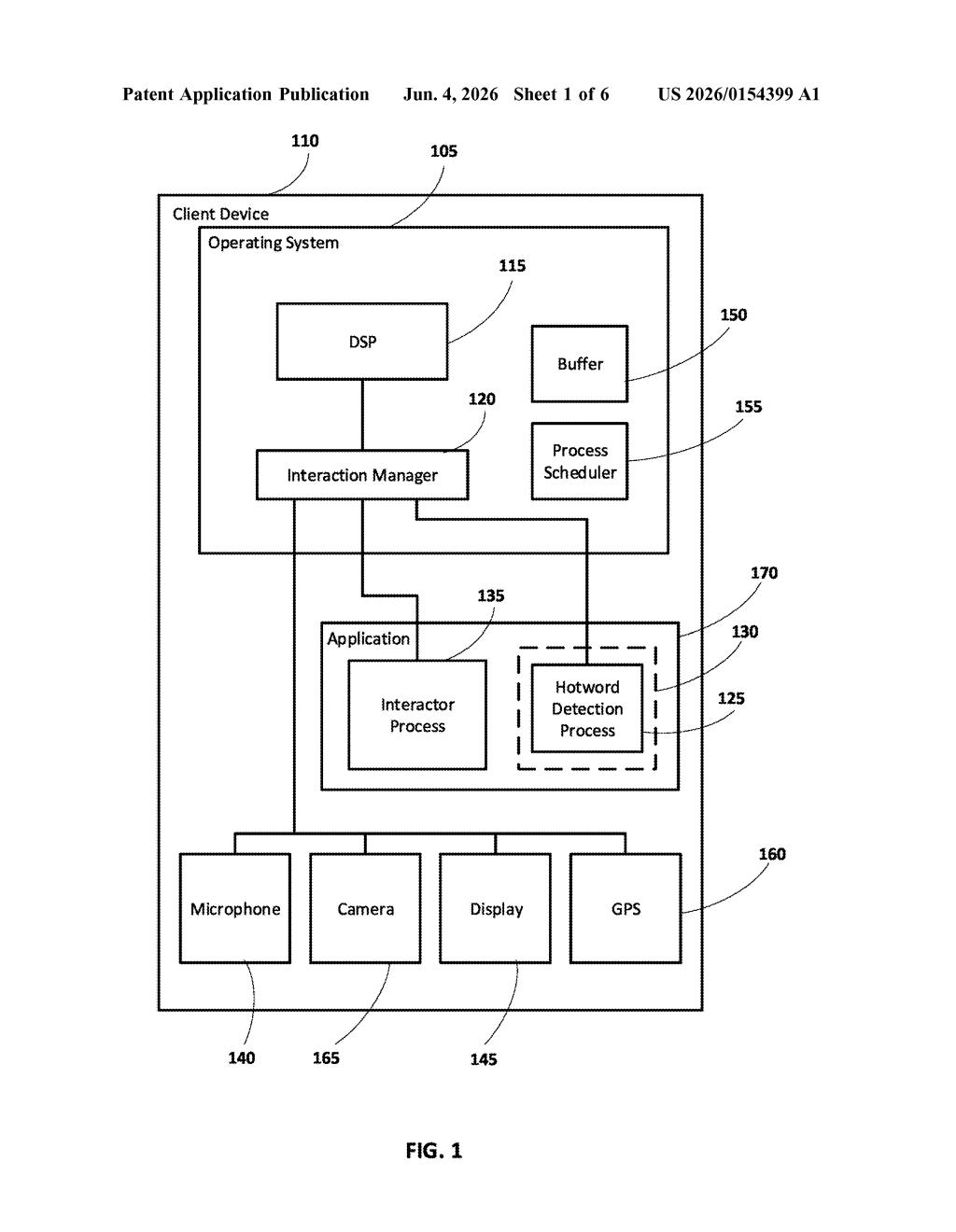
How Google's sandboxed mic trigger actually protects you
Imagine your phone is always half-listening for a wake word or a specific sound. Right now, that raises an obvious question: what's the app doing with all the audio it hears before the trigger fires? Google's patent tries to answer that by putting a wall between the listening phase and the doing phase.
Here's the idea. A tiny, isolated process — called a sandbox — does the initial listening. It can detect patterns in audio (or other sensor data like location or camera input), but it cannot send that raw data anywhere. It's essentially locked in a box. Only when it detects something meaningful does it raise its hand and tell the operating system, which then forwards the data directly to the app.
The system also hides the privacy indicator (the little mic icon) while only the sandboxed listener is running, since no app can actually see your audio yet. Once the trigger fires and a real app takes over, the indicator appears. You get the convenience of always-on features with a cleaner privacy story than today's approach.
How the sandbox, fork-prune cycle, and OS handoff fit together
The patent describes a two-stage sensor pipeline built directly into the operating system. In the first stage, a sandboxed feature detection process receives raw sensor data — audio, images, location, or other inputs — from the OS. The sandbox is a strict isolation boundary: the process can analyze the data internally, but the OS prevents it from forwarding that data to any other process or network destination.
When the sandboxed process detects a feature (a wake word, a sound pattern, a motion cue), it sends only a lightweight signal — not the audio itself — back to the OS. The OS then hands off subsequent sensor data directly to a non-sandboxed interactor process (the actual app or assistant feature). Crucially, the raw pre-trigger audio is never routed through the interactor; the OS controls the flow entirely.
The patent also describes a fork-prune cycle: at regular intervals, the OS spins up a fresh instance of the sandboxed listener and kills the old one. This is a memory hygiene mechanism — it ensures that even the sandboxed process can't accumulate a long rolling buffer of sensor history that could theoretically be exploited.
- Sandbox isolation: OS-enforced egress restrictions on the listener process
- OS-mediated handoff: Raw data goes from OS directly to the app, never through the detector
- Notification suppression: Privacy indicators are hidden during the sandbox-only phase, shown once the app takes over
- Fork-prune cycling: Periodic process refresh to limit data accumulation
What this means for always-on voice features and privacy
Always-on listening features — voice assistants, sound detection for accessibility, keyword spotting — have always carried an implicit trust cost. Users have no real way to verify that an app isn't quietly logging audio before the trigger fires. This architecture moves that enforcement from "trust the app" to "the OS physically can't route the data until you trigger it," which is a meaningfully stronger guarantee.
For Google specifically, this matters on Android, where the diversity of apps and OEMs makes consistent privacy enforcement harder than on a closed platform. A system-level sandbox for sensor gating could become a building block for future always-on AI features — on-device assistants, health monitoring, or ambient computing — where the privacy tradeoff has historically been the biggest obstacle to user acceptance.
This is genuinely thoughtful security architecture, not a marketing checkbox. The fork-prune cycle in particular is a detail that signals real engineering consideration — it closes the loophole where a long-lived sandboxed process could silently accumulate a rolling audio buffer. If this ships in Android, it would give always-on features a privacy foundation that's actually verifiable by design, not just policy.
There are more where this came from
We read every patent application Big Tech publishes and send you the ones worth knowing. Plain English, free, every week.
Want this weekly breakdown for a company we don't cover? Patentlyze Pro →