
Intel Patents a Chip That Sorts AI Decisions Instantly Without Software Help
Intel is patenting a purpose-built chip circuit that runs a classic AI technique — the random forest — entirely in hardware, without leaning on a general-purpose CPU or GPU to do the heavy lifting.
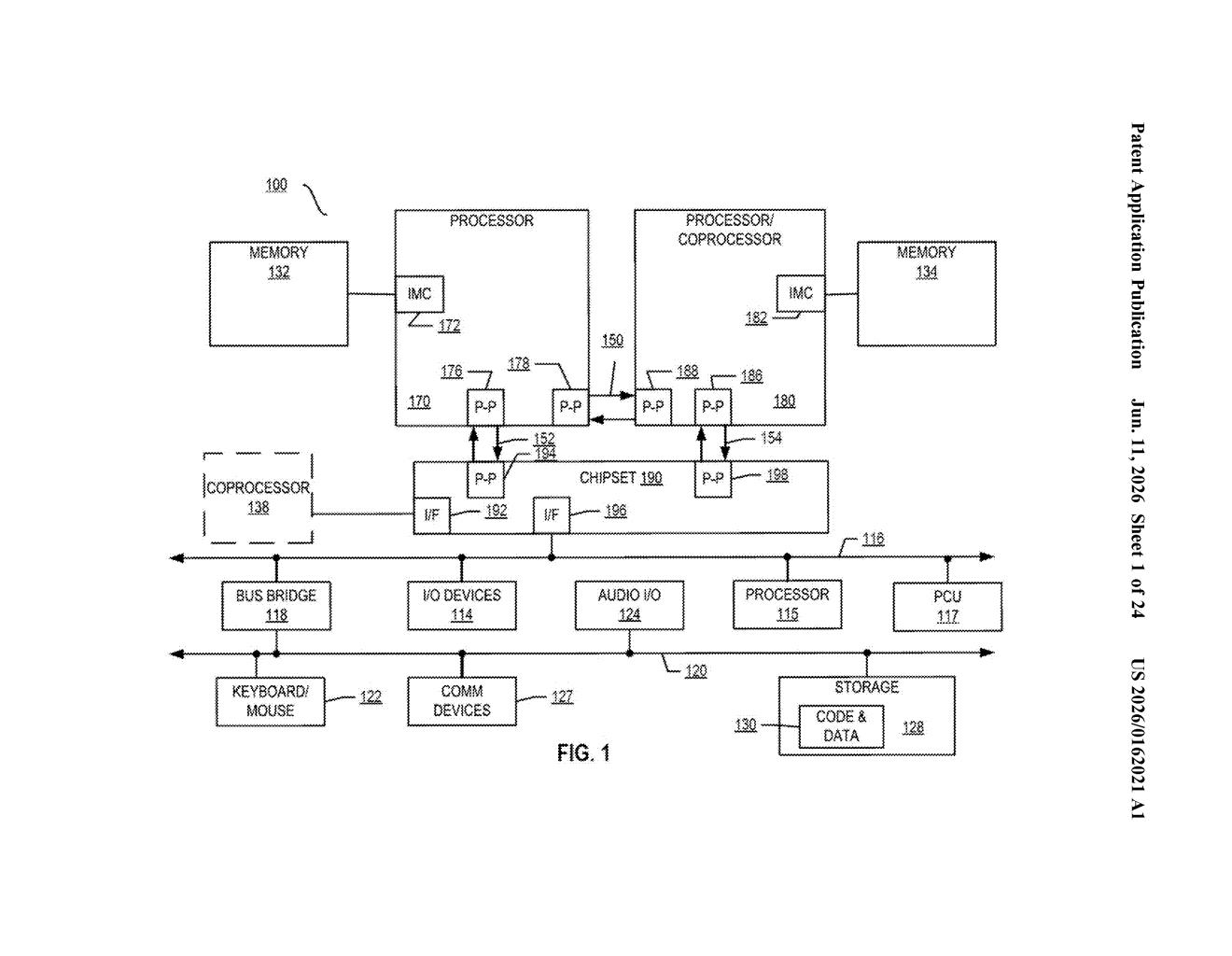
What Intel's hardware random forest chip actually does
Imagine you're trying to sort thousands of emails per second as spam or not-spam. Software running on a regular chip can do it, but every decision burns time and power. What if you built a tiny circuit whose only job was making that call, as fast as electricity can flow?
That's the idea behind Intel's patent. It describes a hardware accelerator — a specialized chunk of silicon — designed to run a type of AI model called a random forest. A random forest works by asking a crowd of simple yes/no question trees and taking a majority vote on the answer. It's a tried-and-true AI technique used in fraud detection, medical diagnostics, and sensor data analysis.
Instead of running those trees in software (which is flexible but slow), Intel's design hardwires the whole process into circuitry: feeding in data, walking each decision tree, tallying votes, and spitting out an answer — all in real time. The goal is fast, low-power classification that doesn't need a cloud connection.
How the traversal and voting circuits classify data
The patent describes a machine-learning accelerator built around three main hardware blocks:
- Preprocessor: Normalizes incoming data (scales all input values to a consistent range) so the decision trees can compare apples to apples.
- Traversal circuitry: Walks through every decision tree in the random forest model. At each node, it pulls a stored threshold weight from memory, compares it to the relevant input feature, and follows the yes or no branch to the next node — until it hits a leaf node with a class label (e.g., "fraud" or "not fraud").
- Majority voting circuitry: Holds a counter for each possible output class. Every time a tree lands on a leaf, the matching counter gets incremented. When all trees are done, whichever counter is highest wins — that's the model's final answer.
The key engineering claim is that all of this happens in dedicated silicon rather than in software loops on a CPU. The trees and their weights live in on-chip memory banks, and the traversal logic is wired to move through them in a pipelined, parallel fashion — meaning many trees can be evaluated close to simultaneously rather than one at a time.
What this means for on-device, low-latency AI inference
Random forests are popular precisely because they're interpretable and robust — they're widely used in edge computing scenarios like intrusion detection, industrial sensor monitoring, and medical device classification, where you need a fast, reliable answer from structured data without shipping it to the cloud. Running them in dedicated hardware could cut latency from milliseconds to microseconds and slash the power budget compared to running the same model on a CPU core.
For Intel, this fits squarely into its push to embed AI acceleration across its chip portfolio — not just in big GPU-style AI cores, but in smaller, task-specific engines that can live inside edge processors, network chips, or embedded controllers. If this makes it into silicon, you could see it powering real-time anomaly detection in routers, laptops, or IoT devices without any cloud dependency.
This is a solid, pragmatic patent — not flashy AI, but the kind of infrastructure work that actually makes AI deployable in power-constrained, latency-sensitive environments. Random forests are unglamorous compared to transformers, but they're everywhere in real production systems. Hardwiring them into silicon is a genuinely useful engineering bet.
There are more where this came from
We read every patent application Big Tech publishes and send you the ones worth knowing. Plain English, free, every week.
Want this weekly breakdown for a company we don't cover? Patentlyze Pro →