
IBM Patents an AI System That Identifies Which Information Matters When Comparing Duplicate Entries
Every large company has the same headache: two databases that both contain a "John Smith" but nobody knows if it's the same John Smith. IBM's new patent teaches an AI to figure that out on its own, without a human pre-labeling which data fields are important.
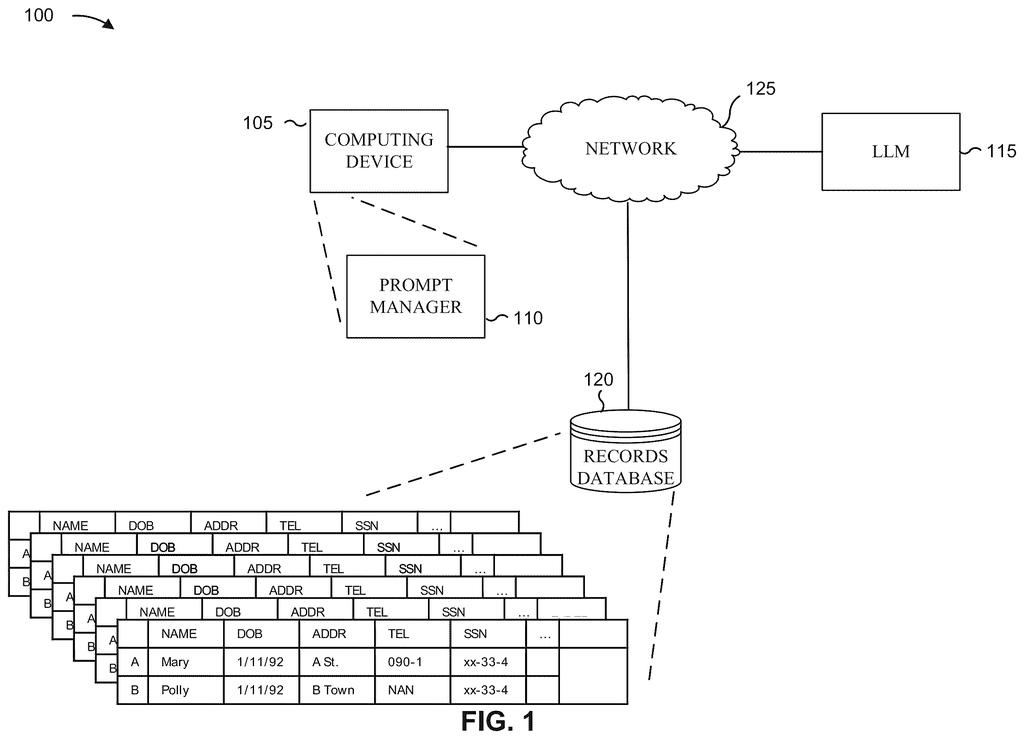
What IBM's auto-field-picking record matcher actually does
You're a data analyst at a hospital, and you're trying to merge two patient databases. One system stores names and birthdates; another stores names and insurance IDs. Figuring out which records belong to the same person, across thousands of rows, would normally take weeks of manual work or a team of engineers hand-tuning rules.
IBM's patent describes a system that uses a large language model (think a ChatGPT-style AI) to do that matching automatically. The twist is that the system first samples a handful of record pairs to figure out which fields are most useful for making the comparison, then builds its questions around those fields before asking the AI to judge any new pair.
In other words, the system teaches itself what to look for before it starts matching, rather than relying on a human to specify the rules up front. That could save a lot of setup time when the same tool gets pointed at a new dataset.
… identifying frequently used key attributes from the key attributes for each of the selected number of pairs of records; generating a prompt based on the frequently used key attributes; and providing the prompt to the LLM to obtain a prediction of whether records of a particular pair of records are matched.
Translation: The system figures out which details matter most and asks an AI to check if two records match.
How the LLM prompt gets built from sampled record pairs
The patent describes a three-stage process for deciding whether two records in a database refer to the same real-world entity, a task called entity matching.
- Sampling pairs at run time: The system picks a small number of record pairs from the full dataset while the job is actually running, not before. "Run time" just means this analysis happens live, on the fly, rather than being hardwired in advance.
- Finding key attributes: For each sampled pair, the system identifies which data fields (attributes) are the most informative for comparison. It then tallies which fields show up frequently across those samples, promoting the most commonly useful ones.
- Building a tailored prompt: Those frequently used fields are assembled into a prompt, essentially a structured question, that gets sent to a large language model (LLM). The LLM then predicts whether any new, unsampled pair of records refers to the same entity.
The core idea is that the system figures out what to compare dynamically, rather than requiring an engineer to pre-specify the relevant fields for every new dataset. That makes it more portable across different data schemas and industries without reconfiguration.
The computing device may provide, at run time, a prompt to a machine learning model to obtain a prediction of whether records, of a particular pair of records that is not selected from the records, are matched.
Translation: It asks an AI model in real time whether two unexamined records actually refer to the same thing.
What this means for companies drowning in duplicate data
Duplicate and mismatched records are an expensive, invisible problem. Banks, hospitals, retailers, and government agencies all maintain databases where the same person or company appears under slightly different names or IDs across systems. Cleaning that up manually is slow; building custom matching rules for each new dataset is costly.
A system that auto-selects the relevant fields before querying an AI could lower the bar for deploying record-matching at scale. For your organization, that could mean faster data migrations, cleaner customer profiles, or fewer billing errors, without needing a dedicated data engineering team to babysit the configuration every time the underlying data changes.
IBM's 21st filing in the AI vision patents we've tracked since May follows earlier work like one flagging Alzheimer's risk and one explaining pixel-level detections.
The system decides which details matter most at the moment a matching job begins, not before it starts. That flexibility costs time: every job now has a warm-up phase where it studies sample record pairs before doing any real work, which is a tolerable delay for small tasks and a real problem when speed matters.
The deeper risk is what happens if those sample pairs are too easy. If the system learns its own rules by examining obvious, clear-cut cases, it will build habits tuned for simple records and struggle with the messy, ambiguous ones where careful judgment actually matters most.
The trade still reads as reasonable for most practical situations. A company managing large, disorganized internal databases gets a tool that figures out its own focus without anyone configuring it by hand, and that low-maintenance quality has real appeal even knowing where it can break.
There are more where this came from
We read every patent application Big Tech publishes and send you the ones worth knowing. Plain English, free, every week.
The drawings
9 drawing sheets from US 2026/0277882 A1 · click any drawing to enlarge


Want this weekly breakdown for a company we don't cover? Patentlyze Pro →
Be the first to weigh in