
IBM Files Patent for a Virtual Factory Copy That Predicts What Data Machines Need
IBM wants to stop your network from scrambling for data at the worst moment. Its filing builds a virtual copy of a site, runs simulations, and parks the data local devices will need right where they can grab it.
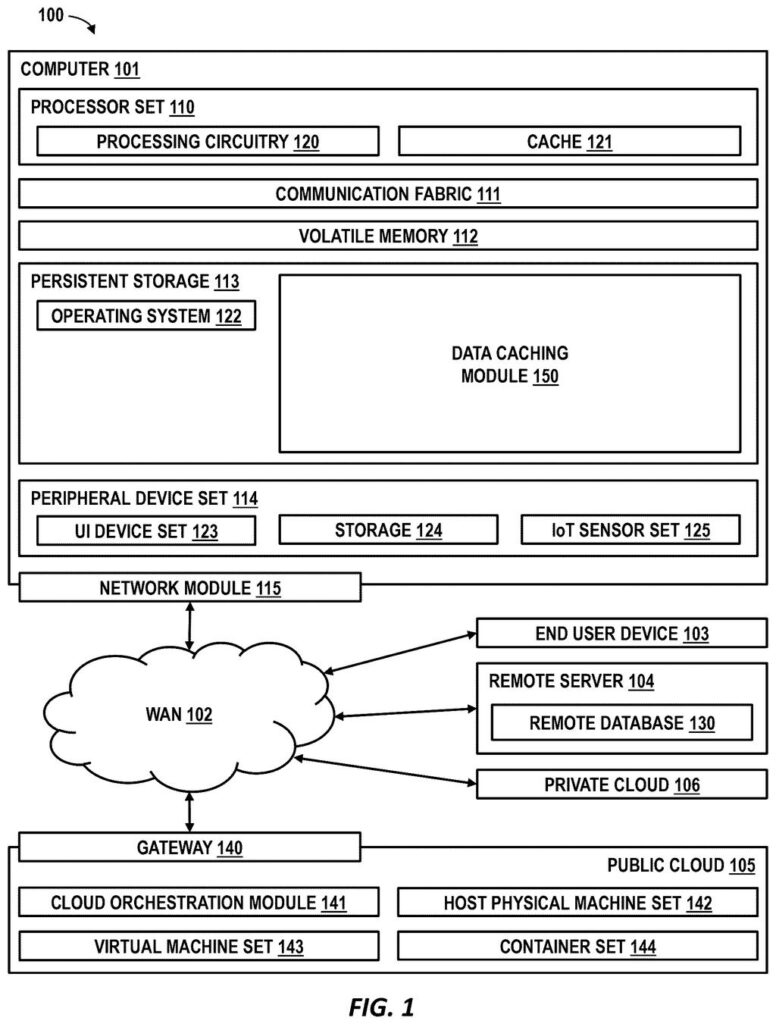
How IBM's virtual twin guesses data demand
You're running a factory floor, and the network bogs down just as a sensor flags a possible equipment failure. The data your team needs is sitting on a distant server, and every second it takes to arrive counts.
IBM's patent application tries to fix that by guessing ahead. It builds a virtual copy of your site, known as a digital twin, then runs many what-if simulations on it to predict what information will be in demand and when. Based on those guesses, it prepares small stashes of data (called caches) and parks them on devices close to the action, so the data is ready before anyone asks.
The system can also tell the site's sensors to take specific extra readings so the virtual copy stays accurate. And it adjusts how often those stashes refresh, so the network isn't clogged with needless updates.
generating a digital twin of an optimization target based on a plurality of data, wherein at least a portion of the plurality of data is gathered by directing one or more Internet of Things (IoT) devices to perform specific sensor readings …
Translation: It builds a virtual copy of machinery using real sensor data from physical devices.
How the caches get built and refreshed
The core idea is a four-step loop. First, the system builds a digital twin (a virtual stand-in for a factory, pipeline, hospital or other site) from historical data and live readings. Some of those readings come from Internet of Things (IoT) sensors that the system directs to measure specific things.
Second, it runs many simulations on the twin to predict future data usage scenarios. The filing mentions techniques such as Monte Carlo modeling (running thousands of randomized trials to estimate odds) and LSTM neural networks (models that learn patterns over time). Third, it generates a separate cache for each predicted scenario. A predicted equipment failure might trigger pre-loading a 50 MB set of diagnostic logs, while a routine shift change might only need a 5 MB set of workflow templates. Fourth, it deploys those caches to edge devices, meaning gateways, cameras and small servers near where the data is used.
The filing adds several refinements:
- Refresh timing: if measured delay between a device and the central system stays under a threshold (130 ms in one example), refreshes stretch out. If it rises above, they speed up.
- Priority ranking: caches get scored on access frequency, delay sensitivity and failure impact, and the most critical ones sit in the fastest memory.
- Sensor reassignment: if simulations flag an area, the system can redirect nearby sensors to watch it more closely.
- Site recommendations: it can suggest new edge locations, with projected improvements shown in an on-screen interface.
… performing a plurality of simulations using the digital twin, wherein the plurality of simulations are utilized to predict data usage scenarios of the optimization target …
Translation: The system runs tests on the virtual copy to guess what information machines will need next.
What this means for factories and hospitals
If you run a busy network, the payoff is fewer moments where critical data arrives late and less energy wasted on updates nobody needed. The filing's examples include oil and gas operations, factory floors, autonomous vehicles and hospital device hubs, all places where a delay can matter more than a slow web page.
The patent office has approved this application and IBM has paid the fee to have it issued, so it should become a granted patent soon. The filing also names IBM's own AI tools, such as watsonx.ai and Granite models, as ways to generate the caches. That ties the idea to IBM's enterprise software and cloud business rather than anything you would buy in a store.
IBM's 417th filing in our IBM coverage since May adds to a run of AI question-answering ideas that includes letting models compete to answer and pulling answers from databases and apps.
Claim 1 is wide. It asks for a digital twin of an "optimization target" and never says what that target must be, so a factory, a hospital or a telecom network would all fit. It then needs only simulations that predict data usage, caches built from those predictions, and deployment on edge devices.
Two details in that claim give it some bite. The twin must be fed partly by sensors that are told to take specific readings, and the caches must come from simulated scenarios. A system that simply watched past traffic and cached popular items would not match those words.
If granted, the claim would mostly matter to companies selling network management tools for sites full of sensors. For an ordinary reader, it describes a sensible way to keep data close and fresh, and the extra claims on refresh timing and site recommendations add useful narrower fallbacks. It is a solid, business-focused filing with no consumer product behind it.
Get our take in your Top Stories
Liked this breakdown? Add Patentlyze as a preferred source on Google, and our plain-English take shows up more often in your Top Stories the next time IBM patent news breaks.
There are more where this came from
We read every patent application Big Tech publishes and send you the ones worth knowing. Plain English, free, every week.
The drawings
2 drawing sheets from US 2026/0329769 A1 · click any drawing to enlarge


Want this weekly breakdown for a company we don't cover? Patentlyze Pro →
Be the first to weigh in