
A New Qualcomm Patent Splits Photos Into Chunks to Send Them Faster Over Wireless
Your phone could send a photo as a compact description of what's in it, sliced into chunks that travel and get rebuilt side by side, so a weak signal blurs less.
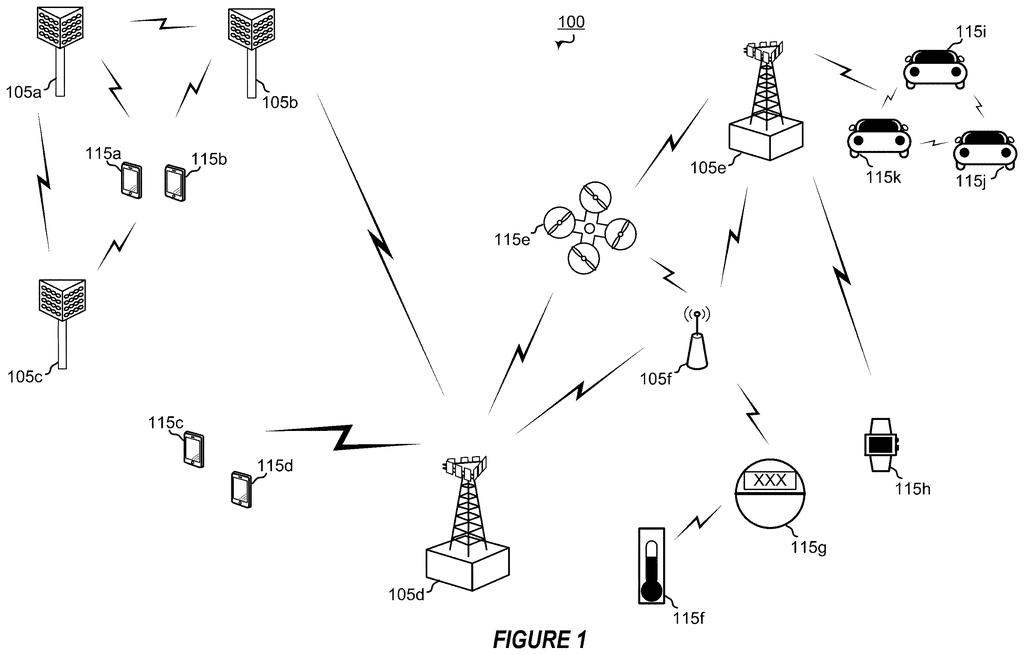
What Qualcomm's chunked photo sending does
You're on a video call from a packed stadium, and your friend's face turns to mush, then freezes. The signal didn't vanish. The call just needed more data than the connection could carry.
Qualcomm's patent application takes a different route. Instead of sending every pixel, your phone first boils each frame down to a compact description of what's in it. It then sends that description along with a small cheat sheet that tells the receiving end which details to expect, so the picture can be rebuilt accurately.
The twist is that the description is cut into chunks sized to fit the radio signal's current conditions. Several processing lines work on those chunks at the same time, which may cut delay and keep quality from dropping off a cliff.
apportion semantic feature data associated with a semantically-encoded image or video frame into a plurality of portions in accordance with a modulation and coding scheme (MCS) and a resource allocation …
Translation: Breaking down photo data into smaller chunks based on current wireless network conditions.
How the image gets split into parallel chunks
The filing covers both ends of one pipeline: a device that sends image data and a device that receives it. On the sending side, a semantic encoder (an AI model that turns pixels into a compact set of features describing the picture's content) shrinks the image. In the filing's example, a 1024 by 1024 color image becomes a 64 by 64 grid with 256 values at each spot.
A second model, called a hyperprior encoder, produces compressed feature probability data. Think of it as a cheat sheet listing how likely each feature is, which helps the receiver decode accurately. The sender decompresses that cheat sheet itself, then uses it to encode each chunk of the image.
Next comes the splitting. The device divides the features, and the matching cheat sheet pieces, into portions sized by the modulation and coding scheme (the setting that decides how tightly data is packed into the signal) and by the radio resources it was given. Each portion goes into a transport block (one package of data sent over the radio). The filing describes doing this inside the layers of the 5G modem software, which can cut and merge data pieces along the way.
The receiver does the reverse: it unpacks each transport block, decompresses the cheat sheet, and uses it to decode each chunk. Several encoders and decoders can run in parallel, one per chunk.
… transmitting a transport block (TB) that includes one or more of the encoded portions of the semantic feature data …
Translation: Sending the broken-down chunks across the network connection.
Why this matters for video over a bad signal
If this works as described, the payoff is photos and video that hold up on a poor connection. The filing says the approach lets larger, higher resolution images fit through a given slice of wireless bandwidth, and it aims at the sudden quality collapse that happens when a signal drops below what the link can carry. It covers phones and base stations alike, for uploads, downloads and device to device sending.
On status: the patent office has approved this application, and once Qualcomm pays the final fee it should be issued as a granted patent. That does not mean any phone will ship with it. Qualcomm makes modem chips found in many phones, so an idea like this would show up, if at all, as a change in how your phone's modem handles pictures, with no new button to press.
Qualcomm's 519th filing in our Qualcomm coverage since May adds to a body of work that includes photo gap-filling and on-demand tower sensing.
If you ever notice this, it will be because something did not go wrong. A video call from a crowded train or a stadium holds together a little longer, or a photo upload finishes faster. The failure it targets is the sudden freeze, when quality falls off a cliff instead of fading gradually.
You will never see a setting for it. The work happens inside the modem, and it only pays off if both ends of the connection speak the same scheme, so your phone and your carrier's equipment would both need to support it.
Our verdict: a useful fix for a common annoyance, wrapped in routine-looking radio engineering that most people will never know they are using.
Get our take in your Top Stories
Liked this breakdown? Add Patentlyze as a preferred source on Google, and our plain-English take shows up more often in your Top Stories the next time Qualcomm patent news breaks.
There are more where this came from
We read every patent application Big Tech publishes and send you the ones worth knowing. Plain English, free, every week.
The drawings
11 drawing sheets from US 2026/0323024 A1 · click any drawing to enlarge


Show the other 3 sheets


Want this weekly breakdown for a company we don't cover? Patentlyze Pro →
Be the first to weigh in