
IBM Patents a Control System That Manages Quantum Computer Operations at Scale
Programming a quantum computer today is a bit like writing directly in machine code for every instruction. IBM is patenting a system that adds a cleaner, higher-level layer in between, so the hardware can grow without the software collapsing under its own complexity.
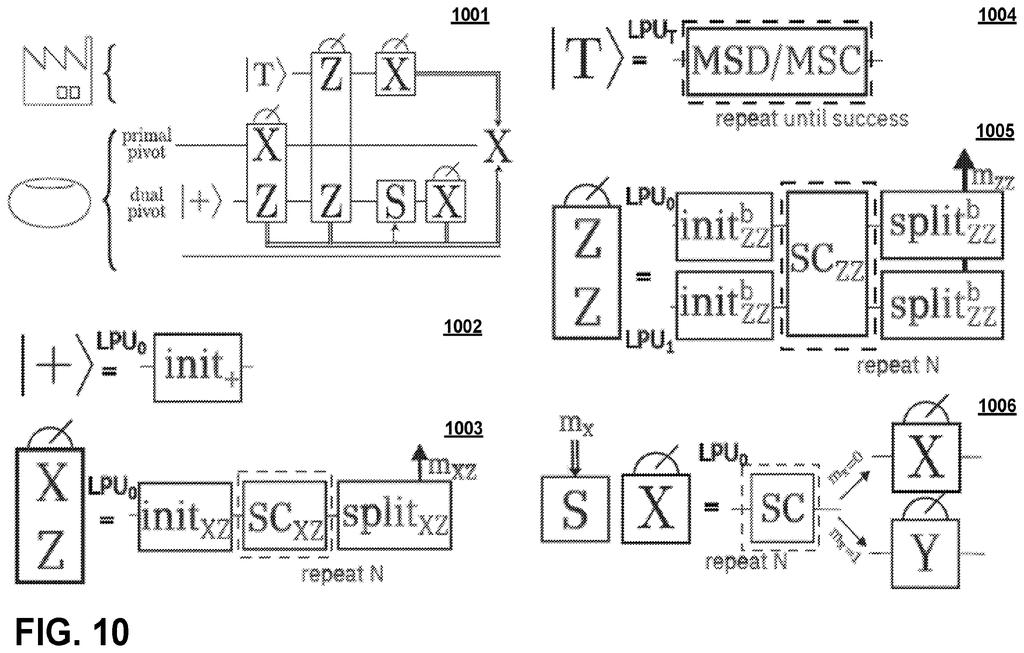
What IBM's quantum instruction system actually does
Today's quantum computers are notoriously hard to control at scale. Every operation has to be translated almost directly into hardware-level commands, and as quantum machines get bigger, that process becomes messier and more error-prone.
IBM's patent describes a control architecture with two distinct layers. A logical control unit handles the "what should happen" side of a quantum program, working at a relatively human-readable level. That unit then hands off to a code control unit, which handles the "how to physically do it" side, converting those instructions into the precise signals the quantum hardware actually needs.
Think of it like the difference between telling a GPS "take me to the airport" versus manually calculating every turn angle yourself. The split lets each layer focus on what it does best, and it means you can update one layer without breaking the other.
… a circuit execution unit that interprets the quantum program and generates, using an instruction element of the instruction element storage, a logical instruction that comprises a discrete higher-level instruction for the operation of the quantum program at the quantum computer system …
Translation: This part translates the high level quantum program into organized instructions.
How the logical and physical layers divide the work
The patent describes a logical control unit (LCU) that sits between the software that defines a quantum program and the physical quantum hardware that executes it.
The LCU contains a circuit execution unit (CEU), which reads the quantum program and generates logical instructions: discrete, higher-level commands that describe what the program wants to do without specifying the exact hardware signals required. To build those instructions, the CEU pulls from a dedicated region of memory called an instruction element storage, which holds reusable building blocks for quantum operations.
The CEU then passes those logical instructions to a separate code control unit (CCU). The CCU's job is translation: it takes a logical instruction and converts it into a physical instruction, a lower-level command that maps directly to the specific quantum hardware components (qubits, pulse generators, control lines) that will carry out the operation.
- The LCU handles program logic and abstraction
- The instruction element storage provides reusable operation templates
- The CCU handles hardware-specific translation
Separating these two concerns is the central design choice. It means changes to the physical hardware don't necessarily require rewriting the program logic, and vice versa.
What this means for scaling quantum machines
The biggest obstacle to useful quantum computers right now isn't just qubit count, it's control complexity. As machines scale from dozens to hundreds or thousands of qubits, the software that runs them has to handle exponentially more moving parts. Without a clean architectural layer between "program intent" and "hardware signal," that complexity tends to pile up in ways that make systems brittle and hard to debug.
IBM's layered approach is a direct attempt to solve that organizational problem. If it works as described, engineers could swap in new quantum hardware or optimize physical control sequences without touching the logical program layer, which is roughly how modern classical computing (think CPU instruction sets) manages similar complexity. That separation has been a core reason classical computers scaled so successfully for decades.
IBM's 21st filing we've tracked since May in our quantum computing buildout work follows a switch linking quantum components and an AI picking error-correction settings.
Rewriting quantum software every time the underlying machine changes is not a minor inconvenience. It is the equivalent of rewriting every spreadsheet each time a new computer comes out, multiplied across research teams, industries, and billions of dollars in development costs.
IBM's patent addresses this by placing a stable translation layer between the program and the machine, so the software can survive hardware changes intact. That is a direct attack on one of the most expensive friction points in the field right now.
The real question is whether the translation happens fast enough to matter, since quantum information degrades in milliseconds. The architecture is clearly defined here, but its value depends entirely on speed in practice.
There are more where this came from
We read every patent application Big Tech publishes and send you the ones worth knowing. Plain English, free, every week.
The drawings
13 drawing sheets from US 2026/0289375 A1 · click any drawing to enlarge


Want this weekly breakdown for a company we don't cover? Patentlyze Pro →
Be the first to weigh in