
A New IBM Patent Mixes Virtual Event Crowds Based on How Excited You Are
A virtual concert could rebuild the crowd around you in real time, swapping in fans from other rooms whenever your excitement rises or falls.
What IBM's multi-room event patent actually does
A virtual music festival runs three stages at once, and the crowd is split across three separate online rooms. You can stand in only one. If yours turns out to be dull, you have to leave and register somewhere else.
IBM's patent describes a fourth room built just for you, blended from the other three. You set the mix: maybe 30% of the people around you come from the first room, 40% from the second and 30% from the third. Or your avatar (your digital stand-in) could hop between rooms, spending set shares of the event in each.
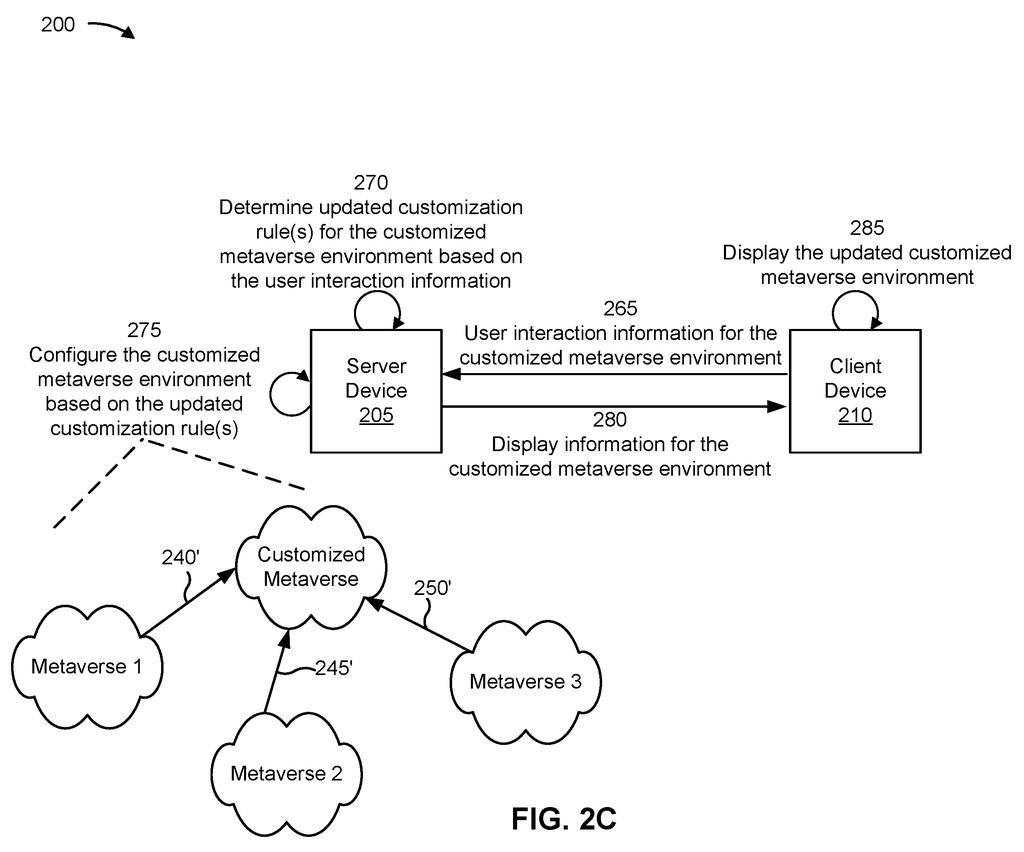
Then the system watches how you react, using your chat messages, your heart rate or how long you linger. When your excitement jumps or drops, it changes the mix on the fly. The mix can also follow the event itself, leaning toward the panel crowd once a panel starts.
… obtaining, based on user interaction information in the second metaverse environment, one or more interaction parameters for a user participating in the second metaverse environment, wherein the one or more interaction parameters indicate at least one of an excitement level or an interaction level …
Translation: The system measures how excited or active you are while participating in the virtual event.
How the crowd ratios shift when you get excited
The filing starts with an event that already has several separate virtual spaces (the patent calls them first metaverse environments). A sports match might have one room per team's supporters, a conference one room per talk, and a music festival one room per stage. Each room carries labels (metadata) such as who is in it, their age range, and whether people chat or watch in silence.
A server then builds a second, customized space from customization rules. Each rule holds a participation ratio, meaning a percentage for each original room. The filing applies those ratios in three ways:
- The share of people in your space who come from each room
- The share of time your avatar spends watching each room
- The share of avatars, objects and other virtual items borrowed from each room
Rules can come from you typing them in, from your history at earlier multi-room events, or from a rule-sharing platform such as a social network, where a recommendation system might suggest one person's rule to similar users.
Once you are inside, the server computes interaction parameters, such as an excitement level or an interaction level. Inputs include sentiment analysis of your chat (a message like 'This is amazing!' might score 8 out of 10), biometrics like heart rate, and measures like dwell time. If a score changes by more than a set threshold, the ratios are rewritten and the space is re-rendered, giving more weight to the room that was exciting you.
What this means for virtual concerts and games
If you have ever bounced between streams or group chats during a live game, this scratches the same itch in a virtual venue: the crowd around you adjusts itself so you are not hunting for the good room. It could matter for virtual concerts, watch parties and online conferences, where a single event is split across many rooms.
IBM also frames it as a savings for whoever runs the event: fewer people re-registering or asking to switch rooms means less network and computing load. The catch is that the system works best if it reads your heart rate or chat mood, which raises privacy questions the filing does not discuss. The examiner's first review rejected the claims as filed, which is routine at this stage and usually followed by amendments.
That makes this IBM's 432nd filing in our IBM coverage since May, a corpus that spans work like trimming old chat history and blocking name-based AI tricks.
Nothing here needs new hardware. It is server software plus whatever headset, laptop or phone people already use to join a virtual event, and the chat-based version of excitement scoring needs no sensors at all.
What has to exist first is the hard part: an event that really is split into several parallel rooms, with enough people in each to make a blended crowd feel alive. The shortest route to a product is modest: a watch-party or festival app with a slider that mixes the rooms and a timer that moves your avatar between them.
The excitement-tracking loop would take the longest to get right, because a racing heart can mean joy or fear, and a sarcastic chat message can fool a sentiment score. It is a plausible software feature for whoever hosts big virtual events, once enough people are showing up to virtual events at all.
Get our take in your Top Stories
Liked this breakdown? Add Patentlyze as a preferred source on Google, and our plain-English take shows up more often in your Top Stories the next time IBM patent news breaks.
There are more where this came from
We read every patent application Big Tech publishes and send you the ones worth knowing. Plain English, free, every week.
The drawings
6 drawing sheets from US 2026/0339677 A1 · click any drawing to enlarge


Want this weekly breakdown for a company we don't cover? Patentlyze Pro →
Be the first to weigh in