
IBM Files Patent to Stop AI From Being Fooled by the Names in Your Questions
Ask an AI to store data for a company called Joe's Billing and Accounting, and it may decide you meant billing tables. IBM's patent application hides the name so the AI can't get that idea.
What IBM's name-swapping patent actually does
Ever asked a coworker to find the right spreadsheet, only to watch them get sidetracked by a name? AI chatbots do the same thing. Ask one where to store a client called "Joe's Billing and Accounting," and it may send you to billing or accounting tables, because the words in the name sound relevant.
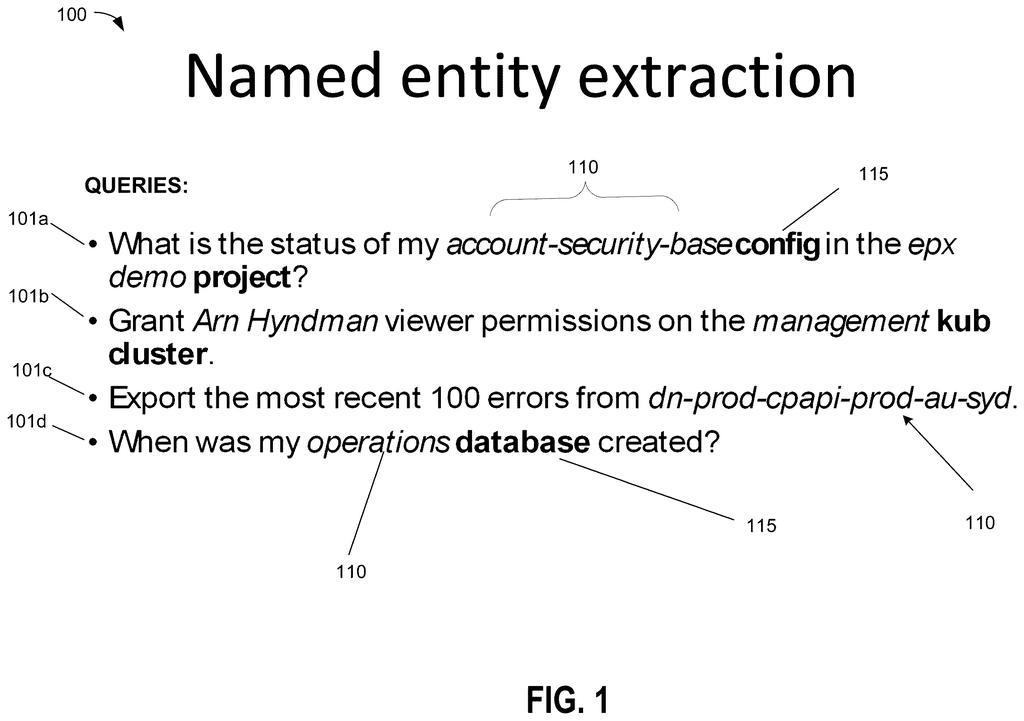
IBM's patent application tackles this by hiding the name. Before the AI sees your question, a first step spots the names in it and swaps each one for a plain label, such as "company name." The AI then does its work on the labeled version, so it can't be distracted by what the name sounds like.
When the answer comes back, the real names are put back in. IBM also says the trick keeps sensitive names away from the AI and may block a whole class of "prompt injection" attacks, where a hacker slips sneaky instructions into a question.
… replacing with placeholders at least one of the extracted identifying information or the type information; performing one or more AIM-supported operations on the user query having the placeholders to generate a response …
Translation: The system swaps sensitive words with temporary markers before the AI processes the question.
How the placeholders get swapped in and out
The filing describes a preprocessing step that runs before the main AI work. First, an AI model (often a large language model, the technology behind chatbots) reads your question and pulls out each named entity, meaning a specific name such as a project, user or database. It also pulls out the type, meaning the category the name belongs to.
If a name shows up without a type, the system can look the type up in a reference data set or another source, or ask you to supply it. The description also says a data source can double-check the extracted names and types before anything gets swapped.
From there the flow looks like this:
- Each name is swapped for a type-based label, such as <company name>, <project name> or <cluster name>.
- The original names and types are saved in a table (or a database).
- The labeled question goes to the AI for the real work: a tool call (the AI triggering another program), a request to write an SQL database query, or a RAG search (the AI looking up documents before answering).
- The table is used to put the real names back into the answer before you see it.
The claims cover this basic loop, plus the extra steps for missing types, label storage and the different kinds of AI requests.
The identifying information includes extracting entity names from the user query by a large language model (LLM).
Translation: The artificial intelligence specifically pulls out proper names from what the user typed.
Why IBM's patent targets wrong-table AI answers
If you use work software where an AI assistant looks things up in company databases, this is about whether it picks the right thing. The failure IBM describes is hard to catch, because the same question with a different name may work perfectly. IBM says its approach makes AI agents behave more predictably and can work even with smaller, lower-cost models.
Security is the second pitch. Since the AI never sees the real names, sensitive ones are not sent to it. IBM also says the labels may eliminate a whole class of prompt injection attacks, where a hacker sneaks instructions into a query. Keep in mind this is a patent application describing a method, and it doesn't point to any specific IBM product built on it.
This is the 72nd IBM filing we've tracked since May in the AI guardrails race, adding to earlier work like penalizing gendered resume words and checking AI against the law.
Most people would notice this fix only by its absence. You ask a work assistant a question, it returns the wrong table, and a colleague asking the same thing with a different name gets a perfect answer. That inconsistency is what makes AI tools hard to trust, and IBM's simple idea goes straight at it.
The idea is easy to grasp: take the name out, let the AI work on the shape of the question, then put the name back. Whether it works depends on the first step catching every name correctly, and the filing adds lookups and checks to help with that. If it holds up, the benefit is a welcome one: answers that don't change just because a client happens to have "billing" in its name.
Get our take in your Top Stories
Liked this breakdown? Add Patentlyze as a preferred source on Google, and our plain-English take shows up more often in your Top Stories the next time IBM patent news breaks.
There are more where this came from
We read every patent application Big Tech publishes and send you the ones worth knowing. Plain English, free, every week.
The drawings
5 drawing sheets from US 2026/0339947 A1 · click any drawing to enlarge


Want this weekly breakdown for a company we don't cover? Patentlyze Pro →
Be the first to weigh in