
Meta's New Patent Puts Translation in 3D Space So You Hear Both Languages at Once
Imagine hearing someone speak in French while simultaneously hearing the English translation — each voice coming from a distinct direction in 3D space. That's the core idea behind Meta's latest AR headset patent.
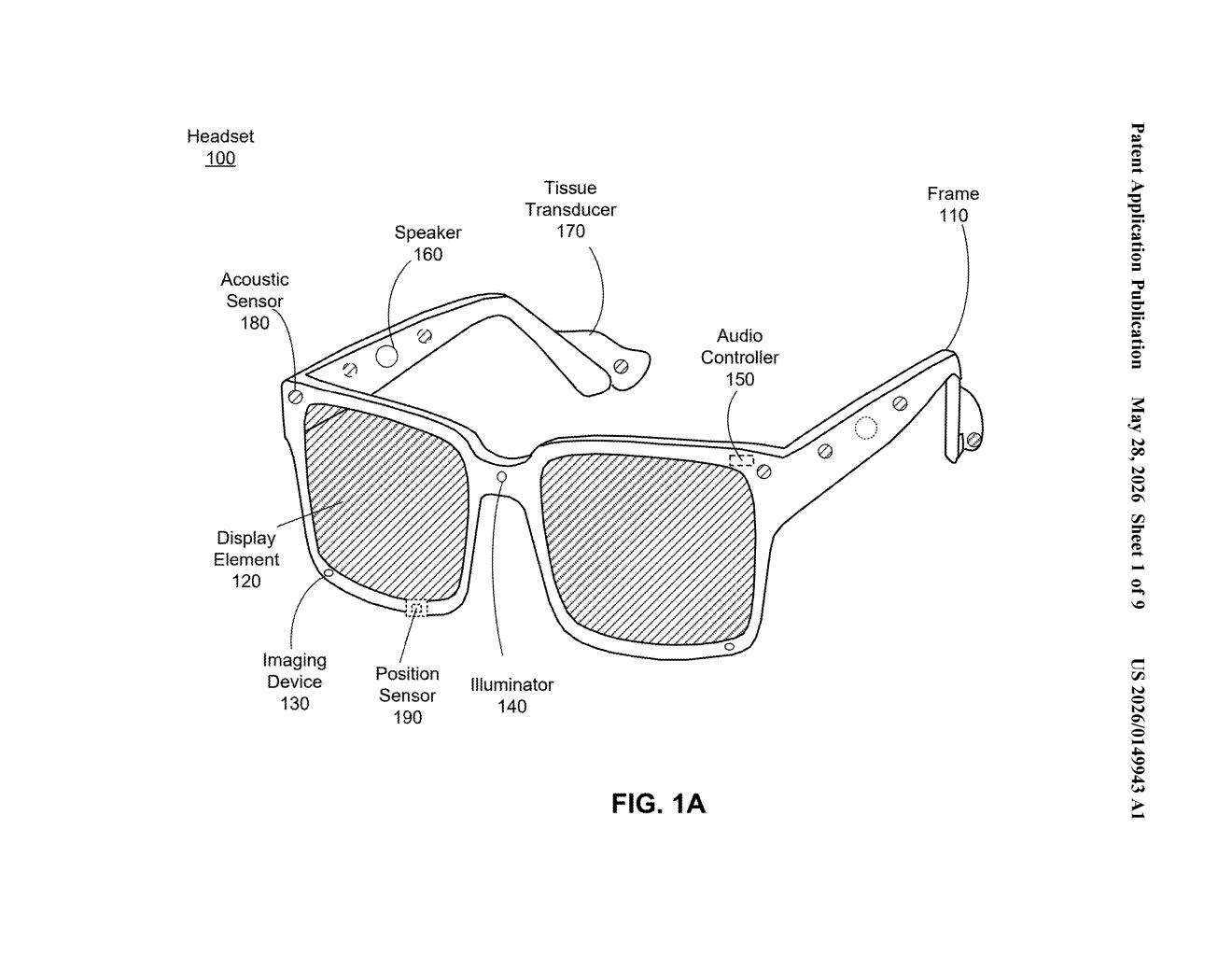
What Meta's spatial translation actually does for you
Picture yourself at a conference, talking to someone who speaks a completely different language. Right now, translation apps force you to stare at a screen or listen to a robotic voice that drowns out the real conversation. Meta's patent describes a different approach.
The idea is that your AR headset — think Ray-Ban Meta glasses or a future Quest-style device — picks up the other person's voice, translates it, and plays both the original voice and the translated version back to you at the same time. Crucially, each audio signal is spatialized, meaning it sounds like it's coming from a specific location in the room around you.
You'd also see the transcribed text from both languages on the headset's display. The effect is meant to feel natural — like you're actually hearing two versions of the same conversation in physical space, rather than having a flat robotic voice interrupt the flow.
How Meta spatializes original and translated voice signals
The system works in a pipeline that runs mostly on an external device (likely a paired phone or cloud server) rather than entirely on the headset itself. Here's the flow:
- A microphone on the headset captures a first voice signal in the speaker's language.
- That audio is transmitted to an external device, which handles transcription (speech-to-text) and translation into a second language.
- Both the original text and the translated text are sent back to the headset and shown on the display.
- A second voice signal — a synthesized audio version of the translation — is generated.
- Both the original and translated audio are spatialized (given 3D positional cues so they appear to come from specific directions) and played simultaneously.
The key novelty here is the simultaneous spatialization of both audio streams. Rather than cutting between languages or layering them as flat stereo audio, the system uses directional audio cues — similar to how spatial audio works on AirPods — to let both voices coexist in the listener's perceived space. The patent also covers displaying the first and second text on the headset's display, giving the user a visual fallback.
What this means for AR glasses and live translation
Meta is clearly building toward a world where its AR glasses serve as a real-time universal translator — one that doesn't break the social flow of a face-to-face conversation. Offloading the heavy compute to an external device is a practical engineering choice that keeps the headset lightweight, which matters a lot for wearable form factors like the Ray-Ban Meta frames.
For you as a user, the spatial audio angle is genuinely interesting: hearing a translation that sounds like it's coming from the person speaking — rather than from a disembodied app voice — could make the experience feel far less disruptive. Whether Meta can nail the latency well enough to make simultaneous dual-language audio feel natural, rather than chaotic, is the real engineering challenge this patent doesn't fully answer.
This is one of the more human-centered translation patents you'll see from a big tech company — most focus on accuracy or latency, but the spatial audio layer shows Meta thinking seriously about social ergonomics. The offload-to-external-device architecture is sensible given current wearable constraints, and the dual simultaneous audio concept is worth following closely as Ray-Ban Meta glasses gain more AI features.
There are more where this came from
We read every patent application Big Tech publishes and send you the ones worth knowing. Plain English, free, every week.
Want this weekly breakdown for a company we don't cover? Patentlyze Pro →