
Microsoft Patents a Collision-Detection Tool for AI Assistant Plug-in Selection
When you ask an AI assistant to book a flight and it opens the wrong app, that's a 'collision' — and Microsoft just filed a patent for a tool that finds and fixes those mix-ups before they reach you.
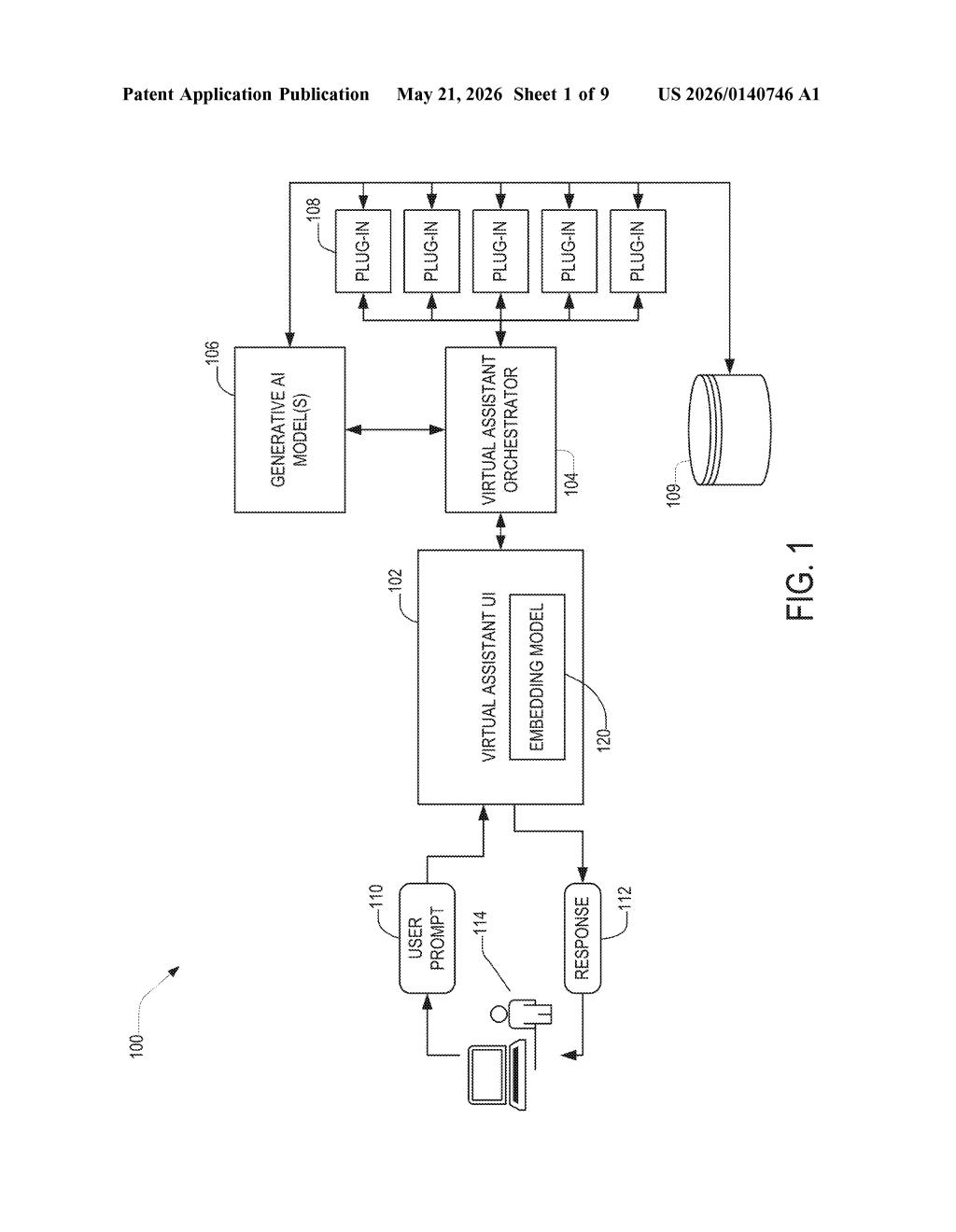
Why Microsoft's AI assistant keeps picking the wrong plug-in
Imagine you ask your AI assistant to check your calendar, and it accidentally opens your email instead. Both plug-ins handle 'scheduling'-style questions, so the AI gets confused. This is what Microsoft calls a collision — when two plug-ins look so similar to the AI that it picks the wrong one.
Microsoft's patent describes a debugging tool that takes all the example phrases used to train each plug-in and plots them on a visual map — like a scatter plot. If two plug-ins' example phrases land too close together on that map, you can see the problem immediately. You then tweak the example phrases — adding, removing, or rewriting them — until the clusters separate cleanly.
A generative AI model can even suggest what changes to make automatically. It's essentially a spell-checker for plug-in definitions, helping developers build AI assistants that reliably route your requests to the right tool.
How the embedding scatter plot catches plug-in collisions
The system works by leveraging the same embedding model (a neural network that converts text into lists of numbers called vectors) that the virtual assistant already uses for plug-in selection. Each example prompt in a plug-in's definition gets encoded into a high-dimensional embedding vector — think of it as a unique numerical fingerprint for that phrase in a space with potentially thousands of dimensions.
Because humans can't visualize thousands of dimensions, the patent applies a dimensionality-reduction step (techniques like PCA or UMAP that compress high-dimensional data into 2D or 3D coordinates without losing too much structural information). The result is a scatter plot where each dot represents one example prompt, colored by which plug-in it belongs to.
When two plug-ins' clusters overlap or sit too close together on that plot, the system flags those prompts as likely collision candidates. From there:
- A generative model proposes concrete fixes: delete ambiguous examples, rewrite them to be more distinct, or add new examples that push clusters further apart.
- Developers can watch the scatter plot update in real time as they apply changes, giving immediate visual feedback on whether the fix worked.
- The entire loop uses the same embedding model as production, so what you see in the debugger reflects what the live assistant will actually experience.
What this means for Copilot's plug-in ecosystem
As Copilot and similar AI assistant platforms accumulate hundreds or thousands of third-party plug-ins, the collision problem compounds fast. Two plug-ins covering overlapping domains — say, a travel booking app and a corporate expense tool — can share so many natural-language patterns that even a well-trained routing model struggles. Right now, debugging that is largely guesswork.
This patent formalizes a visual, iterative workflow for plug-in developers and platform operators to catch routing failures before they ship. For users, that means fewer moments where your AI assistant confidently does the wrong thing. For Microsoft, it's infrastructure that makes the Copilot plug-in marketplace more reliable at scale — which matters when enterprise customers are paying for predictable automation.
This is unglamorous but genuinely useful engineering. The core insight — use the production embedding model for debugging, not a proxy — is the kind of detail that separates a tool that actually works from one that looks good in a demo. If Microsoft ships this as part of its Copilot extensibility toolkit, plug-in developers will use it constantly.
There are more where this came from
We read every patent application Big Tech publishes and send you the ones worth knowing. Plain English, free, every week.
Want this weekly breakdown for a company we don't cover? Patentlyze Pro →