
Microsoft Patent Routes AI Inference Around Unnecessary Model Components for Faster Results
Most AI models do the same amount of computational work no matter how simple or complex your question is. Microsoft has filed a patent for a technique that converts an existing model into one that only activates the parts of itself it actually needs for each specific input, saving time and computing resources without starting from scratch.
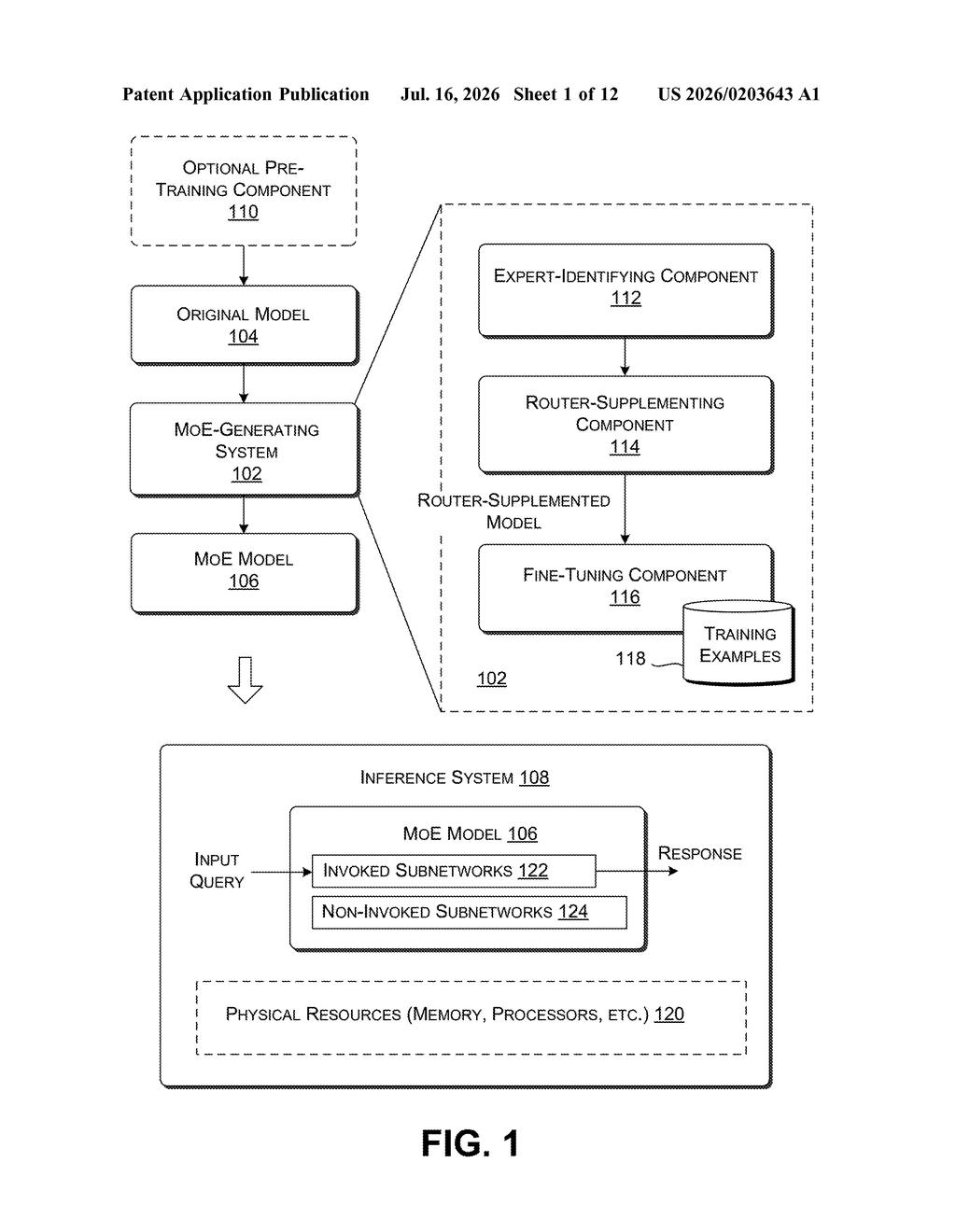
How Microsoft's model-conversion shortcut actually works
Imagine a team of specialists at a company where every meeting requires all of them to show up, even when only one or two are needed. That's roughly how many AI models work today: every question, whether trivial or complicated, runs through the entire model. It wastes effort.
Microsoft's patent describes a way to take an existing AI model and convert it into a version that uses a traffic-directing layer (called a router) to decide which parts of the model should handle each incoming request. Only the most relevant parts get activated. The rest stay idle, saving computing power and speeding things up.
The clever part is that Microsoft's approach doesn't require training a brand-new model from the ground up. You take a model you already have, identify the distinct internal pathways it uses, add the router on top, do a targeted round of additional training, and end up with a faster, leaner version of the original.
Inside the router's two-part scoring system
The patent describes a process called "in-place mixture-of-experts" (MoE) conversion. A mixture-of-experts model is an AI architecture where the model is divided into multiple specialized sub-components (the "experts"), and a routing layer decides which of those sub-components processes any given input. Only a subset runs at a time, which cuts down on computation.
What makes Microsoft's approach distinctive is that it works on existing trained models rather than requiring you to build an MoE model from scratch. The method:
- Identifies groups of subnetworks (internal pathways within the original model that already handle different types of tasks differently) inside the original model.
- Adds a router that scores each subnetwork using two factors: (1) information about the current input token's internal representation (what the model "understands" about the input so far), and (2) an assessed saliency score (a measure of how important or active a given subnetwork has historically been for similar inputs).
- Fine-tunes the combined system (a relatively short additional training phase) to make sure the router learns to direct traffic effectively.
The result is a model that runs the same tasks as before but activates fewer internal components per query, reducing both latency (response time) and compute cost during inference (the phase when the model is actually answering questions, not training).
What this means for the cost of running large AI models
Running large AI models is expensive. Every query through a big language model consumes GPU time, and those costs add up fast at scale. Techniques that reduce how much of a model activates per query, without hurting quality, are genuinely valuable for companies deploying AI in products or cloud services. Microsoft is one of the largest AI infrastructure operators in the world through Azure and its OpenAI partnership, so any tool that makes inference cheaper has real financial weight.
For users, the practical upside is faster responses and the ability to serve more people on the same hardware. The fact that this technique converts existing models rather than requiring new ones to be trained from scratch also lowers the barrier for teams that already have a trained model they want to make more efficient.
This is infrastructure work, not a headline product feature, but it's the kind of patent that could show up inside Azure AI services or Copilot deployments within a year or two. The two-part scoring router (input context plus subnetwork importance) is a specific enough design choice that Microsoft clearly intends to use this in production, not just publish it. Worth watching if you follow AI inference costs.
Get our take in your Top Stories
Liked this breakdown? Add Patentlyze as a preferred source on Google, and our plain-English take shows up more often in your Top Stories the next time Microsoft patent news breaks.
There are more where this came from
We read every patent application Big Tech publishes and send you the ones worth knowing. Plain English, free, every week.
Want this weekly breakdown for a company we don't cover? Patentlyze Pro →