
Microsoft Patents AI System for Flagging Apps With Unexpected Network Traffic
Microsoft is patenting an AI system that watches how an application moves data across a network and automatically raises an alarm when something stops looking normal, even as "normal" shifts over time.
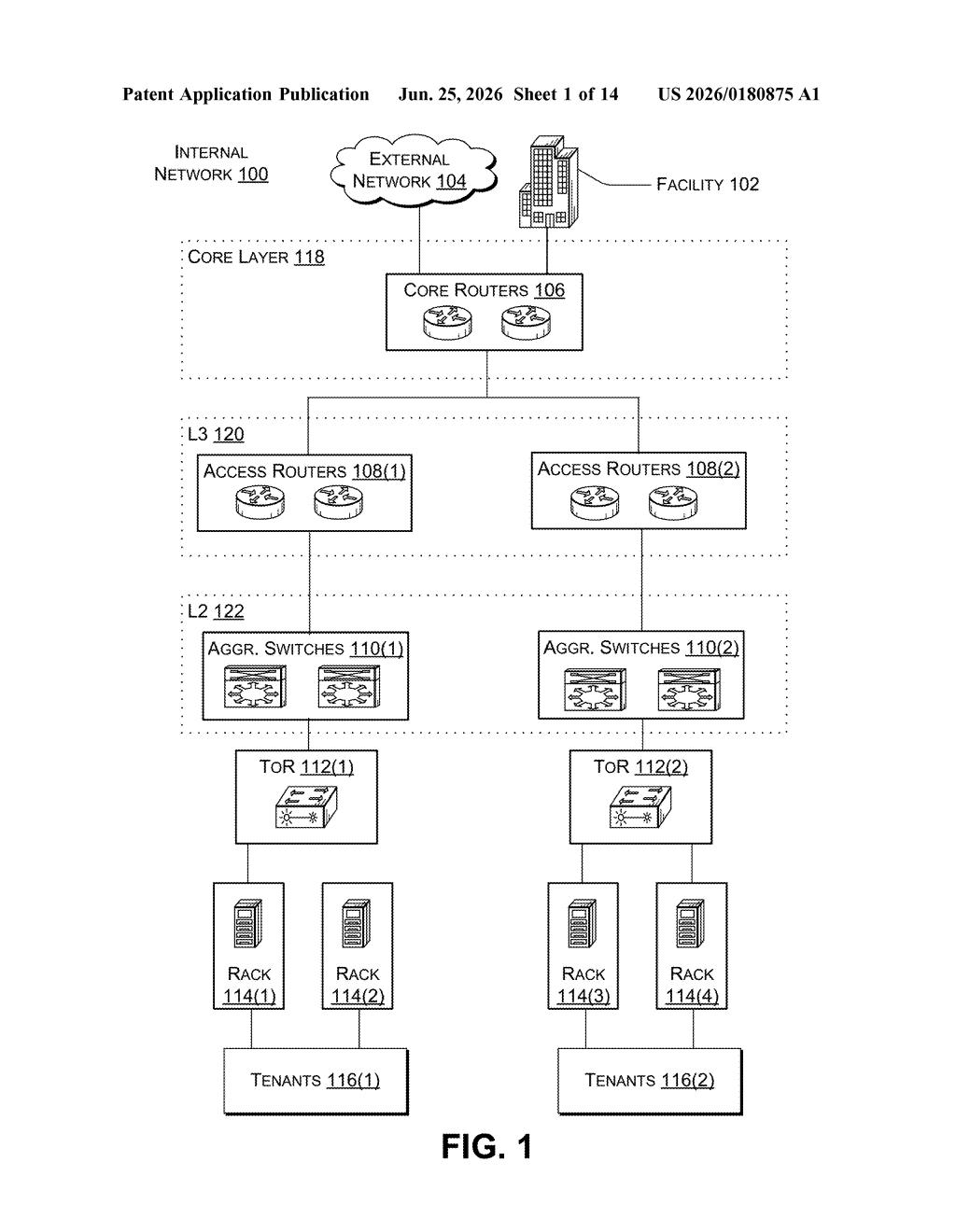
What Microsoft's network-watching AI actually does
Imagine your bank notices you usually spend $50 at a coffee shop every Tuesday morning. One week, a charge appears at 3 a.m. from a foreign country, and your bank flags it immediately. Microsoft's patent works the same way, but for software applications instead of credit cards.
The system watches the flow of data going in and out of an application and builds a picture of what ordinary traffic looks like. When something breaks that pattern, it raises a flag. The clever part is that it keeps relearning over time, so if your app's normal behavior genuinely changes, the system updates its baseline rather than crying wolf every day.
In some versions, it uses a type of AI called a graph neural network, which is particularly good at spotting patterns in data that involves many interconnected pieces, like network traffic.
How the graph neural network spots traffic anomalies
The patent describes a system for automatically detecting anomalies in how an application behaves on a network, using machine learning trained on network flow data (records of which machines are talking to which, how much data is exchanged, and when).
- Data collection: The system gathers network flow records for a specific application, tracking traffic patterns over time.
- Anomaly detection: A machine learning model processes those records and flags behavior that deviates from the established baseline.
- Continuous retraining: The model is updated periodically so it can adapt when an application's legitimate traffic patterns evolve, reducing false positives.
- Graph neural network option: In at least one described approach, a graph neural network (GNN) is used. A GNN treats each machine or service as a node and each connection as an edge, letting the model reason about the structure of communication, not just its volume.
The combination of ongoing retraining and graph-based modeling is meant to handle the reality that cloud applications don't have static traffic patterns. A model frozen at deployment would quickly become outdated.
What this means for cloud and enterprise security
For enterprise IT and cloud operators, catching a compromised application early, before it exfiltrates data or spreads laterally, is one of the hardest problems in security. Most current tools rely on static rules or signatures that attackers learn to evade. A model that continuously relearns what your application's traffic looks like is harder to sneak past.
Microsoft operates Azure, one of the largest cloud platforms in the world, and products like Microsoft Sentinel are already in the network security space. A patent like this fits naturally into that portfolio. For you as an enterprise customer, it hints at detection capabilities that could eventually flag threats without requiring manual rule-writing.
This is a solid, practical patent in a real problem space, but it's not a surprise coming from Microsoft. The core ideas, using ML on flow data and retraining over time, are well-established in security research. The graph neural network angle is the most interesting technical wrinkle. Whether the patent adds meaningful protection or just covers an obvious extension of existing methods is the real question, and the fact that claims 1 through 13 were canceled before publication is a meaningful yellow flag.
There are more where this came from
We read every patent application Big Tech publishes and send you the ones worth knowing. Plain English, free, every week.
Want this weekly breakdown for a company we don't cover? Patentlyze Pro →