
Microsoft Patents a Registration-Based System to Lock App Tokens to Specific Instances
What if an authentication token could only ever work inside the exact app instance that requested it — and nowhere else? That's the core idea in Microsoft's latest authentication patent.
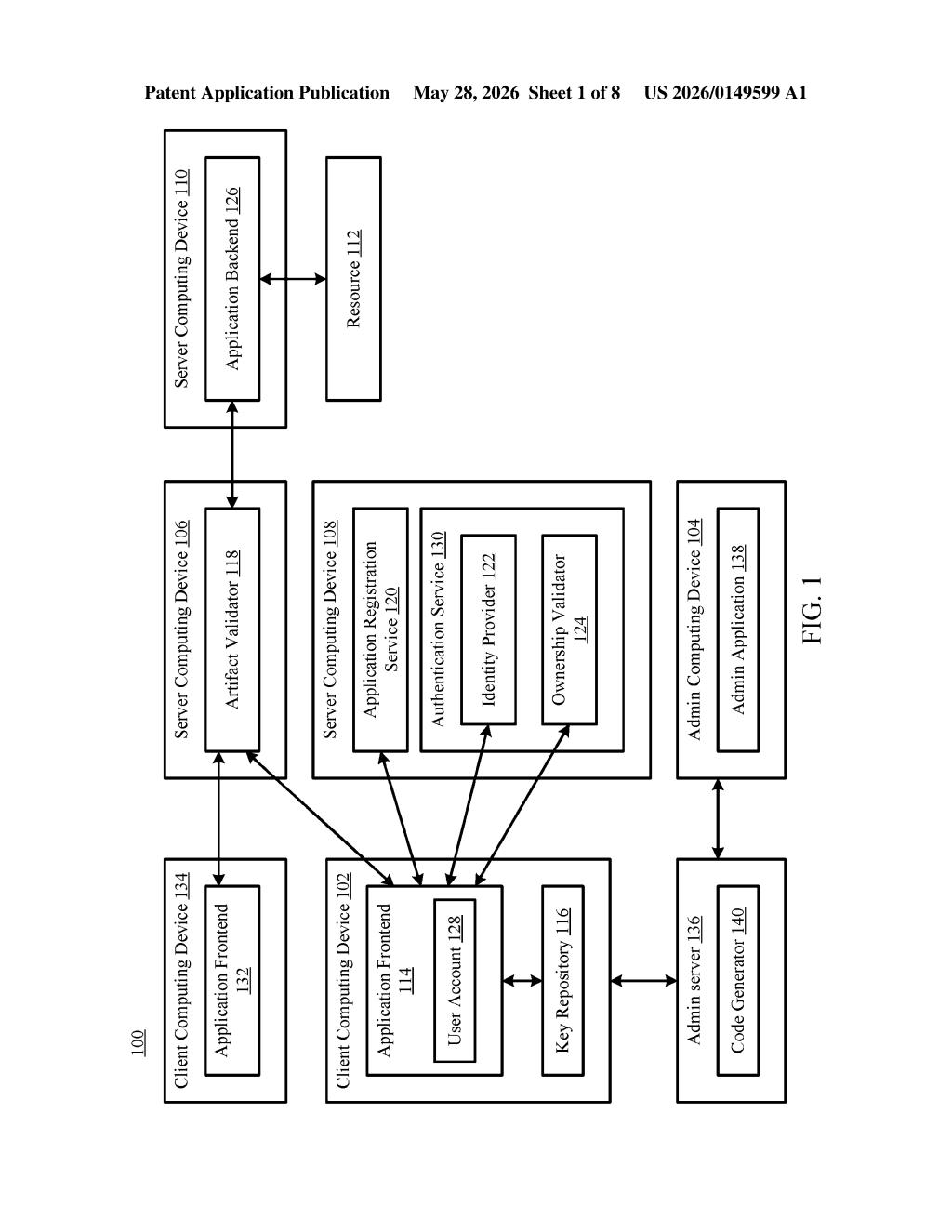
How Microsoft's app-bound authentication tokens work
Imagine you log into a banking app and your bank issues you a special pass. Right now, if someone stole that pass, they could potentially use it from another device or app copy to access your account. Microsoft's patent describes a system designed to close that loophole.
Here's how it works in plain terms: when your app first installs, it registers with a central service and gets a unique registration key. Later, when you log in, the app has to prove it actually holds that key — and your login credentials get bundled with that proof. The result is an access token (called an artifact) that's cryptographically tied to your specific copy of the app.
So even if an attacker grabbed your token, they couldn't use it from a different app instance. The server would reject it. It's a bit like a hotel key card that only works for the exact lock it was programmed for — not just any door in the building.
How the proof code and ownership validator lock the artifact
The system has three main components working together: an Application Registration Service, an Authentication Service, and an Identity Provider paired with an Ownership Validator.
First, an app frontend registers with the Application Registration Service — think of this as the app proving it's a legitimate, known piece of software. It receives a registration key in return. When a user later tries to authenticate, the app generates a proof code derived from that registration key and bundles it with the user's account credential, sending both to the Authentication Service.
The Identity Provider half of the Authentication Service handles the credential check (validating the username/password or token via a standard identity flow). It then packages the proof code into an authentication artifact — essentially a signed token. The Ownership Validator then checks whether that proof code is legitimately tied to a registered app instance. If it is, it digitally signs the artifact, making it a signed authentication artifact.
- The app presents the signed artifact to access backend resources
- The artifact is cryptographically bound to the specific app instance that registered
- Other instances — even of the same app — cannot reuse the artifact
This binding mechanism is the key innovation: it makes token theft significantly less useful because the stolen token won't pass the instance-binding check.
Why binding tokens to app instances matters for enterprise security
Token theft is one of the most common and effective attack vectors in modern cloud environments. Tools like Evilginx and similar adversary-in-the-middle frameworks specifically target session tokens because once you have the token, you often don't need the password at all. Microsoft's system targets this by making the token useless without also controlling the exact registered app instance — a much harder bar for attackers to clear.
For enterprise customers using Microsoft's identity platform (Azure AD / Entra ID), this kind of instance-bound token could meaningfully raise the cost of post-authentication attacks. It also fits neatly into Microsoft's broader Zero Trust architecture push, where continuous verification of device and application identity — not just user identity — is the goal.
This is solid, unsexy security infrastructure work — the kind that rarely makes headlines but matters a lot in practice. Token theft is a real and growing attack class, and binding artifacts to registered app instances is a technically coherent response. Microsoft is clearly thinking about this at the platform level, which suggests it could eventually surface in Entra ID or the Microsoft Authentication Library (MSAL) rather than as a one-off product feature.
There are more where this came from
We read every patent application Big Tech publishes and send you the ones worth knowing. Plain English, free, every week.
Want this weekly breakdown for a company we don't cover? Patentlyze Pro →