
Microsoft Patents a Way for AR Headsets to Share Each Other's Views Mid-Collaboration
Imagine working alongside a colleague in augmented reality and being able to glance at exactly what they're seeing — without taking off your headset or interrupting the flow of work. That's the core idea behind this Microsoft patent.
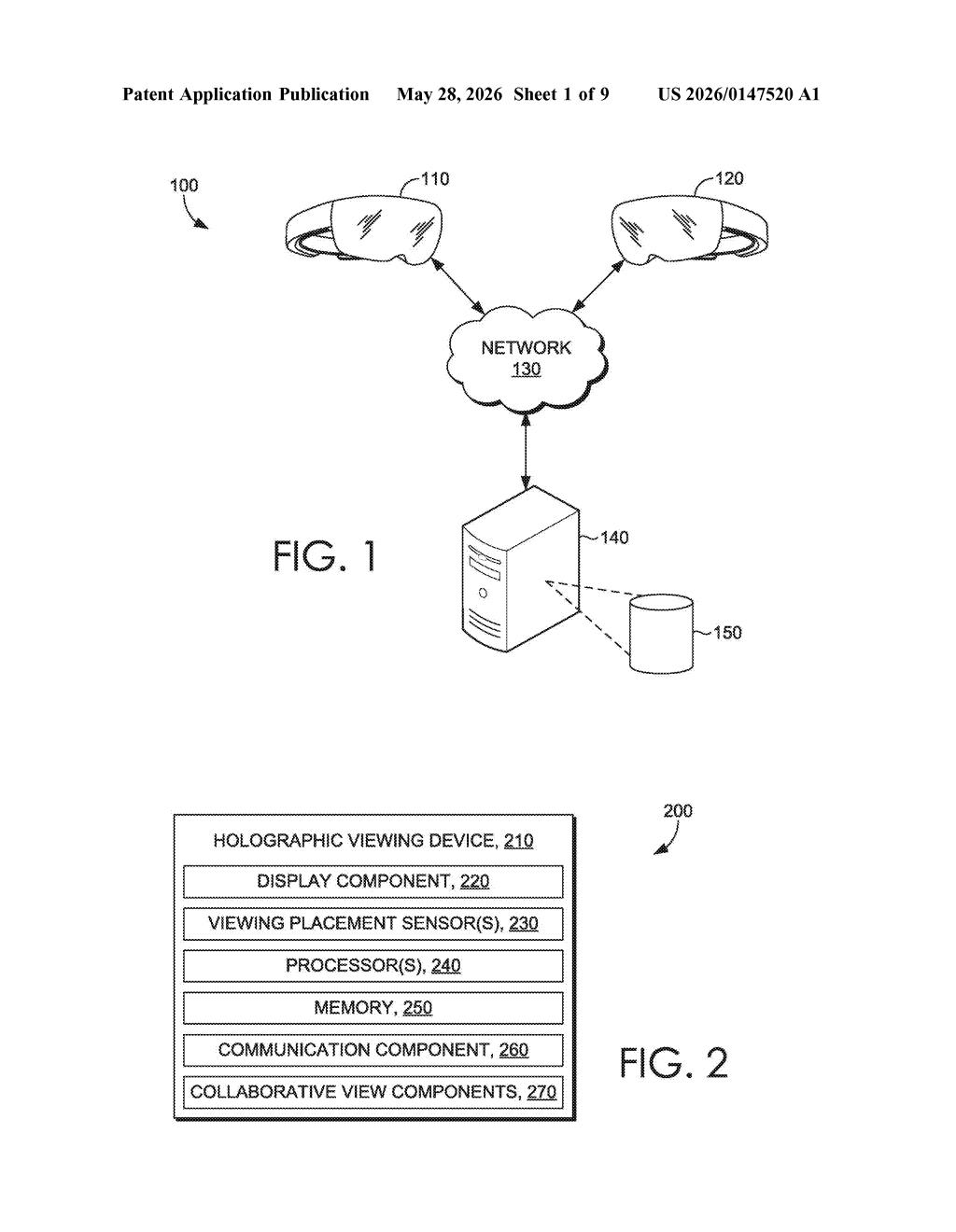
What Microsoft's AR view-sharing system actually does
Picture two people wearing AR headsets in the same room — maybe engineers inspecting a 3D model of a machine, or designers reviewing a layout together. Right now, each person only sees their own perspective. If you want to know what your colleague is looking at, you have to walk over or ask them to describe it.
Microsoft's patent describes a system where one headset can request a live view from another headset simply by performing a detected interaction — like gesturing toward or pointing at your colleague's device. The second headset processes that request and sends back a snapshot of what it's seeing. Your headset then renders that view alongside your own, without blocking what you're already looking at.
The clever part is how the shared content is positioned: the system places the incoming visual data in a spot that avoids obstructing either user's real-world view. It's awareness without intrusion — you get context about your collaborator's perspective without either of you losing track of your own work.
How the HMDs exchange and render each other's perspective data
The patent describes a two-HMD collaboration protocol built around a request-response loop triggered by physical interaction. Here's the flow:
- A first HMD continuously captures its perspective view of a scene from its current position.
- A second HMD detects an interaction directed at the first HMD — the patent doesn't nail down the exact gesture, but the implication is something intentional and low-friction, like a point or a gaze lock.
- That interaction triggers the second HMD to send a state information request to the first HMD.
- The first HMD responds by packaging at least a portion of its current image and transmitting it back.
- The second HMD renders the received view concurrently with its own AR scene — both perspectives visible at once.
The system also handles spatial positioning of the shared content. Computer-generated objects carrying the collaborator's view data are placed according to the real-world or virtualized position of the source HMD, so the overlay doesn't interfere with either user's primary field of view. Think of it like a floating picture-in-picture window anchored to where your colleague is physically standing.
The patent also mentions "status" information beyond just the visual feed — suggesting the system could surface things like what a collaborator is focused on or what holographic data they have loaded, not just a raw image.
What this means for real-world AR teamwork on HoloLens
For Microsoft's HoloLens and any future mixed-reality hardware, this kind of seamless view-sharing is the difference between AR being a solo tool and a genuinely collaborative one. Right now, sharing perspectives in AR requires clunky screen-casting workarounds or stepping out of the experience entirely. A native, gesture-triggered system that keeps both users in their flow state is a meaningful usability upgrade.
The non-obstructive positioning angle is also worth flagging. One of the persistent complaints about AR overlays is that they clutter your field of view at the worst moments. By anchoring shared content spatially — near where your collaborator actually is — Microsoft is designing around that problem rather than just bolting on a feature and hoping users figure out the rest.
This is a practical, well-scoped patent that solves a real friction point in AR collaboration without overpromising. It's not a moonshot — it's the kind of thoughtful UX infrastructure that could quietly make HoloLens deployments in enterprise settings (manufacturing floors, surgical suites, remote assistance) meaningfully more useful. Worth watching if you're tracking Microsoft's mixed-reality roadmap.
There are more where this came from
We read every patent application Big Tech publishes and send you the ones worth knowing. Plain English, free, every week.
Want this weekly breakdown for a company we don't cover? Patentlyze Pro →