
Microsoft Patents a Paper Trail for Every Image and Story Its AI Makes
Microsoft's patent describes a switchboard for AI-made content that can hand back a saved answer instead of generating a new one, and it keeps a log of which model made what.
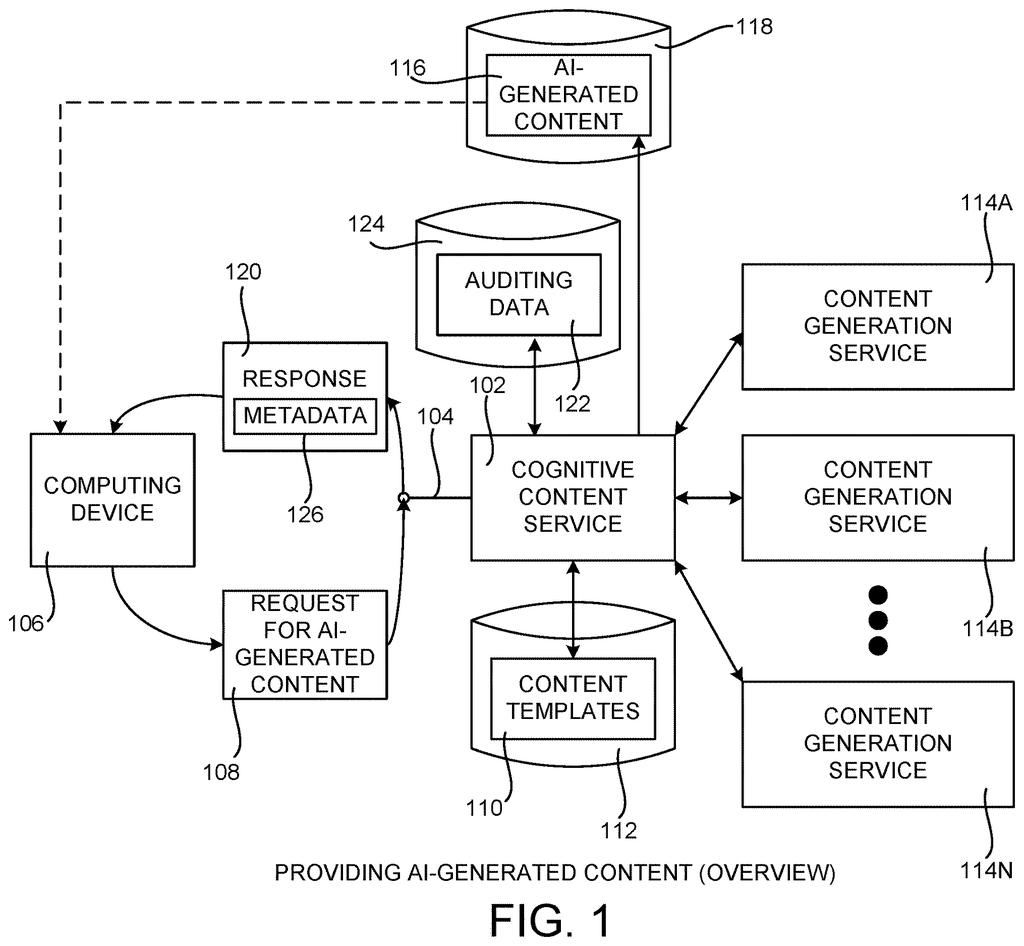
What Microsoft's AI content templates actually do
Today, when an app asks an AI for a picture or a paragraph, the system usually builds a brand-new one every single time, even if the exact same request came in a minute ago. That burns computing power, and the wait can stretch from seconds to minutes.
Microsoft's patent describes a middle layer that decides whether a fresh answer is really needed. Each request points to a saved template, a kind of standing instruction sheet. One template might say to always reuse the last result, another to always make a new one, and another to refresh after a set amount of time or number of requests.
The filing also adds a record-keeping side. Every time the AI makes something, the system notes which model made it and tracks how often the template is used, so a person can look back through the history on a dashboard.
… receiving, from the content generation service, auditing data identifying one or more of a model utilized to generate the AI-generated content, a version of the model, a training history of the model, or infrastructure utilized to execute the model; …
Translation: The system collects detailed records about which AI model, version, training data, and hardware were used to make the content.
How each request gets logged and counted
At the center is a cognitive content service, a piece of server software that sits between whoever asks for AI content and the AI models that create it. A request arrives through an API (a standard doorway that programs use to talk to each other) or a screen-based or command-line interface, carrying the ID of a content template.
The template is structured data, written in a markup language such as XML, that spells out when and how content gets made. In the filing's example, a template reads "basket of { }" with "oranges" as the default fill-in, so a request can swap in "pears" and get a different picture. The template also sets a cognition type:
- Cold: return a previously generated result.
- Hot: always generate a new one.
- Warm: follow a refresh policy, such as regenerating after five minutes, two hours, or a set number of requests.
The claims focus on the paper trail. When a generation service makes content, it sends back auditing data: the model used, its version, its training history, or the hardware it ran on. The service stores that in a separate audit store, adds one to the template's usage counter, and replies with an ID or web address for the content plus a link to a dashboard showing the history of requests and responses.
The filing also describes permissions, so a template link can be shared with outside parties who can request content without ever seeing the template itself.
The cognitive content service determines, based on the identified content template, whether the requested AI-generated content is to be newly generated or whether previously generated AI-generated content is to be returned in response to the request.
Translation: The system checks if it needs to create a new piece of AI content or simply reuse an older one that was already made.
Why a paper trail for AI output matters
For you as an everyday user of AI features, the practical effect would be speed and cost. Answers that can be reused come back fast, and the company running them spends less computing power and energy. The filing says this approach can cut processor time, memory use, energy use, and the delay people feel when waiting on an AI.
The audit side matters for a different reason. The filing lists bias and other unwanted output as things existing systems struggle to govern. A record of which model, which version, and which training history produced each result gives a company something to check when an output goes wrong or someone asks where it came from. Microsoft says this data can be used for governance and auditing.
Microsoft's 57th filing in the Enterprise AI work we've tracked since May adds to a run that includes swappable skill add-ons for on-device AI and rewording questions to match past ones.
The cost problem is easy to see. Generating a fresh AI image or paragraph for every request is expensive, and the filing puts the wait at seconds to minutes. When many people ask for nearly the same thing, redoing the work each time is plain waste.
Saving and reusing answers is an old, obvious fix, so the speed-up half of this filing is routine. The record-keeping half is more interesting, and it is what the claims actually center on. Companies are increasingly asked who made what and with which model, and a log that answers that automatically fits the size of that question.
A log only tells you what happened after the fact. It does nothing to stop a biased or wrong result from going out in the first place, so the dashboard helps most when someone is investigating a problem.
Get our take in your Top Stories
Liked this breakdown? Add Patentlyze as a preferred source on Google, and our plain-English take shows up more often in your Top Stories the next time Microsoft patent news breaks.
There are more where this came from
We read every patent application Big Tech publishes and send you the ones worth knowing. Plain English, free, every week.
The drawings
10 drawing sheets from US 2026/0349797 A1 · click any drawing to enlarge


Show the other 2 sheets


Want this weekly breakdown for a company we don't cover? Patentlyze Pro →
Be the first to weigh in