
Microsoft Patents a System That Catches Code Bugs Before They Spread
Every time a software team ships an update, something can break. Microsoft has patented a system that watches live services in real time, ties any slowdown back to a specific code change, and automatically starts fixing the problem.
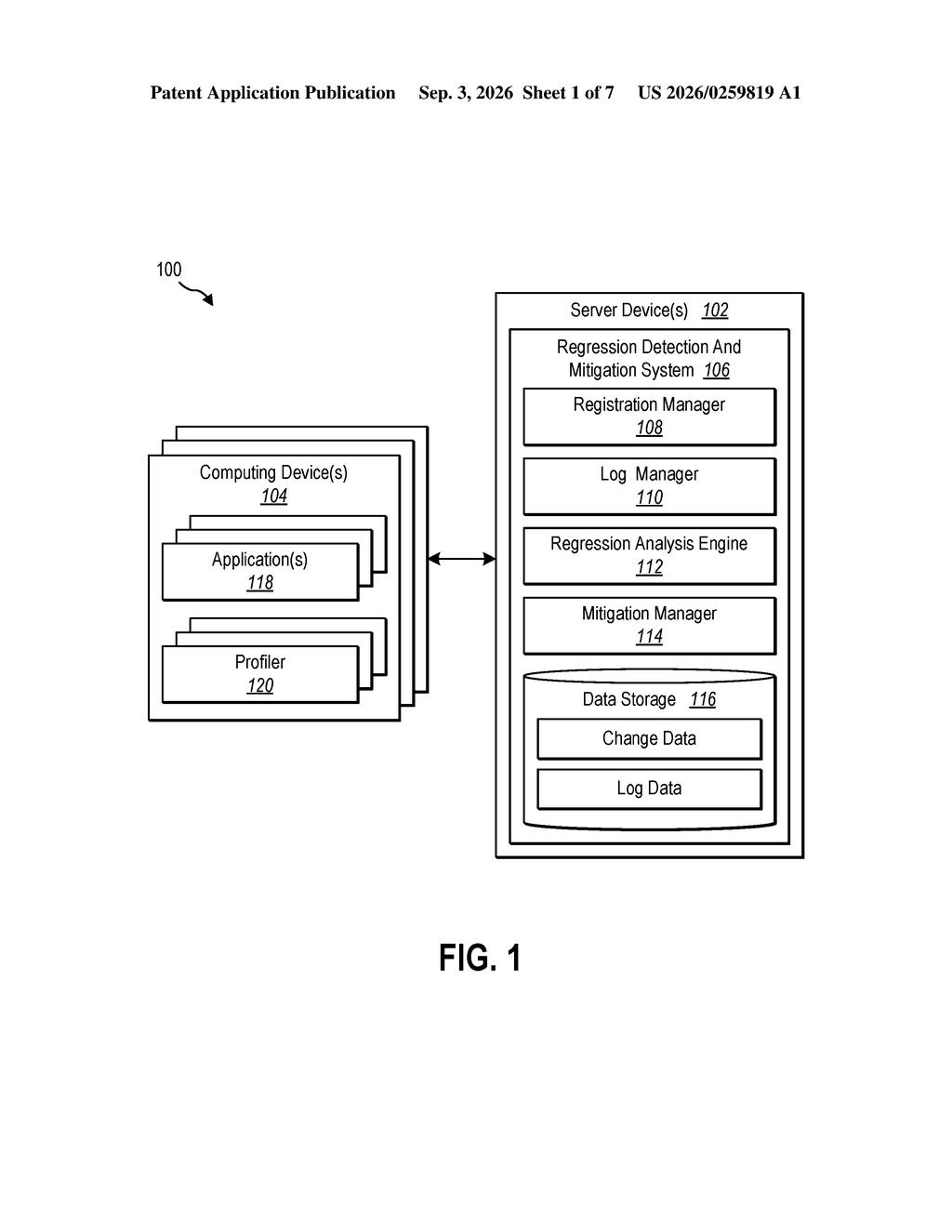
What Microsoft's automatic regression detector actually does
Ever wondered why an app you use every day suddenly feels slower, then goes back to normal a few hours later? Behind the scenes, a software engineer probably pushed a code update that caused a problem, and another engineer had to race to find and undo it.
Microsoft's patent describes a system designed to handle that detective work automatically. When a developer saves a code change, the system tags it with a unique ID. It then watches a running log of how the software is actually behaving, things like how long operations take or how much computing power they consume. If the numbers get worse after that tagged change arrives, the system connects the dots.
Once it spots the connection, it doesn't just send an alert. It can take action on its own, rolling back the change or rerouting work, to limit the damage. Microsoft's cloud-reliability patent activity has been building toward exactly this kind of self-healing infrastructure.
… associating a set of log instances from the trace log with the commit identifier for the subroutine based on a comparison of the registered commit identifier and the plurality of log instances from the trace log; …
Translation: The system links specific code updates to the performance data they generated.
How the system links a code commit to a live performance dip
The system operates inside distributed computing environments, meaning large collections of servers running many small pieces of code, called subroutines, simultaneously.
Here is how the process flows:
- Tag the change: When a developer commits a code update, the system registers a commit identifier, a unique label attached to that specific version of the code.
- Watch the logs: A trace log continuously records what every subroutine is doing, capturing usage metrics like response time, error rates, and resource consumption for each action the code takes.
- Make the match: The system compares the commit identifier against log entries to find which log records were produced by the updated version of the code.
- Spot the regression: If the usage metrics for those matched log entries are significantly worse than baseline, the system declares a regression, meaning the update made things worse.
- Act on it: The system then performs a mitigation action. The patent frames this as reducing the "cumulative cost" of the bad metrics, which could mean rolling back the code, scaling up resources, or flagging the change for immediate review.
The key technical move is the correlation step: instead of a human manually comparing pre- and post-update performance, the system does it continuously and at scale across many subroutines at once.
… determining which usage metrics are attributable to specific subroutine changes and detecting whether a regression has occurred.
Translation: It figures out if a specific code update caused a performance drop or bug.
What this means for cloud services you use every day
For large cloud platforms, a bad code update can affect millions of users within minutes. Today, finding which of dozens of simultaneous code changes caused a slowdown is largely a manual process. A system that automates that correlation and triggers a fix shortens the window between "something broke" and "it's fixed" from hours to potentially seconds.
Microsoft's sustained push on self-healing cloud infrastructure matters here because Azure, Microsoft 365, and Teams all run on the same kind of distributed architecture this patent targets. If this system works as described, the practical payoff for you as a user is fewer of those mysterious slowdowns that disappear without explanation.
Microsoft's 382nd filing in our Microsoft coverage since May continues a thread of AI memory work seen in the shared AI memory filing and the selective data unpacking filing.
Claim 1 covers a wide stretch of territory: any distributed computer system, any type of subroutine, and any remediation action, as long as the system tags a code change, collects a performance log, links log entries to that tag, spots a regression, and responds. That sequence is broad enough to describe a large share of modern software monitoring.
In practice, that breadth could put pressure on any platform that automatically connects a deployment event to a performance drop and triggers a fix, which describes a common pattern in cloud operations today.
What Microsoft is specifically staking out is the complete loop, detect, attribute, act, performed automatically at the level of individual code changes inside a live system. The patent's value, and its legal exposure to challenge, both follow directly from how far that loop extends.
Get our take in your Top Stories
Liked this breakdown? Add Patentlyze as a preferred source on Google, and our plain-English take shows up more often in your Top Stories the next time Microsoft patent news breaks.
There are more where this came from
We read every patent application Big Tech publishes and send you the ones worth knowing. Plain English, free, every week.
The drawings
7 drawing sheets from US 2026/0259819 A1 · click any drawing to enlarge


Want this weekly breakdown for a company we don't cover? Patentlyze Pro →
Be the first to weigh in