
System and Method for Generating a Custom Operating System and Software Development Kit Package
Most apps run on a full operating system even when they only use a fraction of it. Microsoft has patented a way to automatically figure out which parts of an OS an app actually needs and package only those, along with the matching developer tools.
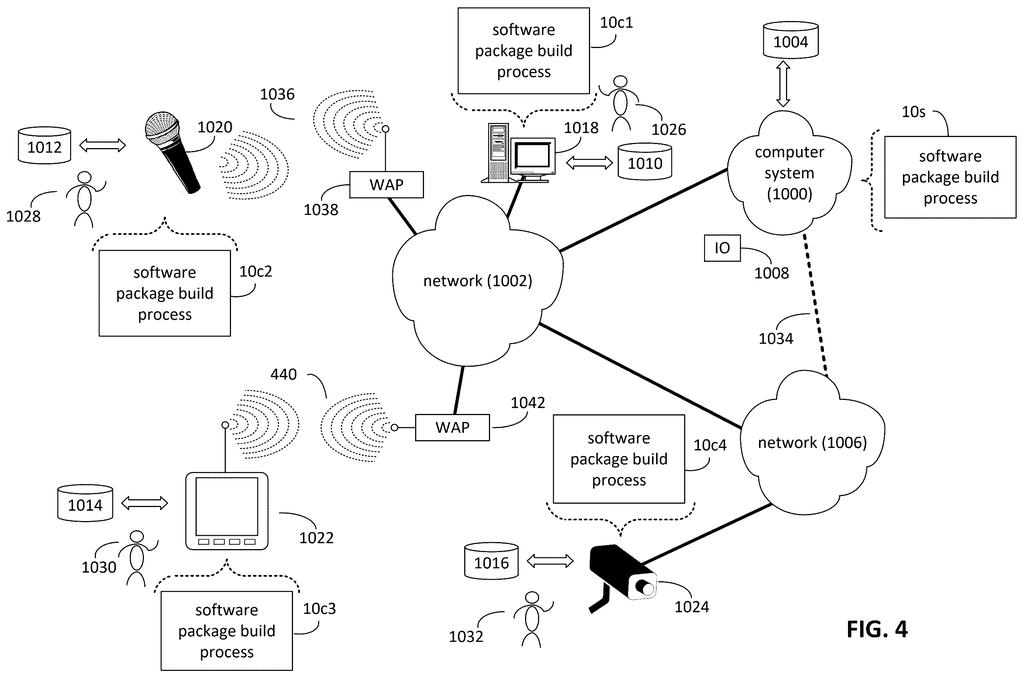
How Microsoft's app-specific OS trimming works
You're building an app and you just want to ship it to a device. But under the hood, you're dragging along an entire operating system with hundreds of features your app will never touch. That bloat slows things down, creates security exposure, and wastes storage.
Microsoft's patent describes a system that looks at what your app actually does, picks out only the OS pieces it needs to run, and then bundles a matching set of developer tools alongside it. The result is a compact software package: a lean operating system and a matching toolkit, both trimmed to fit your app like a tailored suit rather than an off-the-rack one.
This kind of approach is especially valuable for devices that aren't traditional PCs, like factory sensors, kiosks, or embedded systems, where every megabyte and every extra background process has a real cost.
… assembling an OS with the subset of OS software components, the subset of OS software components including fewer OS software components than the plurality of OS software components available for the OS; …
Translation: The system builds a stripped down operating system using only the necessary parts.
How the system matches OS parts to SDK parts
The patent describes a pipeline that starts by analyzing the features of an application to determine which operating system (OS) components are required to run it. Rather than shipping the full OS, the system picks a targeted subset of components, only the drivers, services, and libraries the app actually calls on.
Once that trimmed OS is assembled, the system then identifies the matching subset of SDK (Software Development Kit) components. An SDK is the collection of tools, headers, and libraries a developer uses to build and test software against a particular OS. Crucially, the patent requires the SDK subset to be aligned with the OS subset, so developers get tools that correspond exactly to what's on the device, no more, no less.
The output is a single software package containing both the custom OS and the matching SDK. This keeps the development environment and the runtime environment in sync, which matters because mismatches between what a developer tests against and what actually runs on a device are a common source of hard-to-diagnose bugs.
The claim is deliberately broad, covering the method, the software program that runs it, and the computing system that executes it, suggesting Microsoft wants wide coverage over the core idea of feature-driven OS and SDK co-assembly.
A method, computer program product, and computing system for developing a custom operating system (OS) and software development kit (SDK) package.
Translation: This tool builds customized operating systems and developer toolkits.
What slimmer OS packages mean for developers and devices
For developers targeting specialized hardware, like IoT sensors, retail kiosks, or medical devices, a full Windows install is often overkill. A stripped-down OS has a smaller attack surface (fewer components that can be exploited), boots faster, and fits on lower-cost hardware. Pairing that lean OS with a matching SDK means developers don't accidentally write code that depends on a system feature the device doesn't have, which is a real and recurring problem today.
The deeper strategic read is that Microsoft has long sold Windows for embedded and specialized use cases, and this patent points toward automating the customization work that currently requires significant manual engineering. Developers and IT teams who follow the latest Big Tech patents in OS and platform tooling will recognize this as part of a broader industry push to make purpose-built software environments less painful to create and maintain.
Microsoft's 318th filing in our Microsoft coverage since May, which we've tracked from the start, extends ideas seen in one routing tasks by device strengths and one splitting AI and cloud work.
The system locks in its decisions early, during setup, rather than adapting later when the software is actually running. That saves resources, but it creates a real problem: if an app turns out to need something that was not included at setup time, it simply breaks, and there is no fix built into this approach.
For simple, dedicated devices doing one predictable job, that trade makes sense. For complicated apps that change often, it is a genuine weak spot that this patent leaves unsolved.
Get our take in your Top Stories
Liked this breakdown? Add Patentlyze as a preferred source on Google, and our plain-English take shows up more often in your Top Stories the next time Microsoft patent news breaks.
There are more where this came from
We read every patent application Big Tech publishes and send you the ones worth knowing. Plain English, free, every week.
The drawings
4 drawing sheets from US 2026/0244427 A1 · click any drawing to enlarge


Want this weekly breakdown for a company we don't cover? Patentlyze Pro →
Be the first to weigh in