
New Microsoft Patent Tracks Cross-App Behavior to Sharpen Recommendations
Microsoft has filed a patent for a recommendation system that doesn't just look at what you've done inside one app. It reaches across multiple services to find other users who behave like you, then uses their patterns to predict what you'll want next.
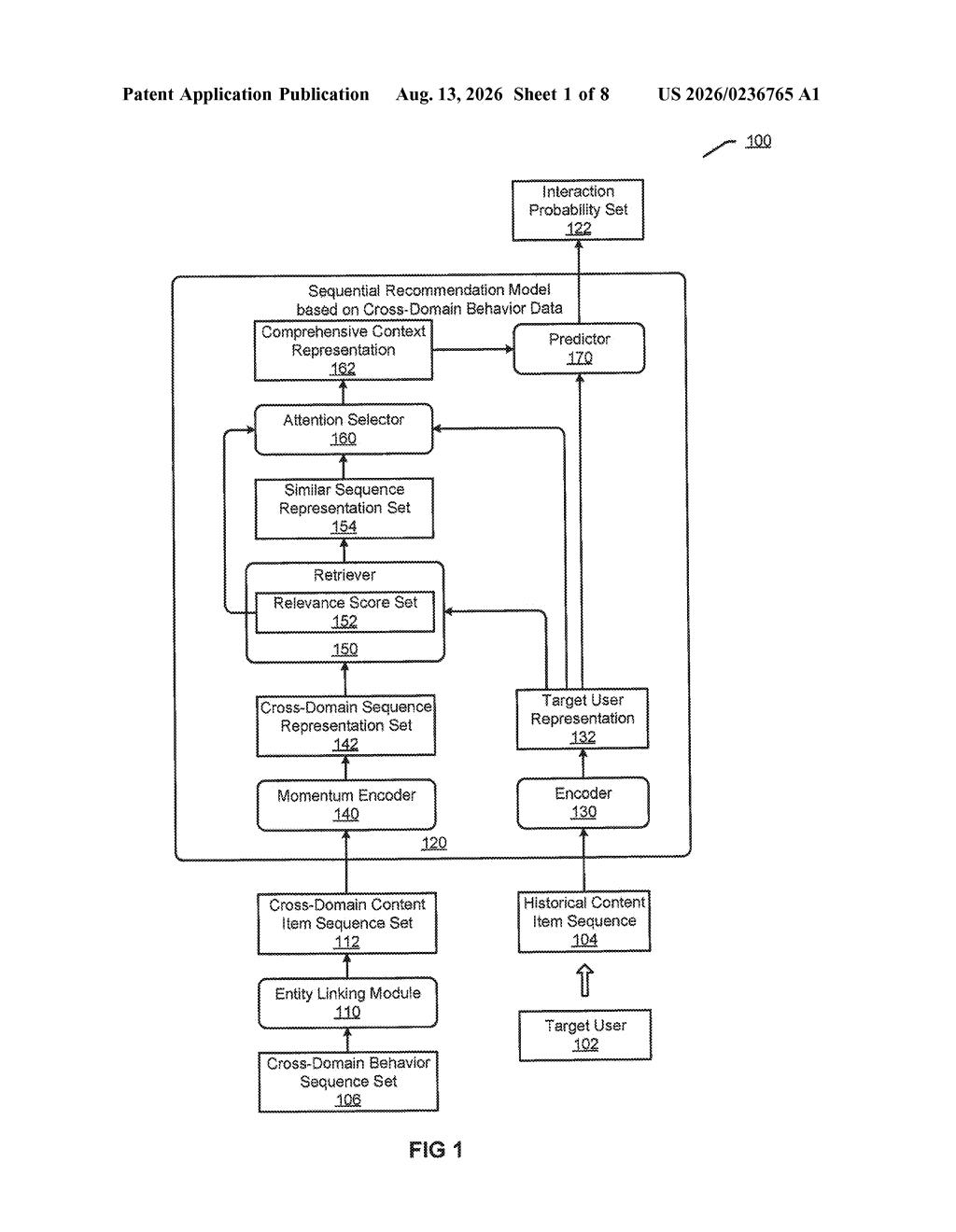
How Microsoft's cross-app recommendation system works
Ever wondered why a recommendation engine on one app feels totally clueless about you, even though you've been clicking on the same kinds of things for years somewhere else? That's the gap this Microsoft patent is trying to close.
The system builds a profile of you based on your history inside an app. Then it searches logs from other apps or services for users whose behavior patterns look similar to yours. Those matching patterns get pulled in to help predict what you're likely to click on next, even if you're relatively new to that particular service.
In plain terms: instead of starting from scratch every time you use a new product, Microsoft's system borrows signals from your behavior across its wider ecosystem to give you recommendations that feel more tuned in, sooner.
… extracting a cross-domain behavior sequence set from a log of a network application: generating a cross-domain sequence representation set corresponding to the cross-domain behavior sequence set; retrieving a similar sequence representation set similar to the target user representation from the cross-domain sequence representation set …
Translation: The system pulls data about your activity across different apps to find other users who behave just like you do.
How the system matches your behavior to similar users elsewhere
The patent describes a four-step pipeline for generating recommendations across service boundaries.
- Target user representation: The system encodes your past interactions inside one app into a mathematical summary called a user representation. Think of it as a compressed fingerprint of your tastes.
- Cross-domain behavior extraction: Logs from other network applications (different Microsoft services, for instance) are processed and also encoded into a set of sequence representations. Each sequence represents a different user's behavior pattern from those other apps.
- Similarity retrieval: The system compares your fingerprint against all those cross-domain fingerprints to find the ones most like yours, a process similar to finding the nearest neighbors in a large library.
- Interaction probability prediction: Your fingerprint and those similar cross-domain fingerprints are combined to score a list of candidate content items, ranking what you're most likely to click or engage with.
The patent's claim is broad in scope: it covers any network application log as the source of cross-domain data, which means the technique isn't tied to any single product or data silo. The encoding and retrieval steps are left intentionally flexible, so different model architectures could be plugged in.
An interaction probability set of the target user interacting with a candidate content item set may be predicted based on the target user representation and the similar sequence representation set.
Translation: The software calculates the likelihood that you will click on a specific piece of content based on your past habits.
What this means for Microsoft's ad and content platforms
For users, this could mean fewer cold-start frustrations. When you arrive at a Microsoft service you rarely use, a system like this wouldn't need weeks of your in-app behavior before it starts making useful suggestions. It would already have a rough idea of your preferences from your activity elsewhere in the ecosystem.
Microsoft's advertising and content businesses, including Bing, MSN, LinkedIn, and Xbox, all generate the kind of cross-service behavioral logs this patent describes. A working version of this system could sharpen targeting and engagement across all of them from a single unified model. Recommendation-system patents are a crowded space right now, and Big Tech patent news in the ad-tech and personalization category has been tracking how Microsoft, Google, and Meta each try to build cross-platform intelligence without running into data-privacy walls.
Claim 1 is written at a high level of abstraction: it covers any method that generates a user representation, extracts behavior sequences from any network application log, finds similar sequences, and predicts interactions. If granted at that breadth, it would cast a wide net over cross-domain recommendation techniques in general, and any competitor pulling behavioral signals from multiple apps to rank content would need to think carefully about its boundaries. Whether it survives prior-art scrutiny is a different question: cross-domain collaborative filtering has a long academic history, and the novelty here rests on the specific sequencing and retrieval architecture.
Get our take in your Top Stories
Liked this breakdown? Add Patentlyze as a preferred source on Google, and our plain-English take shows up more often in your Top Stories the next time Microsoft patent news breaks.
There are more where this came from
We read every patent application Big Tech publishes and send you the ones worth knowing. Plain English, free, every week.
The drawings
8 drawing sheets from US 2026/0236765 A1 · click any drawing to enlarge


Want this weekly breakdown for a company we don't cover? Patentlyze Pro →
Be the first to weigh in