
Microsoft Patents Faster Data Comparison on Chips That Run Custom Hardware Circuits
FPGAs — the reconfigurable chips Microsoft uses heavily in its Azure data centers — are powerful but have limited built-in resources. This patent describes a way to squeeze more comparison work out of those chips without adding hardware.
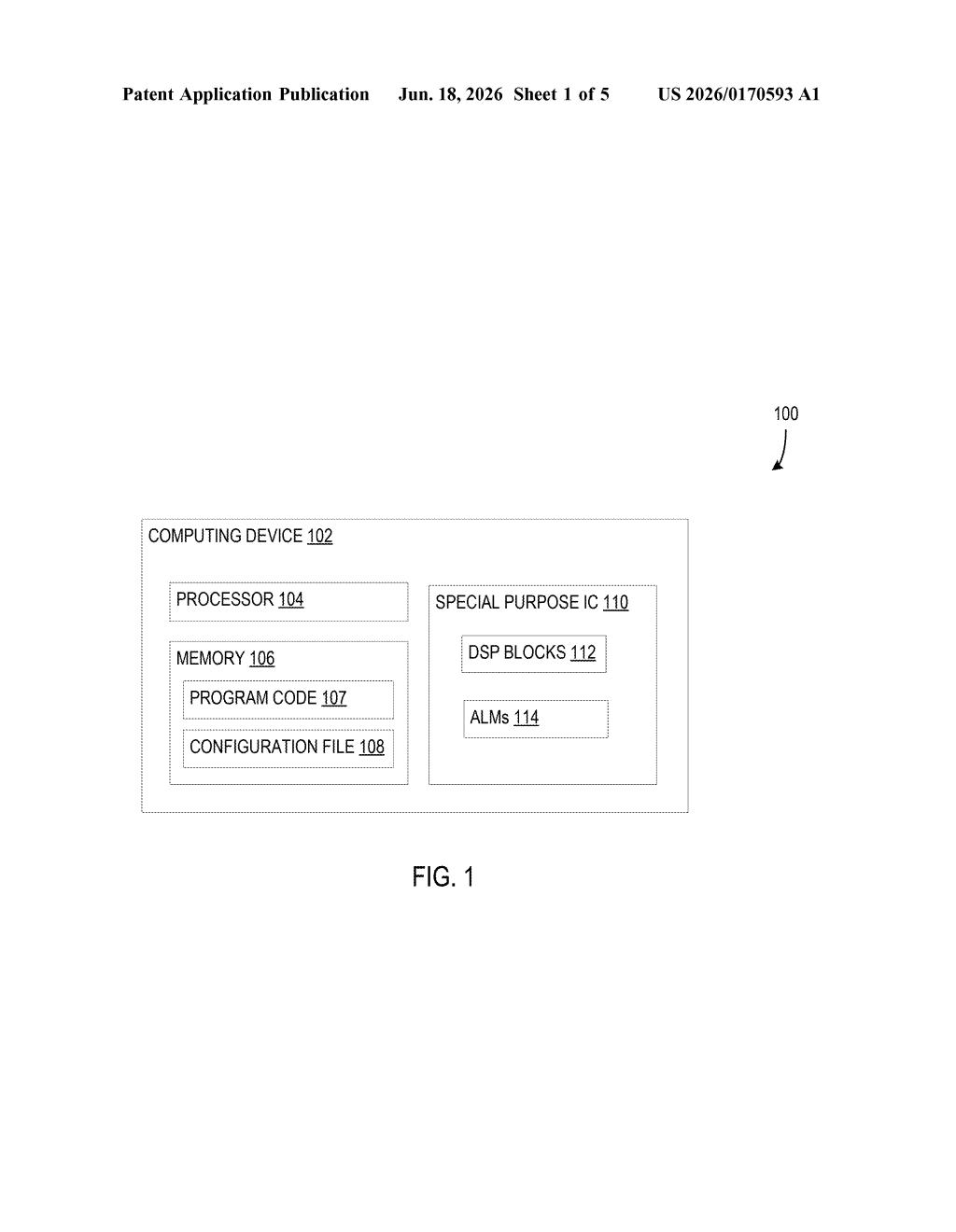
What Microsoft's FPGA mask comparison actually does
Imagine you're comparing two long lists of numbers, but you only care about certain digits in each number — not the whole thing. Normally you'd need a lot of circuitry to do that. Microsoft's approach here lets a chip do that selective comparison using hardware blocks that are already sitting idle on the chip, freeing up other parts for different tasks.
The technique splits large chunks of data into smaller pieces, blanks out the parts you don't care about (that's the "mask" step), and then subtracts one piece from the other. If the result is zero, the two pieces match on the bits that matter. It's a neat trick to get more done with the same chip.
This kind of optimization is mostly invisible to end users, but it's the sort of thing that determines how many tasks a data-center chip can handle at once — which eventually affects cost and speed for cloud services.
How the DSP blocks handle the masking and subtraction
The patent describes a system built around an FPGA (Field-Programmable Gate Array — a chip whose internal logic can be reconfigured in software after manufacture) that uses its onboard DSP blocks (Digital Signal Processor blocks — fixed-function math units baked into the chip, originally intended for signal-processing arithmetic) to run a "mask operator."
Here's the sequence the patent claims:
- Take two large data vectors and split each into smaller n-bit subgroups (bite-sized chunks of a fixed bit width).
- Apply a mask to each subgroup — a bitmask zeroes out the positions you want to ignore, leaving only the bits that matter for comparison.
- Subtract the second masked subgroup from the first. If the result is zero, the two subgroups are identical on the bits you care about.
- Output that result for downstream logic to act on.
The core insight is that DSP blocks on FPGAs are often underused during non-math workloads. By routing mask-and-compare operations through them, the design frees up the FPGA's general-purpose LUT resources (Look-Up Tables — the main logic fabric of an FPGA) for other work, improving overall chip utilization.
What this means for cloud and data-center hardware
FPGAs are a meaningful part of Microsoft's Azure infrastructure, used for everything from network packet processing to AI inference acceleration. Any technique that extracts more parallel work from the same silicon translates directly into better throughput per dollar in a data center.
For end users of Azure services, this kind of low-level optimization is invisible — but it's part of what determines whether Microsoft can run more workloads on fewer chips. That said, this is a narrow, incremental improvement in FPGA resource allocation, not a architectural shift. Its impact depends entirely on how widely the technique gets deployed across Microsoft's hardware stack.
This is a genuine but narrow engineering optimization — the kind of internal plumbing work that keeps a hyperscaler's hardware costs in check. It won't make headlines, and it isn't meant to. If you're an FPGA engineer, there's something worth reading here; everyone else can move on.
There are more where this came from
We read every patent application Big Tech publishes and send you the ones worth knowing. Plain English, free, every week.
Want this weekly breakdown for a company we don't cover? Patentlyze Pro →