
Microsoft Patents a Precision Glass Filament Drawing and Cutting Method
Microsoft — best known for software, cloud, and Surface laptops — has quietly filed a patent for manufacturing glass filaments with sub-millimeter precision. That's a long way from Excel, and it raises some interesting questions about where the company is heading.
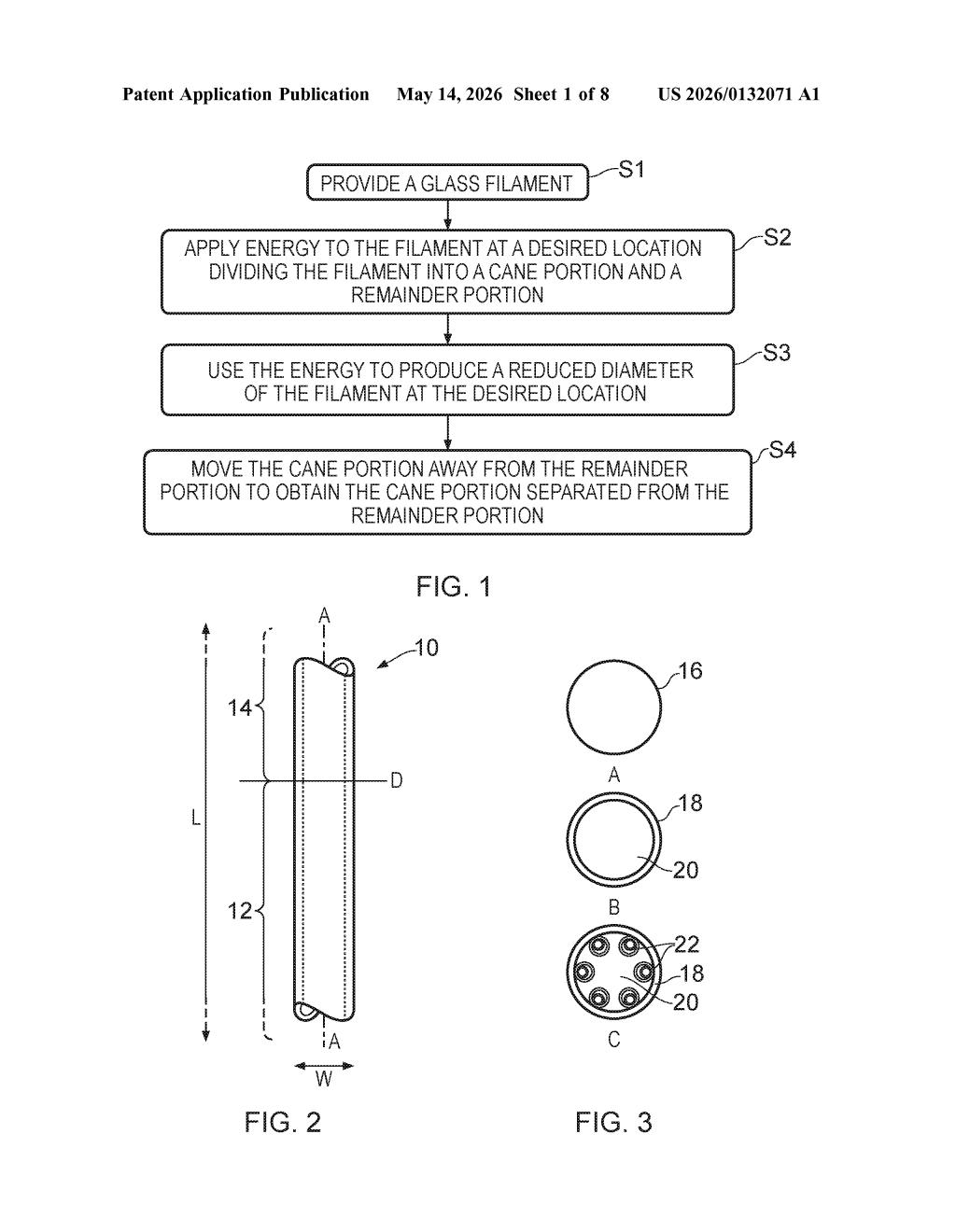
What Microsoft's glass filament patent actually describes
Imagine you're making ultra-thin glass threads — the kind used in fiber optics — and you need to snip them cleanly at an exact spot without cracking or fraying the glass. That's a genuinely hard problem, and it's what this patent addresses.
Microsoft's approach uses focused energy (think a laser or similar beam) to weaken a precise point on a glass filament, then gently pulls the two sides apart to make a clean break. It's more like coaxing the glass to separate than cutting it with brute force.
The patent also covers the drawing side of the process — how you pull the filament out of a molten glass source called a preform. A pair of rotating belts grip the filament and spin it slightly as they pull, keeping the fiber uniform. Together, these two techniques suggest Microsoft is interested in making custom optical fiber in-house.
How the belt system draws and rotates the glass fiber
The patent covers two related but distinct processes for handling glass filament at a manufacturing level.
Separation method: A length of glass filament needs to be cleanly divided at a specific point. Rather than mechanically cutting it (which risks cracking or uneven edges), the method directs energy — most likely a laser — onto the filament at the target location. This causes a localized necking (a narrowing of the filament's diameter), and then relative movement between the two sections completes the separation. The result is a controlled, predictable break point.
Drawing mechanism (the independent claim): The actual claim granted describes a device for pulling glass filament out of a preform (a solid glass rod that gets heated and stretched into fiber). Two motorized belts grip the filament between their moving surfaces and pull it away from the preform. The key innovation here: the belts are angled at non-orthogonal (i.e., not 90-degree) and opposing angles relative to the pull direction. This geometry imparts a controlled rotation to the filament as it's drawn — helping maintain consistent diameter and optical properties along the fiber's length.
Think of it like twisting dough as you stretch it — the rotation helps keep things even.
What this signals about Microsoft's optical hardware work
Microsoft has been investing heavily in optical interconnects and photonic computing — technologies that use light instead of electricity to move data inside data centers. Custom glass fiber manufacturing capability would fit neatly into that strategy, giving Microsoft more control over the optical components that underpin high-speed AI training clusters.
For everyday users, this is deep infrastructure work — you won't see a "Made with Microsoft Glass" label on anything. But if you care about where AI compute is heading, the fact that a software company is patenting fiber-drawing hardware is a meaningful signal. It suggests Microsoft wants vertical integration in optical hardware, not just dependency on third-party suppliers.
This is a genuinely unusual patent for Microsoft — most of their filings cluster around software, AI, and cloud infrastructure, not precision glass manufacturing. The fact that it exists at all is more interesting than the specific technique it describes. Read alongside Microsoft's known investments in silicon photonics and optical networking, it paints a picture of a company quietly building serious hardware depth.
Get our take in your Top Stories
Liked this breakdown? Add Patentlyze as a preferred source on Google, and our plain-English take shows up more often in your Top Stories the next time Microsoft patent news breaks.
There are more where this came from
We read every patent application Big Tech publishes and send you the ones worth knowing. Plain English, free, every week.
Want this weekly breakdown for a company we don't cover? Patentlyze Pro →