
Qualcomm Patents a Way to Fix the Most Error-Prone Parts of a Compressed AI Model First
When AI models get squeezed down to fit on a phone or a chip, important settings get corrupted in the process. Qualcomm's new patent describes a way to fix the most fragile ones first, before the damage spreads.
What Qualcomm's weight-sorting trick actually does for AI
Ever tried to pack a suitcase in a hurry and realized afterward that you crushed the most delicate items at the bottom? AI models face a similar problem when engineers compress them to run on smaller devices.
AI models are built from millions of tiny numbers called weights, which encode everything the model has learned. Shrinking a model to fit on a phone chip means rounding those numbers off, and some of them matter far more than others. If you round the wrong ones carelessly, the model starts making mistakes.
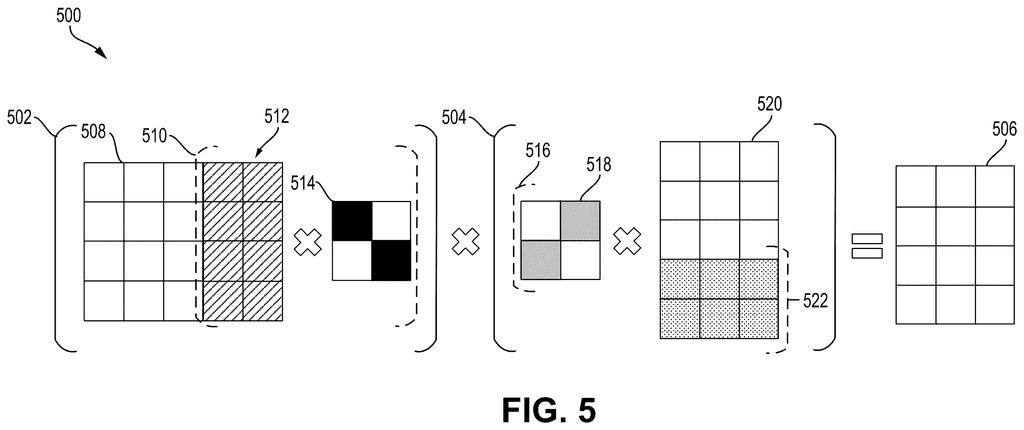
Qualcomm's patent describes a system that first figures out which weights are most sensitive to rounding errors, sorts them to the front of the line, and then applies corrections to those high-risk weights before moving on. Think of it as triaging the most fragile items in your suitcase before everything else gets packed on top.
determine, based on characteristics of weights from a first matrix representation of a set of weights of a machine learning model, sensitivity levels of the weights; adjust an order of the first matrix representation to sort a subset of weights from the set of weights based on the sensitivity levels of the weights; …
Translation: The system figures out which parts of the AI model are most fragile and rearranges them to be fixed first.
How the system ranks, reorders, and corrects model weights
The patent describes a process with four main steps:
- Sensitivity scoring: The system analyzes the characteristics of each weight in the model's internal matrix (a grid of numbers representing learned knowledge) and assigns each one a sensitivity score, essentially a measure of how badly rounding will hurt it.
- Reordering: The weight matrix is rearranged so the highest-sensitivity weights are processed first rather than in their original order.
- Targeted correction: A correction pass runs on that high-priority subset, adjusting individual weights to compensate for the rounding error introduced during compression.
- Matrix update: The corrected values are written back into the full weight matrix before the rest of the model is finalized.
The core insight is that not all quantization error (the distortion introduced when precise decimal numbers get rounded to cruder integers) hurts equally. Some weights control critical pathways in the model's decision-making; others are relatively forgiving. Fixing the fragile ones first, before they interact with other rounding errors, keeps the total damage lower than a uniform correction pass would achieve.
What this means for AI running on phones and chips
For you as an end user, this is about AI quality on the devices you already own. Models running locally on a phone or a Qualcomm Snapdragon chip have to be compressed to fit in limited memory, and that compression is one of the main reasons on-device AI can feel less capable than the cloud version. A better compression process means a more accurate model in the same amount of storage.
Qualcomm has been filing around on-device AI efficiency since 2023, which fits its business model: the company sells the chips inside Android phones and wants those chips to run AI workloads locally rather than sending everything to a server. A tighter quantization process is exactly the kind of quiet infrastructure improvement that could let future Snapdragon chips run larger AI models without a battery or memory penalty.
Qualcomm's 47th filing we've tracked since July in our AI chip wars watchlist adds to a run that includes one on compact visual codes and one on a self-checking memory chip.
When AI runs on your phone, it has been squeezed down to fit, and that squeezing makes it worse. This patent describes a method for losing less quality during that process.
The benefit shows up in small moments: the voice assistant hears you correctly the first time, the photo edit doesn't do something slightly odd to a face, the autocorrect suggestion actually makes sense. None of these feel like technology working. They feel like things just going right.
Qualcomm makes the chips inside a large share of Android phones, so a technique that meaningfully closes the gap between a compressed AI model and the original would ripple across a lot of everyday experiences that people care about without ever knowing why they improved.
There are more where this came from
We read every patent application Big Tech publishes and send you the ones worth knowing. Plain English, free, every week.
The drawings
9 drawing sheets from US 2026/0278456 A1 · click any drawing to enlarge


Want this weekly breakdown for a company we don't cover? Patentlyze Pro →