
Microsoft Patents a Way to Track Storage Power Use Per Virtual Machine
Every time a virtual machine reads or writes data, it burns power — but right now, most systems can't tell you exactly how much. Microsoft's new patent wants to fix that with per-VM storage power accounting.
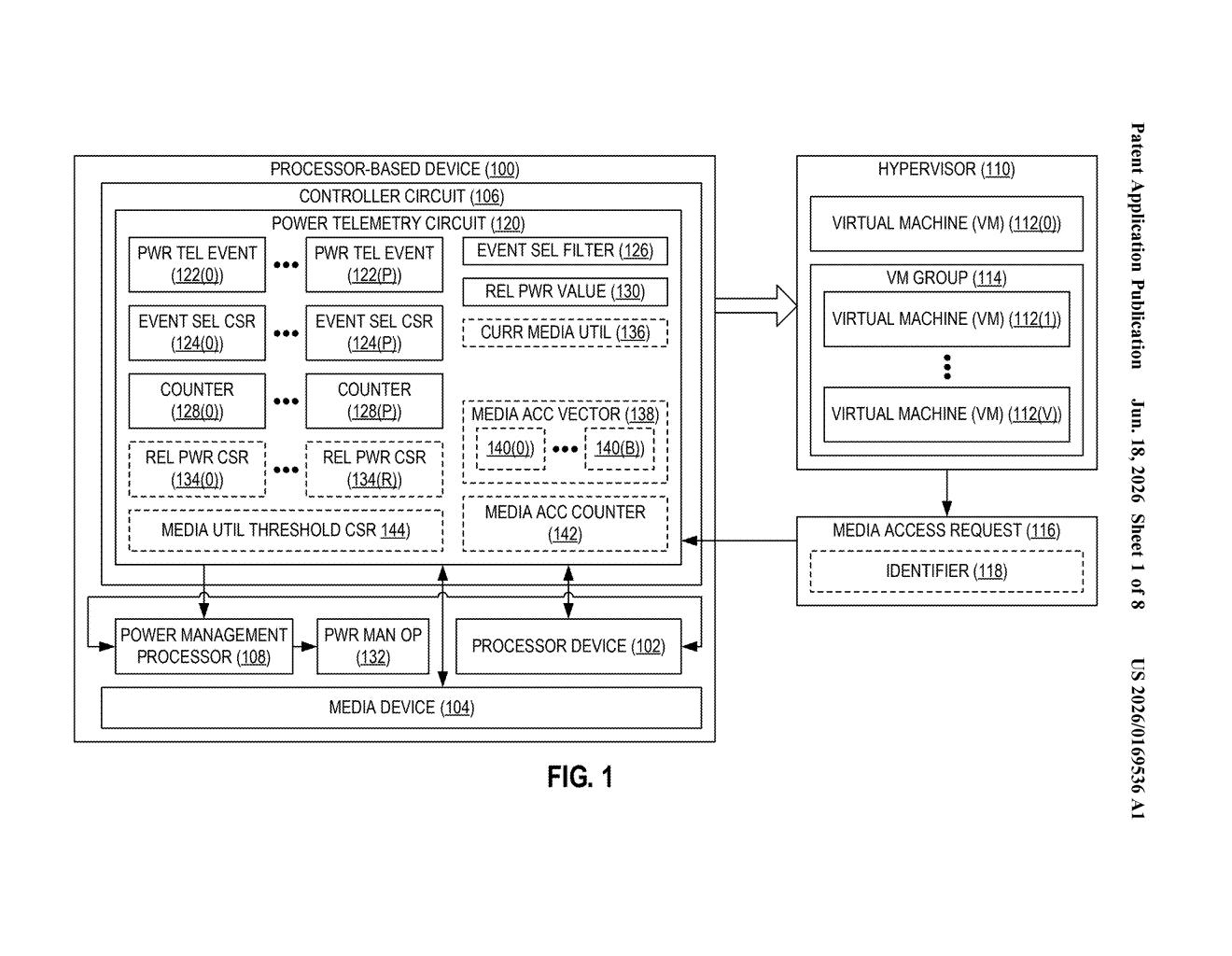
How Microsoft measures storage energy use per VM
Imagine a large apartment building where dozens of families share the same electrical meter. The landlord knows the total bill but can't tell which tenant left the AC running all night. Cloud computing has the same problem: hundreds of virtual machines share physical hardware, and it's nearly impossible to pin power consumption on any one of them.
Microsoft's patent describes a tracking system built into the storage controller — the chip that manages reading and writing data. Every time a virtual machine sends a request to storage (say, loading a database row or writing a log file), the system checks whether that request matches a category it's watching and then adds a weighted score to a running counter. A heavy write operation might count for more than a lightweight read, for example.
Once those counters build up, a power management chip reads them and decides what to do — maybe throttling a VM that's hammering storage, or shifting workloads to save energy. The goal is giving cloud operators fine-grained visibility into which workloads are actually driving power costs, not just a blurry total.
How the telemetry circuit counts weighted storage events
The patent describes a hardware-level telemetry pipeline sitting inside a controller circuit — the logic that sits between a processor and its storage devices (think NVMe SSDs or similar media).
Here's how the flow works:
- When a virtual machine issues a storage request, the power telemetry circuit intercepts it and checks whether it matches a pre-configured event selection filter stored in a control and status register (CSR — a small hardware register that holds configuration settings).
- If the request matches, the circuit increments a dedicated power telemetry counter — but not by a flat 1. It increments by a relative power value tied to the type of request, so a large sequential write can carry a higher weight than a small read.
- A separate power management processor monitors those counters and decides on a management action — throttling throughput, adjusting voltage, or flagging the workload for the hypervisor (the software that runs virtual machines).
Critically, the filter is programmable. An operator can tell the system to watch only certain VM IDs, certain request sizes, or certain access patterns. That makes the telemetry targeted rather than a firehose of data about every single I/O operation.
What this means for cloud power budgets and VM tenants
Cloud providers like Microsoft Azure charge customers for compute and storage, but power consumption is mostly invisible to both operator and tenant. As data centers face tighter energy budgets — and as regulators start pushing for power-use transparency — per-workload power accounting becomes genuinely useful. This patent is one piece of that puzzle: hardware that can tell you, accurately, how much a specific VM's storage activity is costing in watts.
For you as a cloud customer, the downstream effect could be more granular billing, better performance guarantees, or simply a more stable environment when a noisy neighbor VM stops being allowed to monopolize storage bandwidth without any power accountability attached.
This is unglamorous infrastructure work — the kind of patent that never makes a keynote but quietly underpins every future claim about 'carbon-aware computing.' The idea of weighting storage events by their power cost rather than just counting them is the genuinely interesting design choice here. Whether Microsoft turns this into a real Azure feature depends on how much pressure they're under to deliver per-tenant energy reporting, but the direction is clearly toward finer-grained cloud power accounting.
There are more where this came from
We read every patent application Big Tech publishes and send you the ones worth knowing. Plain English, free, every week.
Want this weekly breakdown for a company we don't cover? Patentlyze Pro →